2025
23
25102024
13062025
Technology Papers

Recepción: 25 Octubre 2024
Aprobación: 13 Junio 2025
Publicación: 15 Octubre 2025
DOI: https://doi.org/10.36517/contextus.2025.94404
Abstract:
Background: The accounting field is undergoing a transformation driven by technological advances, with emphasis on the use of artificial intelligence (AI), such as ChatGPT. This study examines how this technology can transform traditional interactions and optimize efficiency and accuracy in tax returns. Therefore, it is urgent to understand how ChatGPT, as a representative of innovations in AI, changes the flow of information and advice between accounting professionals and their clients.
Purpose: This study aims to investigate the effects of the use of ChatGPT in the accountant-client communication process for preparing the Individual Income Tax Return.
Method: The study is characterized as qualitative and exploratory, collecting data from accounting professionals through semi-structured interviews. The data were analyzed through content analysis with theory-driven coding, inspired by the sociomateriality approach.
Results: The results reveal that the use of ChatGPT brought benefits, such as greater efficiency, reduction of errors and optimization of the time to perform some professional activities. Furthermore, there was a reconfiguration of accountants' tasks, who can now play a less repetitive role in some activities of the communication process. However, challenges also arise, such as the need to adapt and develop new digital skills. The results obtained can help accountants, other accounting professionals and researchers interested in the field of technology applied to accounting.
Conclusions: The study revealed that the use of ChatGPT in the preparation of Individual Income Tax Return reconfigures operational tasks, organizational structures, and sociomaterial relations, implying a reformulation of accounting practice in the digital context. The analysis through the lens of sociomateriality offers an original perspective on the phenomenon, expanding an approach still incipient in accounting literature.
Keywords: artificial intelligence, ChatGPT, sociomateriality, accounting profession, technologies.
Resumo:
Contextualização: : A área contábil está passando por uma transformação impulsionada pelos avanços tecnológicos, com destaque para o uso de inteligência artificial (IA), como o ChatGPT. Neste estudo, examina-se como essa tecnologia pode transformar as interações tradicionais e otimizar a eficiência e precisão na declaração de impostos. Urge, portanto, entender de que forma o ChatGPT, como representante das inovações em IA, altera o fluxo de informações e aconselhamento entre profissionais de contabilidade e seus clientes.
Objetivo: Este estudo buscou investigar efeitos do uso do ChatGPT no processo de comunicação contador-cliente para elaboração da Declaração de Imposto de Renda de Pessoa Física (DIRPF).
Método: O estudo se caracteriza como qualitativo e exploratório, coletando dados junto a profissionais contábeis por meio de entrevistas semiestruturadas. Os dados foram analisados por meio de análise de conteúdo com codificação theory driven, inspirada pela abordagem da sociomaterialidade.
Resultados: Os resultados revelam que o uso do ChatGPT trouxe benefícios, como maior eficiência, redução de erros e otimização do tempo de realização de algumas atividades do profissional. Além disso, verificou-se uma reconfiguração das tarefas do contador, que passa a poder desempenhar um papel menos repetitivo em algumas atividades do processo de comunicação. Entretanto, também surgem desafios, como a necessidade de adaptação e desenvolvimento de novas competências digitais. Os resultados obtidos podem auxiliar contadores, outros profissionais da área contábil e pesquisadores interessados no campo da tecnologia aplicada à contabilidade.
Conclusões: A pesquisa evidenciou que o uso do ChatGPT na elaboração da DIRPF reconfigura tarefas operacionais, estruturas organizacionais e relações sociomateriais, implicando na reformulação da prática contábil no contexto digital. A análise sob a perspectiva da sociomaterialidade contribui para um olhar original ao fenômeno, expandindo uma abordagem ainda incipiente na literatura contábil.
Palavras-chave: inteligência artificial, ChatGPT, sociomaterialidade, profissão contábil, tecnologias.
Resumen:
Contextualización: El área contable está viviendo una transformación impulsada por avances tecnológicos, con énfasis en el uso de inteligencia artificial (IA), como ChatGPT. El estudio examina cómo esta tecnología puede transformar las interacciones tradicionales y optimizar la eficiencia y precisión en la declaración de impuestos. Por tanto, es urgente comprender cómo ChatGPT, como representante de las innovaciones en IA, cambia el flujo de información y asesoramiento entre los profesionales contables y sus clientes.
Objetivo: Este estudio buscó investigar los efectos del uso de ChatGPT en el proceso de comunicación contador-cliente para la elaboración de la Declaración del Impuesto sobre la Renta.
Método: El estudio se caracteriza por ser cualitativo y exploratorio, recogiendo datos de profesionales contables a través de entrevistas semiestructuradas. Los datos se analizaron mediante análisis de contenido con codificación basada en teoría, inspirada en el enfoque de sociomaterialidad.
Resultados: Los resultados revelan que el uso de ChatGPT trajo beneficios, como mayor eficiencia, reducción de errores y optimización del tiempo para la realización de algunas actividades profesionales. Además, hubo una reconfiguración de las tareas del contador, que puede desempeñar un papel menos repetitivo en algunas actividades del proceso de comunicación. Sin embargo, surgen desafíos, como la necesidad de adaptarse y desarrollar nuevas habilidades digitales. Los resultados pueden ayudar a los contadores, otros profesionales contables e investigadores interesados en el campo de la tecnología aplicada a la contabilidad.
Conclusiones: La investigación evidenció que el uso de ChatGPT en la elaboración de la Declaración del Impuesto sobre la Renta reconfigura tareas operativas, estructuras organizacionales y relaciones sociomateriales, implicando una reformulación de la práctica contable en el contexto digital. El análisis desde la perspectiva de la sociomaterialidad aporta una mirada original al fenómeno, ampliando un enfoque aún incipiente en la literatura contable.
Palabras clave: inteligencia artificial, ChatGPT, sociomaterialidad, profesión contable, tecnologias.
1 INTRODUCTION
Accounting has been undergoing a significant transformation with the incorporation of emerging technologies (Alshurafat, 2023). One of the main technological trends impacting the profession is the utilization of artificial intelligence (AI). According to a study published by McKinsey, by 2030, AI could replace about 15% of the global workforce, affecting approximately 400 million jobs, with accounting being one of the most exposed sectors (Manyika & Sneader, 2018). In the accounting field, the integration of AI has already brought about significant changes in how financial data is processed, analyzed, and reported (Hadi et al., 2024; Stancheva-Todorova, 2018; Bose, Dey & Bhattacharjee, 2023). Chatbots, for instance, are computer programs that use AI to simulate human conversation and provide automated responses (Adamopoulou & Moussiades, 2020).
The integration of AI into accounting has led to substantial changes in the way financial data is handled. These technologies have the potential to enhance the efficiency and accuracy of accounting processes, and to facilitate decision-making (Hadi et al., 2024; Cheng et al., 2024; Bose, Dey, & Bhattacharjee, 2023; Franco, Faria, Maciel & Duarte, 2021; Jackson, Michelson, & Munir, 2023). In this regard, Bose, Dey, & Bhattacharjee (2023) report that AI may be employed to automate routine tasks, such as data entry and reconciliation, enabling accountants to focus on more strategic and analytical activities. Chatbots and other AI tools, in turn, can be employed to automate clearly defined tasks, such as real-time data updates and responding to common queries, thereby reducing the need for manual intervention (Adamopoulou & Moussiades, 2020).
However, the adoption of AI in accounting also poses challenges and implications for the profession. One of the main concerns is the potential replacement of certain job functions by automated systems (Chukwuani & Egiyi, 2020). Therefore, it is essential that accounting professionals adapt to these technological advancements and acquire the necessary skills to work in tandem with AI systems (Jackson, Michelson, & Munir, 2023; Chatterjee et al., 2021; Silva, Carolina & Gritti, 2020; Pan & Seow, 2016).
The accounting field has been the subject of study and research by various authors who explore the implications of technological trends, such as the utilization of artificial intelligence. Bakarich and O’Brien (2021) have contributed to the field by discussing the role of artificial intelligence in accounting, addressing the opportunities and challenges posed by this technology. Additionally, Alshurafat (2023) has focused on investigating the potential of Chat Generative Pre-Trained Transformer (ChatGPT) in accounting, analyzing its use to improve client communication and the preparation of accounting reports. Fisher, Garnsey, and Hughes (2016) examined the utilization of natural language processing systems in analyzing unstructured accounting data, enhancing the efficiency and accuracy of financial reporting. Although the utilization of AI in accounting is growing and recent studies have evaluated ChatGPT’s performance in accounting tasks (Hadi et al., 2024; Cheng et al., 2024; Wood et al., 2023; Eulerich & Wood, 2023), there remains a gap in investigating the impact of these technologies on specific accounting tasks—particularly considering the social and material aspects of this interaction through the lens of sociomateriality theory.
Generative AI technologies based on LLMs (Large Language Models), such as ChatGPT, create highly fluent dialogues in natural language. However, they do not always deliver truthful, updated, or accurate information. Therefore, it is imperative to analyze the impact of using ChatGPT—treated as though it were a professional accountant—in technical advisory tasks such as guidance on preparing the Brazilian Individual Income Tax Return (Declaração de Imposto de Renda de Pessoa Física – DIRPF). The choice of the DIRPF as the focus of this study is justified by the relevance of this activity in accounting practice and by the frequency with which accountants are involved in this process. Although accountants perform a range of functions, this practice stands out for requiring both the meticulous collection of financial data and continuous communication with clients to ensure the accuracy of the information provided. As such, this task—more than others—highlights the role of technology in optimizing repetitive processes and supporting decision-making. Compared to other accounting activities, the preparation of the DIRPF is a highly standardized process and particularly suitable for the utilization of AI tools, which facilitates the analysis of ChatGPT’s impact. However, the risks arising from the misuse of technologies such as ChatGPT are substantive and, to date, there is no legal framework for holding the technology accountable for providing inaccurate guidance to taxpayers. Many professionals may also be unaware of these risks, given the speed at which tools like ChatGPT have entered mainstream society. In light of this scenario, the following research question was proposed: How are accountants reconfiguring their practices to cope with the effects of using LLM models, such as ChatGPT, in their professional context?
Unlike traditional approaches that treat technologies as passive tools, the sociomateriality perspective emphasizes the material agency of these technologies—their ability to act and influence human practices. The analysis in this study is based on the idea that technologies are not merely support tools for professional activities, but agents that shape and reconfigure interactions and processes in the workplace (Orlikowski, 2007). From this perspective, it is observed that the rapid evolution of AI and its increasing integration into various sectors of society have been recognized and prioritized in public policies in Brazil. Notably, the Brazilian Strategy for Digital Transformation, established by Federal Decree No. 9,319/2018 (Brasil, 2018) and supplemented by the Ministry of Science, Technology and Innovation (MCTIC) Ordinance No. 1,556/2018, sets forth the need to treat AI as a key element as a result of its potential to significantly impact public administration and several other sectors. Later, the relevance of AI was reaffirmed by MCTIC Ordinance No. 1,122/2020, amended by Ordinance No. 1,329/2020, which solidified AI as a primary focus in research and technological development, culminating in the formulation of the Brazilian Artificial Intelligence Strategy (MCTIC, 2020).
These government initiatives underscore the importance of exploring the implications of AI in different fields, including the accounting sector. This study specifically examines the effects of using ChatGPT, an advanced AI tool, in the accountant-client communication process during the preparation of the DIRPF. The objective is to investigate how this technology can transform traditional interactions and enhance efficiency and accuracy in tax filing.
The analysis focuses on understanding how ChatGPT, as a representative of AI innovations, alters the flow of information and advice between accountants and their clients. Additionally, the study aims to identify the challenges and opportunities brought by the utilization of ChatGPT in the preparation of the DIRPF, in a context where national AI guidelines and policies, such as those set by the Brazilian Strategy for Digital Transformation and the Brazilian Artificial Intelligence Strategy, are shaping practices and technological development (Divino, 2022). Through this investigation, the study seeks to contribute to a deeper understanding of the role of AI in modernizing and increasing the efficiency of accounting services in Brazil.
Within this analytical framework, ChatGPT was chosen as the focus of this research as a result of its current prominence and recognition, as also referenced in other studies (Alshurafat, 2023; Sallam, 2023). However, it is imperative to clarify that the concepts and approaches used in this study are not exclusive to ChatGPT but can also apply to other similar generative AI technologies, enabling a broader understanding of AI’s effects. Furthermore, although the empirical focus of the study was the specific task of preparing the DIRPF, the findings and developed categories reveal dynamics that may be generalized to other accounting activities with similar characteristics especially those involving routine automation, client interaction, and intensive use of these tools. Moreover, while the advancement of artificial intelligence and the application of natural language systems demonstrate significant potential to transform accounting practices by offering operational efficiency and task automation, it is critical to understand how this technology affects the actions of professionals and reshapes the organizations that provide accounting services. This is a key contribution of the sociomateriality perspective (Orlikowski, 2007; Leonardi, 2013).
According to Orlikowski (2007), sociomateriality explores the interconnection between technological artifacts and human activities, emphasizing that technology and social practice are not separate elements but are mutually constituted. Leonardi (2013) reinforces this perspective by arguing that studying professional practices in a technology-use context requires an analysis that does not separate the material (technology) from the social (human practice). Thus, when applying this theory to the accounting context—particularly in the utilization of artificial intelligence like ChatGPT—it becomes possible to investigate how these technologies transform accountants’ daily practices, reconfiguring both their interactions with clients and their internal work processes. For this reason, the theory of sociomateriality not only informs the theoretical framework of the study but also guides the data analysis, justifying its relevance to this research.
By exploring these aspects, this study seeks to contribute to the literature by understanding the benefits and challenges associated with the utilization of artificial intelligence in accounting practice. The findings may support the development of more efficient practices and provide valuable insights for accountants, other professionals in the field, and researchers interested in the intersection between technology and accounting.
2 THEORETICAL FRAMEWORK
2.1 Algorithms in Accounting Decision-Making: Delegation and Implications
ChatGPT, or Chat-based Generative Pre-trained Transformer, is the most popular artificial intelligence (AI) chatbot developed by OpenAI. It uses a large volume of textual data to generate responses in a conversational format, similar to human interactions (Alshurafat, 2023; Adamopoulou & Moussiades, 2020; Dong, Stratopoulos & Wang, 2024). In recent months, ChatGPT has exhibited significant improvements in learning and refinement (Ross & Zhang, 2024). After its release in 2022, its ability to solve accounting questions was still limited. In January 2023, ChatGPT only outperformed accounting students in 15.8% of assessments (Wood et al., 2023). However, by May 2023, despite ChatGPT (GPT-3.5) failing the Certified Public Accountant (CPA) exams in April, the newer version, GPT-4, achieved a score above 80% (Eulerich & Wood, 2023). Against this backdrop, it is evident that ChatGPT has acquired enough technical kcurrentlyledge to transform the accounting profession.
Artificial intelligence systems originate from advancements in big data and machine learning technologies, with the economic value of these systems becoming increasingly apparent (Asatiani et al., 2021). According to Ågerfalk (2020), AI introduces renewed attention to the concepts of delegation and the autonomous performance of tasks. In this regard, Baird and Maruping (2021) describe AI as one of the foundational emerging technologies and emphasize its role in enabling the rise of agentic artifacts in information systems. These artifacts can be viewed as rational, software-based agents capable of perceiving and acting to execute tasks.
Consequently, the transfer of rights and responsibilities corresponds to what the authors refer to as delegation. With the emergence of these artifacts, users are currently able to delegate more complex tasks to these technologies, including autonomous decision-making—a responsibility increasingly entrusted to such systems (Baird & Maruping, 2021). However, Asatiani et al. (2021) caution that AI has an irrational nature and is prone to errors, requiring careful control of agency and autonomy in its implementation. For instance, the authors point out that AI systems do not reflect on the ethical or legal aspects of their actions (Asatiani et al., 2021).
Generative artificial intelligence has emerged as a key driver of digital transformation within organizations. It is characterized by its ability to generate content from large volumes of unstructured data through deep learning models and natural language processing. However, Vasarhelyi et al. (2023) emphasize that although models like ChatGPT have the potential to enhance the quality of auditing, education, and accounting research, their adoption poses risks such as inaccuracies in responses, limitations in accessing up-to-date data, threats to professional independence, and concerns about privacy. In this context, Dell’Acqua et al. (2023) demonstrated that although the utilization of ChatGPT-4 by consultants at Boston Consulting Group led to significant improvements in routine tasks—with up to a 43% increase in quality and a 25.1% increase in execution speed—performance dropped when users applied the tool to tasks beyond its current capabilities. This highlights the need for critical judgment and technical kcurrentlyledge on the part of accounting professionals. Additionally, the literature points out that while the utilization of LLMs is promising for automation and decision support, it may introduce algorithmic biases, hallucinations, and the risk of professional deskilling—that is, the loss of technical skills as a result of excessive task delegation to AI systems (Hadi et al., 2024; Cheng et al., 2024). It is, therefore, a transformation that demands not only technological investment but also a reconfiguration of organizational structures and accountability systems.
Thus, it is unequivocal that the introduction of automated decision-making through machine learning has generated tensions related to accountability, as managing such actions becomes increasingly complex in light of the lack of transparency in automated decision-making (Benbya, Pachidi, & Jarvenpaa, 2021). In this regard, the growing volume of data and the evolution of computational power have increased the complexity of AI systems, resulting in behavior that is often inscrutable and challenging for human comprehension (Asatiani et al., 2021; Xavier, Carraro & Rodrigues, 2020). Although reflecting on accountability concerns in automated decisions is essential, Baird and Maruping (2021) argue that in the process of evaluating the delegation of rights and responsibilities to artifacts, the human agent may make such evaluations either cognitively or emotionally. In other words, delegation may occur without a rational assessment of accountability involved in the process.
In the accountant-client relationship, the decision delegation dynamic is complex and falls under agency theory. This theory explores the nuances of trust and responsibility when an agent (the accountant) makes decisions on behalf of the principal (the client), playing a critical role in preparing the Individual Income Tax Return (DIRPF), where precision and accountability are paramount. While AI, such as ChatGPT, can influence this delegation, the emphasis must remain on the human relationship and the inherent trust dynamic within it (Baird & Maruping, 2021; Benbya, Pachidi, & Jarvenpaa, 2021).
Within this analytical framework, with the incorporation of ChatGPT, professionals may delegate certain decision-making tasks to the algorithm, allowing the technology to make suggestions based on predefined rules and patterns. This delegation, in turn, implies a reconfiguration of accounting practices, positioning accountants in a more active role in monitoring and validating the decisions made by the algorithm. However, it is critical to understand how professionals manage this delegation and how it affects their practices and responsibilities. For this purpose, the sociomateriality approach offers a valuable conceptual and methodological framework for analyzing this phenomenon.
2.2 Sociomateriality
According to Sallam (2023) and Liu et al. (2023), Large Language Models (LLMs) are advanced artificial intelligence models designed to process and generate text on a large scale. ChatGPT, for instance, is an LLM trained on textual data to understand language and generate coherent responses (Sallam, 2023). These models are used in natural language processing tasks such as machine translation, text generation, and question answering, and have been widely adopted in various domains including customer service, technical support, virtual assistants, and others.
According to Leonardi (2013), when studying technological artifacts, many authors use the adjective “material” to emphasize that certain aspects of the technology are intrinsic. Thus, the technological artifact under study possesses inherent characteristics independent of the social context in which it is used. The materiality of such technology comprises the set of features that define it and are made available to all users in the same way. From this perspective, the concept of materiality is useful in directing attention to the artifact’s intrinsic properties, reminding us that these characteristics remain fixed, at least for a certain period.
For Orlikowski (2007), organizational practices are not merely viewed as “social practices” but rather through the lens of sociomateriality. The term sociomateriality is used to explicitly highlight the constitutive entanglement of the social and the material in everyday organizational life. This concept asserts that all materiality is social—created through social processes and interpreted and used in social contexts—and all social action is made possible by some form of materiality (Leonardi, 2013). Therefore, the social and the material are seen as inextricably linked—there is no social that is not also material, and no material that is not also social (Orlikowski, 2007).
Although it is a theoretical concept, Orlikowski (2007) provides practical examples of how to examine the constitutive entanglement that characterizes sociomaterial practices. One such example is performing a search on Google. From a sociomaterial perspective, this search is constituted by the interdependent relationship between the social practice of searching and the material infrastructure of the search engine. The search engine is a computer code developed and maintained by software engineers, executed on servers, and dependent on millions of people who create and update web pages. From this viewpoint, the result is a constitutive entanglement of the material and the social (Suchman, 2007).
However, Leonardi (2013) places emphasis on both human and material agency in the discourse on sociomateriality. Human agency can be defined as an individual’s capacity to formulate and pursue goals, while material agency refers to the perception of what technology is capable of executing. In other words, human agency (linked to goal-setting) is influenced by people’s perception of the artifact’s material agency, which in turn is influenced by the goals that are set.
In this sense, human agency in the accountant-client relationship refers to the capacity and autonomy of the accountant (and the client) to formulate and achieve specific objectives in the preparation of the DIRPF. This agency is manifested in how the accountant uses their kcurrentlyledge and experience to interpret and apply tax regulations, and in the client’s ability to provide accurate information and make decisions. Although AI tools such as ChatGPT may influence this dynamic by offering analytical and procedural support, human agency remains central, highlighting the importance of human skills, professional judgment, and ethical decision-making in accounting. The perception of technology (material agency) by the accountant and the client shapes and is shaped by these human processes—integrating with but not replacing human agency in the accountant-client relationship (Leonardi, 2013).
By using the sociomateriality perspective as a theoretical lens, one assumes that technological artifacts and human agents are deeply intertwined in the constitution of organizational practices (Orlikowski, 2007). In the Brazilian context, this perspective proves particularly relevant, as the accountant’s role is strongly regulated by oversight bodies such as the Federal Accounting Council (CFC), yet it also evolves in response to challenges that require accounting professionals to make decisions mediated by technological artifacts. The adoption of systems such as ChatGPT, therefore, not only automates tasks but also reconfigures relationships, redistributes responsibilities, and alters the modes of production and validation of accounting information. Russo and Guerreiro (2017) highlight that managerial accounting practices in Brazil are perceived by managers not only as technical tools for problem-solving (instrumentality), but also as practices that confer institutional legitimacy. Thus, this perspective enables an understanding of AI’s effects not as a direct substitution of professionals, but as a rearticulation of the human and technological elements that constitute accounting practice. Through the utilization of ChatGPT in accounting practice, sociomateriality considers the dynamic and complex interaction between social and material dimensions. Furthermore, the sociomaterial approach recognizes that accounting practices and processes are shaped not only by human actions but also by the technologies employed. From this perspective, sociomateriality demonstrates how the utilization of ChatGPT influences interactions between accountants and clients, reconfiguring both tasks and organizational structures. Moreover, this approach facilitates in understanding the implications of interactions between human and technological actors, considering how values, norms, and social relationships are shaped and influenced by these interactions.
2.3 The Role of Artificial Intelligence in Accounting
According to Petkov (2020), given the introduction of AI into many aspects of society, it is necessary to rethink the accounting function and identify possible processes that could benefit from it. In the accounting context, AI refers to a system capable of performing tasks that would normally require human intelligence (Petkov, 2020). Accountants are responsible for identifying economic events and recording them using accounting entries. However, some accounts require judgment and assumptions about how to record them over time. Depreciation accounts and allowance for doubtful accounts are examples that demand judgment. In other words, when considering the utilization of AI in accounting, one must evaluate its capacity to make assumptions and judgments about data entries to ensure accurate accounting records.
Among the accounting tasks that could be delegated to AI, Petkov (2020) highlights: digitizing and recording cash payments and receipts; estimating allowance for doubtful accounts based on assumptions; and automatically recording bank transactions in accounts payable, receivable, investments, and others. According to Chukwuani & Egiyi (2020), accountants must remain open to new technologies and seek to integrate them to enhance task performance. The ongoing use of such technologies, combined with managerial processes, aims to boost competitive advantage and organizational performance (Olan et al., 2022; Cruzara, Takahashi, Sandri, & Cherobim, 2020; Franco, Faria, Maciel & Duarte, 2021). While AI does not replace accountants, there is a growing need to adopt these tools as essential aids in performing accounting tasks. The authors emphasize benefits such as reduced risk of financial fraud and improved quality of accounting information.
According to Alshurafat (2023), ChatGPT is considered a revolutionary tool as a result of its ability to analyze large datasets quickly and accurately and to automate the generation of financial statements and reports. The author outlines several uses and potential benefits of ChatGPT to enhance accounting efficiency, accuracy, and timeliness: (1) automation of routine tasks such as data entry and calculations; (2) support in preparing financial statements, balance sheets, and other reports; (3) rapid response to common queries, reducing time and manual follow-up; (4) assistance with complex accounting issues such as tax regulations and compliance; (5) workload reduction and productivity increase; (6) enhanced data analysis enabling new insights; and (7) improved customer service.
However, despite its potential benefits, the adoption of ChatGPT in accounting also presents challenges. These include integrating the tool with existing systems without disrupting current workflows, and ensuring data privacy and security (Ross & Zhang, 2024; Alshurafat, 2023). The author also stresses the importance of managing client expectations and trust, balancing technology with human expertise, and providing adequate user training and support.
The integration of generative artificial intelligence tools such as ChatGPT has raised growing ethical and legal concerns in accounting. These include responsibility for the accuracy of information provided by AI, transparency in the utilization of automated systems in client interactions, and the risk of overreliance on responses generated without professional judgment (Binns et al., 2018; Zhang et al., 2023; Qian, Siau, & Nah, 2024). In the field of algorithmic ethics, Binns et al. (2018) note that decisions made by automated systems often lead to perceptions of injustice, especially when the criteria used are unclear or when responsibility for the information is ambiguous. Zhang et al. (2023) reinforce that user trust in generative AI tools may be erroneously heightened by linguistic fluency and the authoritative tone of responses, which exacerbates risks in regulated contexts such as accounting services. Both works warn of the phenomenon of automation bias, whereby professionals delegate decisions to automated systems even when the accuracy of their output is uncertain.
Qian, Siau, and Nah (2024) also point out that using language models in professional environments requires a balance between operational efficiency and ethical responsibility, particularly when such systems are applied to roles traditionally associated with human expertise and professional judgment. In accounting, this not only concerns the technical quality of information provided by AI, but also involves client transparency and compliance with legal and professional standards. Therefore, the adoption of tools like ChatGPT must be accompanied by governance policies, human oversight, and accountability—especially in tasks such as assisting with the completion of the Individual Income Tax Return (DIRPF), where accountants are legally responsible for the information submitted to the Brazilian Federal Revenue Service. This concern has gained support in the national regulatory arena, as reflected in Bill No. 2338/2023, which proposes a legal framework for AI in Brazil and adopts a risk-based approach, similar to the European Union’s Artificial Intelligence Act. The bill includes measures such as strict liability for AI system providers and operators in cases of harm caused by high-risk applications, and reversal of the burden of proof in favor of the victim. These provisions underscore the urgency of discussing AI adoption in professional fields with high legal compliance and technical responsibility requirements—such as accounting.
In today’s context of rapid technological change, ChatGPT has reshaped communication between accountants and clients, particularly in the preparation of the DIRPF. This transformation is especially dynamic in Brazil, where the Brazilian Artificial Intelligence Strategy (EBIA) has established guidelines for AI adoption across multiple sectors, including finance and accounting. Recent legislative and regulatory developments reflect efforts to keep pace with technological shifts while balancing innovation with data protection, ethics, and security (Divino, 2022). Implementing these guidelines in the daily routines of accounting professionals presents both challenges and opportunities, particularly regarding the adoption and management of emerging technologies.
Given this scenario, it is critical to construct projections that consider uncertainties and the potential paths for AI development in accounting. One possibility is a significant increase in efficiency and accuracy in preparing the DIRPF, thanks to ChatGPT’s ability to process and analyze large volumes of tax data—potentially revolutionizing accounting practices. On the other hand, concerns arise over data security and the reliability of information processed by AI, and the need for professionals to adapt to these tools. Another factor to consider is the potential change in the skill set required of accountants, who may need stronger training in information technology and data analysis, aligned with EBIA’s directives.
3 METHODOLOGY
This study adopts a qualitative approach, investigating the phenomenon of artificial intelligence in relation to accounting practices from the perspective of professionals in the field. This approach allows for the understanding and interpretation of the behaviors of the individuals involved and provides a variety of data that facilitates expand kcurrentlyledge related to the research object (Collis & Hussey, 2005). Furthermore, this study is based on its exploratory nature, as it seeks to expand the boundaries of available kcurrentlyledge on an emerging topic—the effects of AI adoption on business processes in the accounting field—being more concerned with proposing avenues of inquiry than with confirming hypotheses (Jaeger & Halliday, 1998).
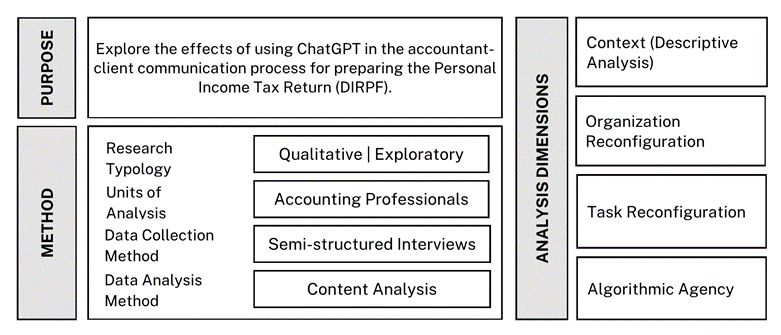
The units of analysis in this study are six (6) accounting professionals working in Brazil. Among them, two are self-employed accountants with over ten years of experience in tax consulting and independent auditing, while the other four are employees at accounting service firms with experience ranging from five to fifteen years, holding positions from senior analyst to department manager, with specializations in areas such as managerial accounting, taxation, and controlling. The interviewees were identified as Respondents E1, E2, E3, E4, E5, and E6 to preserve anonymity. Given the exploratory focus of the investigation, the number of respondents proved sufficient to represent the phenomenon, enabling the development of legitimate propositions in the synthesis of results and allowing for descriptive or explanatory approaches thereafter (Collis & Hussey, 2005). Polkinghorne (1989) and Creswell (1998), for instance, recommend between 5 and 25 participants in studies focused on social phenomena. Similarly, Guest, Bunce, and Johnson (2006), in a study on saturation, indicate that between 6 and 12 interviews are often sufficient to identify thematic patterns in homogeneous samples. Figure 1 summarizes the main methodological information of the study and presents the logical sequence of steps applied to address the research problem.
Regarding the interviews, all six participants signed a Free and Informed Consent Form (TCLE), in which they voluntarily agreed to participate in the study, with their anonymity guaranteed. The interviews were recorded and fully transcribed with the participants’ consent and conducted online via Microsoft Teams. NVivo software was used for data processing and to support the analysis.
The decision to interview only accountants, rather than clients, was motivated by the need to deepen the understanding of how accounting professionals are adapting their management and communication practices in the era of artificial intelligence. Although clients are an important part of the phenomenon under study, the focus on accountants seeks to report the technical and ethical changes faced by professionals, which are essential to assess the impact of using AI tools such as ChatGPT in accountant-client communication.
The data collection instrument consisted of a script organized into four blocks of questions, inspired by Karunakaran, Orlikowski, and Scott (2022), aimed at describing the work process (block 1) and the effects of AI use on professional practice (blocks 2, 3, and 4). Based on this, the first block included a descriptive analysis of the role performed by accountants, with the aim of understanding how these professionals are incorporating ChatGPT into their daily work. This involved considering the specific context in which they operate and included aspects such as the utilization of ChatGPT as a support tool, interaction with clients after using the technology, and the strategies adopted to deal with the effects of using ChatGPT.
The second block, on the reconfiguration of professional tasks, included questions about how the utilization of ChatGPT modifies the performance, stages, and processes involved in the preparation and completion of the Individual Income Tax Return (DIRPF). This block aimed to explore how the tool’s use is impacting and reconfiguring the activities and tasks carried out by accountants in their professional routines.
In the third block, with the purpose of assessing the reconfiguration of the organization, the questions addressed strategies adopted to deal with both the positive and negative effects of using ChatGPT, and how the skills required of accounting professionals are changing in the context of artificial intelligence. The goal of this block was to explore how ChatGPT affects structures, processes, and organizational practices in the accounting field, to understand how the technology is being integrated into existing workflows, what adaptations were required, and how the organization is restructuring to deal with AI.
The last block of the script focused on questions regarding a possible intention or “own will” of ChatGPT and how this could change people’s intention when seeking guidance, and the potential losses in understanding the logic behind how the DIRPF functions. The aim was to understand the complex and dynamic interactions between social and material aspects in the context of ChatGPT use in accounting practice, to explore how the technology influences the activities, social relationships, and professional practices of accountants.
For data analysis, Bardin’s (2011) content analysis technique was applied, which proposes a three-step process. In the pre-analysis phase, the transcribed interview data were processed and thoroughly reviewed. In the second phase, material exploration, all content was subjected to an in-depth study using coding and categorization procedures, with the four thematic blocks presented in Table 1 serving as the a priori categories. Finally, in the third phase—data analysis and inference—the relationships among the codes that make up the four categories were constructed to provide empirical grounding for the study’s conclusions.
4 ANALYSIS AND DISCUSSION OF RESULTS
4.1 Reconfiguration of Workflows and Processes
To assess the level of applicability of AI tools, the interviewees were initially asked about changes in workflows perceived by the accountants. In this context, four interviewees reported significant changes in the company’s routine in recent years, such as the introduction of validation steps for AI-generated responses, adjustments in customer service procedures, and the restructuring of workflows to incorporate the utilization of ChatGPT (E2, E3, E5, and E6). Regarding task reconfiguration, this aligns with the ideas of Stancheva-Todorova (2018), who argues that the profile of accounting professionals will undergo a transformation, adopting the characteristics of a hybrid professional as a result of the interaction of financial, technological, and informational skills and competencies.
From this perspective, the adoption of new technologies, such as artificial intelligence, to assist accountants in performing their activities offers greater agility and productivity, as reported by E3: “The most significant change I observed with the implementation of artificial intelligence was this transformation in how we carry out daily tasks. Previously, many processes were manual and required considerable effort and more time. Now, with AI, some tasks have been automated and simplified.” This means increased productivity and time savings, allowing professionals to handle greater demand. The progressive use of technology combined with management processes aims to enhance competitive advantage and organizational performance (Olan et al., 2022; Cruzara, Takahashi, Sandri, & Cherobim, 2020). Additionally, Franco, Faria, Maciel, and Duarte (2021) noted that most professionals perceive the main impact of technology in the accounting environment to be related to agility and time savings, corroborating E3’s statement. The contents raised on this topic are summarized in Figure 2.
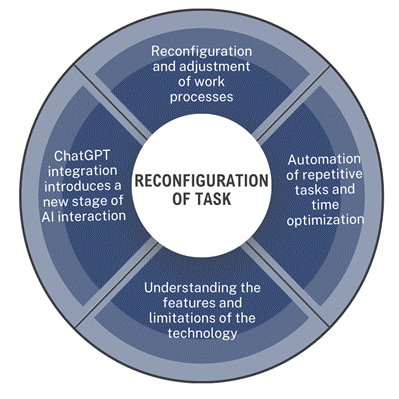
However, two interviewees mentioned that using these technologies requires a new stage of reviewing the responses provided by the tool, demanding familiarity with these new technologies to ensure the accuracy of the information, since, frequently, some clients require validation and the provision of additional clarifications (E2 and E5). In this regard, Xavier, Carraro, and Rodrigues (2020) emphasize the need to train professionals to ensure that the changes brought by the increased use of technology can be effectively sustained.
E2 reports: “[…] some of my clients use and bring questions about the answers generated by ChatGPT and expect me to validate or clarify some information.” Similarly, E5 states: “The responses generated by ChatGPT help explain more complex concepts in a more accessible way to clients and assist me in identifying possible inconsistencies or missing information in the tax returns.” According to Stancheva-Todorova (2018), AI has the ability to surpass humans as a result of its faster processing speed, which exceeds human capacity in solving problems and handling data. This allows individuals to save time when performing basic and repetitive tasks, redirecting their focus toward actions that require critical thinking.
Nevertheless, some interviewees expressed concern about the indiscriminate use of ChatGPT in activities involving technical responsibility and guidance to taxpayers (E1, E2, E3, and E5). Such accounts reveal an ethical concern regarding the limits of AI’s role in accounting practice, especially when the client mistakenly assumes they are being assisted by a qualified professional. These perceptions gain relevance given the absence of specific regulations governing the utilization of artificial intelligence tools within this framework. Although there is still no consolidated legislation in force, Project No. 2338/2023 proposes guidelines for the development and responsible use of AI, including generative systems, highlighting the urgency of reflections on legal certainty and the risks of holding accountants liable for errors or omissions caused by automated information.
4.2 Organizational Reconfiguration
Regarding the impact on organizational structure, three participants mentioned individual and organizational strategies adopted to deal with the positive and negative effects of using ChatGPT. As E3 stated: “I always try to stay informed about updates and improvements to these technologies […] and we try to validate the answers generated by the system. At the organizational level, we offer training to employees and remain open to customer feedback to improve our services.”
Based on this argument, professional training becomes a strategic tool for business development and success, promoting professional updating, improved work quality, and innovation in organizational processes. This perspective aligns with the findings of Silva, Carolina, and Gritti (2020), who emphasize that companies are increasingly investing in training programs and seeking professionals who can adapt to new business models and possess behavioral skills (soft skills), as technical kcurrentlyledge alone is no longer sufficient to meet current market demands.
Consequently, the interviewees were asked whether the competencies required of accounting professionals have changed following the implementation of ChatGPT. Data analysis skills were cited by two professionals as essential competencies valued within their companies. E1 stated that there is a growing demand for specialists capable of analyzing and interpreting large volumes of data to provide more accurate analyses that support decision-making processes. According to Pan and Seow (2016), the current professional profile requires hybrid characteristics such as: sharp business acumen, in-depth kcurrentlyledge of the market in which they operate, and the ability to apply technology and analytics concepts to generate new insights and transform data into actions and business strategies.
Accordingly, E4 noted that accountants are being driven to go beyond the role of mere “number generators” and take on a new role of coordination across different areas of the company. As E2 reinforced: “[…] employers are increasingly looking for multiskilled professionals who kcurrently how to use these new technologies and interpret that information.” Therefore, in addition to traditional kcurrentlyledge, competencies in data analysis, AI, automation, and data interpretation are currently required. This transformation in the role of accountants reflects the need to adapt to the demands of the modern business environment, where adopting an interdisciplinary approach and utilizing data are crucial for competitive success (Jackson, Michelson, & Munir, 2023). The accountants’ perceptions regarding changes in organizational structure are summarized in Figure 3.
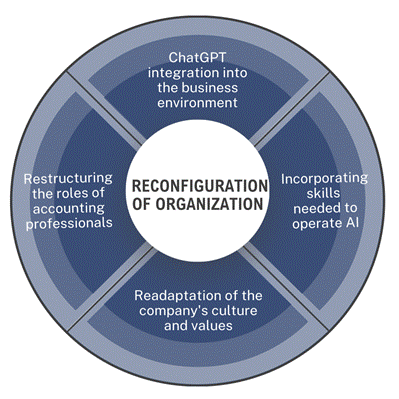
Within this analytical framework, the reconfiguration of the organization in the setting of ChatGPT use by accountants is a complex process involving several changes and adjustments in organizational aspects. One of the main ways this reconfiguration occurs is through the integration of ChatGPT into accounting workflows and processes, as accountants need to adapt their routines and procedures to incorporate the utilization of this tool. This situation requires the creation of new stages in accounting processes, such as interacting with ChatGPT to obtain responses or guidance, analyzing and validating the information generated by the tool, and integrating these data with other systems used within the company.
Another important aspect of organizational reconfiguration is the adaptation of company culture and values to embrace the utilization of artificial intelligence. In this sense, promoting a culture of innovation and learning, encouraging accountants’ training in new technologies, and creating spaces for dialogue and collaboration among team members must be considered (Chatterjee et al., 2021). Moreover, it demands efforts to develop skills and competencies related to emerging technologies, which can be fostered through training programs, workshops, and professional development initiatives focused on the utilization of AI tools. As a result, professionals must understand the capabilities and limitations of the technology, and learn how to integrate it into their daily work.
4.3 Sociomaterial Dynamics
The algorithmic agency’s ability to make decisions and perform actions autonomously is increasingly evident across various aspects of society—from recommendation systems on digital platforms to automated trading algorithms in financial markets (Grozdanovski, 2022). The delegation of tasks to algorithms, meaning the transfer of responsibility to ensure that algorithms act in place of humans, is becoming increasingly common. In this context, the interviewees believe that such delegation can bring benefits, such as greater efficiency and precision, but also raises important concerns, such as the trust placed in algorithms and the need for transparency and accountability in algorithmic decision-making.
Consequently, one of the interviewed managers (E5) reported that some individuals may develop trust in the responses provided by AI and become increasingly dependent on these tools to guide their actions. This may lead to a certain “transfer of responsibility” to the technology, as people begin to rely on ChatGPT’s intentions to provide accurate and complete responses. However, it is essential for individuals to be aware of the limitations of such technologies and view them as complementary tools, still seeking professional guidance when necessary. In this regard, the study by Doshi-Velez and Kim (2017) highlights the importance of developing algorithms that are transparent and explainable, enabling users to understand how decisions are made and helping mitigate concerns related to accountability, while also allowing for the identification and correction of bias.
In the context of sociomateriality, it is understood that the interaction between the social and material dimensions does not occur in isolation but rather through constant entanglement (Orlikowski, 2007). In the case of ChatGPT usage by accountants, this interaction is evidenced in how technology both affects and is affected by the social environment and accounting practices. By incorporating ChatGPT into their activities, accountants gain a tool that supports the execution of accounting tasks, which implies a reconfiguration of workflows and processes, introducing new stages and redistributing responsibilities among the professional, the client, and the technology. For example, according to E2, “the accountant can use ChatGPT to assist in preparing the tax return, obtaining faster and more accurate answers to specific questions.”
When asked whether they believe ChatGPT has some sort of “intention” or will of its own, interviewees stated that AI is designed to process information and generate responses based on a set of algorithms, but ackcurrentlyledged that bias may be present. Therefore, users must be aware of these limitations and critically validate and analyze the information obtained. Furthermore, when asked about potential losses in understanding the task, three interviewees mentioned that a lack of familiarity with the technology may cause insecurity and uncertainty in clients, who then turn to accountants for confirmation (E1, E3, and E4).
This is compounded by the potential losses in comprehension that may arise when individuals do not understand how ChatGPT or other technologies used for guidance function. These losses often involve a lack of understanding of the criteria used by such technologies to generate responses, leading to excessive dependence on the tool without critical analysis and a reduced capacity to detect errors or inconsistencies. Therefore, it is crucial to seek a balance between the utilization of technology and a solid understanding of the underlying accounting concepts to ensure the accuracy of the information provided. Figure 4 summarizes the sociomaterial dynamics involved in this process.
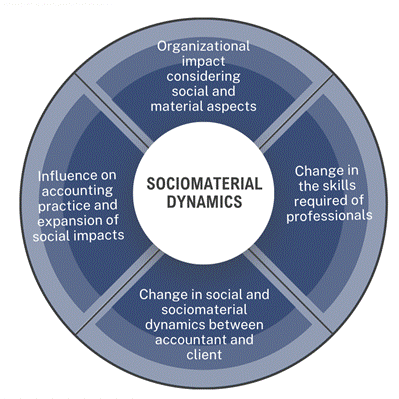
Thus, the interaction between the accountant and ChatGPT involves a sociomaterial dynamic, in which the accountant’s technical skills and accounting kcurrentlyledge are intertwined with the processing and data analysis capabilities of the technology. The accountant, therefore, must understand how to correctly use these tools, interpret their responses, and, if necessary, make adjustments or add clarifications to the information provided. Moreover, sociomateriality is also manifested in the interactions between the accountant, the client, and the AI. In this sense, the client may seek guidance through the technology, altering the communication dynamic between both parties. However, this interaction involves not only the exchange of information, but also the influence of technology on understanding and decision-making (Leonardi, 2013).
From this perspective, sociomateriality offers a theoretical and analytical lens that allows for the exploration of the complex relationships between social and material aspects involved in accounting practices. This approach facilitates to more broadly understand the impacts, challenges, and opportunities brought by technology, contributing to a critical and informed reflection on the topic (Fenwick, 2015; Cecez-Kecmanovic et al., 2014).
4.3 Reconfiguration of Accounting Practice in Light of AI Use
The adoption of artificial intelligence in accounting practice, especially in the preparation of the DIRPF, has led to significant transformations in professional routines, organizational structures, and forms of interaction among accountants, technology, and clients. Accordingly, Table 1 aims to summarize the research findings across three analytical dimensions: reconfiguration of workflows and processes, organizational reconfiguration, and sociomaterial reconfiguration. For each dimension, the impacts of using ChatGPT in the task of preparing the DIRPF are highlighted, followed by a comparison with findings from the existing literature on the reconfiguration of accounting practices.
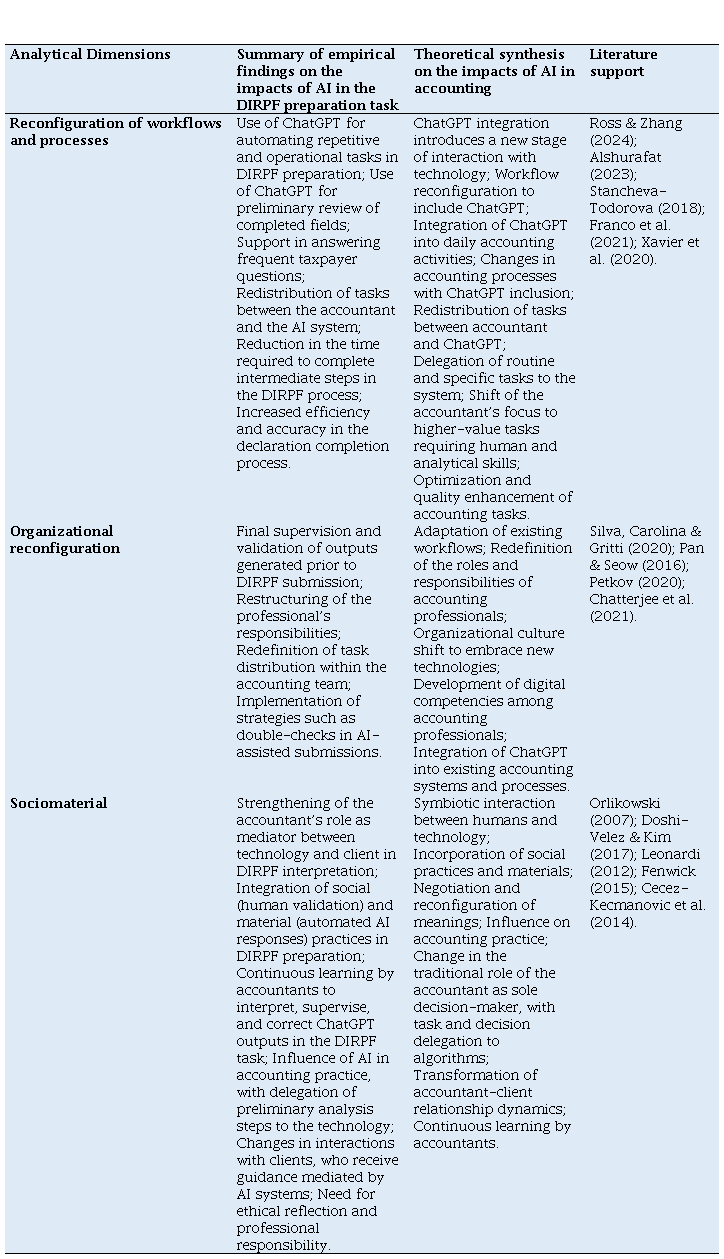
In the dimension of workflows and processes, professionals reported the utilization of generative AI to automate repetitive tasks, such as checking completed fields and responding to frequent taxpayer questions, thereby optimizing productivity and reducing the time required to complete intermediate steps in the return preparation. In this sense, the utilization of the tool not only shifts operational activities to the system but also demands new routines of verification, validation, and supervision of results, pointing to the increasing complexity of daily accounting processes. The findings are consistent with recent studies by Dong, Stratopoulos & Wang (2024), Ross & Zhang (2024), and Liu et al. (2023), which highlight the role of AI in automating accounting activities, strengthening client support, financial data analysis, and strategic planning. These technologies have proven effective in improving client satisfaction, increasing efficiency, and reducing operational costs (Eulerich & Wood, 2023; Alshurafat, 2023; Stancheva-Todorova, 2018; Liu et al., 2023). Furthermore, the utilization of AI algorithms in accounting support has proven to be an important advancement, offering real-time analyses, error reduction, and optimization of repetitive processes (Adamopoulou & Moussiades, 2020; Stancheva-Todorova, 2018). Such practices are transformed as accountants become less involved in routine tasks, allowing them to assume a more analytical and strategic role—something that demands a new configuration of professional competencies (Dong, Stratopoulos & Wang, 2024; Ross & Zhang, 2024).
In the organizational dimension, the interviewees indicated the need for supervision and validation of outputs before the return is submitted, and the implementation of strategies such as double-checking and a redistribution of responsibilities within the team. These contributions align with the literature on cultural adaptation and role redefinition (Pan & Seow, 2016; Petkov, 2020). However, the results reveal that this reconfiguration does not occur homogeneously or through fully institutionalized processes. On the contrary, it was observed that organizational decisions are still reactive, focused on isolated practices, and driven mainly by the need to mitigate operational risks and ensure compliance in deliverables—especially in tasks such as the DIRPF. The integration of ChatGPT into accounting workflows requires professionals to make constant adjustments to internal routines and practices. However, this does not yet translate into formal policies, new training models, or structural changes in accountability systems. Thus, the reorganization process is underway but remains marked by adaptive, unstructured initiatives, revealing an early stage of organizational maturity regarding the incorporation of generative AI.
Finally, the sociomaterial dimension highlights—both in the empirical data and the literature (Fenwick, 2015; Cecez-Kecmanovic et al., 2014; Orlikowski, 2007; Leonardi, 2012)—that technology is not neutral, but acts as a co-participant in professional practice. Professionals reported that ChatGPT modifies interactions with clients, requires human validation of automated responses, and imposes a continuous process of learning and adaptation. This movement confirms the perspective offered by Orlikowski (2007) and Leonardi (2012), who emphasize that these tools are embedded in practice, actively participating in the production of meaning, decision-making, and work relationships.
In the specific case of preparing the DIRPF, the algorithmic materiality of ChatGPT not only performs tasks but also shapes how the accounting professional acts and communicates. Furthermore, the results show that the trust placed in AI and clients’ perception of its intentionality create tensions in accounting practice. Professionals reported the need to explain, justify, or even refute the answers generated by the system, which demonstrates that AI not only produces content but also directly affects perceptions of professional credibility. As Doshi-Velez and Kim (2017) point out, algorithmic explainability becomes a necessary condition for professionals to exert greater control over automated decisions, thereby preserving the technical legitimacy and trust attributed to their work. Thus, the co-production between technological artifacts and social practices described by sociomaterial theory is reaffirmed, while the findings also expand this theory by showing that, in the case of the DIRPF, such co-production occurs in a normatively sensitive field—where legal responsibility, client trust, and government regulation shape the presence of AI in accounting practices.
However, the implementation of these technologies faces challenges related to data privacy, information security, and the ongoing need for training to adapt to new standards and regulations (Chukwuani & Egiyi, 2020; Liu et al., 2023). As a result, there is a need for the integration of multidisciplinary approaches and flexible organizational strategies capable of aligning technological demands with professional goals (Eulerich & Wood, 2023). In line with the findings of Alshurafat (2023) and Chukwuani & Egiyi (2020), the future of development lies in integrating AI technologies with machine learning tools for predictive analytics and real-time financial reporting, which may enhance decision-making processes. In this way, these contributions not only reconfigure accounting practices but also reveal new possibilities for building a more digital, collaborative, and efficient accounting environment—fostering advances in the quality and security of services provided by the accounting profession. Table 2 summarizes aspects of the application of generative AI in the task of preparing the DIRPF, highlighting the role played by these technologies, the challenges encountered during their implementation, and the benefits reported by the interviewed professionals.
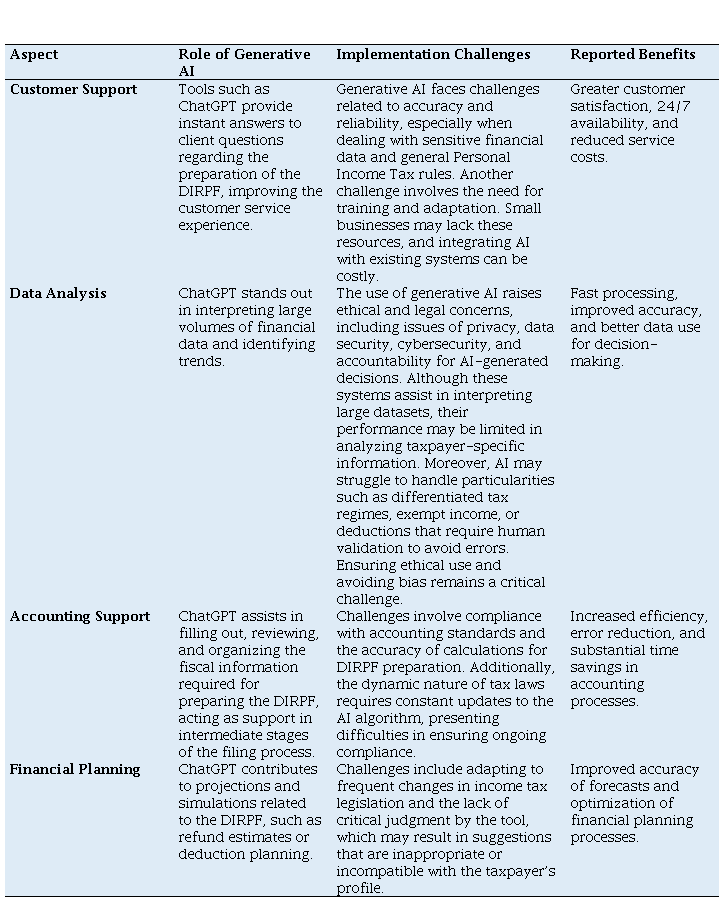
Based on the interviewees’ perceptions, it was possible to identify that the adoption of generative AI, such as ChatGPT, has led to significant impacts to various areas of accounting practice, including client support, data analysis, accounting assistance, and financial planning. However, as pointed out by recent studies, the successful implementation of these technologies requires careful attention to data security, the accuracy of financial information interpretation, and ongoing professional training (Eulerich & Wood, 2023; Liu et al., 2023; Chukwuani & Egiyi, 2020; Alshurafat, 2023; Stancheva-Todorova, 2018). According to the interviewees, the benefits include improvements in efficiency, error reduction, and agility in responding to client demands—reinforcing the conclusions of Dong, Stratopoulos & Wang (2024) and Stancheva-Todorova (2018). Furthermore, support found in the literature reveals how these technological innovations, when properly implemented, can optimize workflows, reduce costs, and strengthen decision-making capabilities.
Within this analytical framework, the task becomes reconfigured through the legitimization of use by both clients and accountants, providing accurate answers and assisting in client guidance. Thus, this reconfiguration implies an expansion of accountants’ capabilities, who begin to integrate technological skills into their practices. In parallel, an organizational reconfiguration takes place, with adjustments in workflows and processes that optimize communication, management, and the efficiency of services. Finally, sociomateriality is manifested through the interdependence between human actors and technology, in a symbiotic relationship in which they mutually influence one another. As a result, this interaction enables the adaptation and improvement of accounting practices in the face of technological transformations. However, at the same time, it establishes a new entanglement and dependence of the task on the technology, just as the DIRPF currently uses computerized systems, internet connectivity, and pre-filled returns as technological evolutions that have redefined the work of accountants and users.
5 CONCLUSIONS
This article examined the effects of AI usage, specifically technologies such as ChatGPT, on the preparation of the Brazilian Individual Income Tax Return (DIRPF) and its influences communication between accountants and their clients (taxpayers). To achieve the research objective, an empirical investigation was conducted through interviews with accounting professionals. The reports indicate that tools like ChatGPT have brought significant benefits, such as increased efficiency, reduced errors, and optimized time in completing certain tasks. Moreover, a reconfiguration of the accountant’s tasks was observed, with professionals adopting a more strategic and less repetitive role in the communication process. Interviewees highlighted the importance of adaptation and the development of new skills to fully leverage the potential of AI, demanding a more analytical, strategic, and interdisciplinary posture. However, the adoption of such technologies also presents several challenges, including data security issues, the need for continuous professional training, and the accuracy of the generated responses. These challenges were broadly recognized by the interviewees and corroborated by the literature, underscoring that the utilization of such tools requires caution from users.
In this scenario, it is essential for accounting organizations to adopt a strategic approach when dealing with the effects of these technologies, by promoting professional training, reconfiguring workflows, and realigning organizational values and culture. Additionally, the study illustrated aspects of algorithmic agency and the delegation of decision-making to algorithms through the analysis of changes in professional practices and in the competencies required from accountants. These efforts represent practical contributions that provide a legitimate foundation for understanding the impacts of AI tools like ChatGPT in the accounting field, and a basis for the development of academic kcurrentlyledge by exploring the phenomenon and presenting analytical codes that deserve further investigation in future studies.
From this perspective, human agency in the context of the accountant-client relationship refers to the ability and autonomy of both the accountant and the client to formulate and achieve specific goals in preparing the DIRPF. Although AI tools like ChatGPT may influence this dynamic by offering analytical and procedural support, human agency remains relevant, highlighting the importance of human skills, professional judgment, and ethical decisions in accounting. As Leonardi (2013) argues, the perception of technology (material agency) by both the accountant and the client shapes and is shaped by these human processes, integrating with—but not replacing—human agency in the accountant-client relationship. Thus, the material agency of technologies should not be seen as a replacement, but rather as a complement that expands the reach and capacity of professionals to handle complex and ever-changing tasks. Hence, this study demonstrates that, although ChatGPT supports the optimization of repetitive and analytical tasks, human intervention remains necessary for data interpretation, effective communication, and the construction of a trust-based relationship with the client.
Theoretically, the delimitation of the DIRPF as the empirical object of this study enabled the analysis of the reconfiguration of professional agency on a microsociological level, revealing how technology becomes embedded in practices and transforms dispositions, routines, and responsibilities. This approach aligns with practice-based research and contributes to future qualitative studies focused on understanding technological phenomena in specific professional contexts in the accounting field. Furthermore, by adopting the analytical dimensions of workflow reconfiguration, organizational transformation, and sociomaterial relationships, the article presents categories that may guide future investigations on AI usage in similar contexts. Practically,, the findings indicate that ChatGPT has been used by accounting professionals to automate certain tasks, such as the DIRPF preparation, through preliminary field checks, suggestions of tax classifications, and the provision of explanations for frequently asked taxpayer questions. A redistribution of roles within offices was also noted, with professionals operating the tool while assuming the validation and ultimate responsibility for the generated content. Additionally, organizational strategies such as validation protocols and the implementation of double-check processes were identified, evidencing a practical adaptation to the presence of AI in accounting routines.
As a limitation of the study, it is imperative to note the still-emerging understanding of this type of technology, which may lead professionals to change their perspectives in the near future as they become more familiar with its features. However, such a limitation is considered natural in exploratory research and is mitigated by the opportunity to study a social phenomenon in its early manifestations. Therefore, it is suggested that future studies adopt a longitudinal approach with the same focus to verify changes in perceptions, practices, and regulations associated with the utilization of ChatGPT in accounting. Additionally, given the potential for errors, financial and legal damages—including penalties and tax fraud lawsuits—resulting from the utilization of AI in accounting, the accountant-client relationship might encounter challenges. It is therefore recommended that future studies deepen the investigation of the ethical, legal, and social implications of generative AI use in accounting routines and activities, especially concerning professional responsibility for the information provided, data privacy, and compliance with Brazil’s General Data Protection Law (LGPD).
It is also recommended that future research includes the client’s perspective, as they are an integral part of the AI-mediated relationship. While this study focused on the accountant’s view, client interaction is central to the process. Clients may perceive the benefits and limitations of AI differently, directly influencing their trust and satisfaction with accounting services. Thus, future studies could investigate clients’ perceptions of technologies like ChatGPT in the preparation of the DIRPF, exploring their concerns, expectations, and experiences. It is imperative to analyze how the utilization of AI tools alters clients’ perceptions of trust, authority, and satisfaction with accounting services, with a focus on communication mediated by automated responses. Finally, further research should examine the regulatory and legal implications of using technologies such as ChatGPT in tax return preparation, considering issues such as legal responsibility for information provided by the tool.
REFERENCES
Adamopoulou, E., & Moussiades, L. (2020). An overview of chatbot technology. In IFIP international conference on artificial intelligence applications and innovations (pp. 373-383). Cham: Springer International Publishing.https://doi.org/10.1007/978-3-030-49186-4_31
Ågerfalk, P. J. (2020). Artificial intelligence as digital agency. European Journal of Information Systems, 29(1), 1–8. https://doi.org/10.1080/0960085X.2020.1721947
Alshurafat, H. (2023). The usefulness and challenges of chatbots for accounting professionals: Application on ChatGPT. Available at SSRN 4345921.https://doi.org/10.2139/ssrn.4345921
Asatiani, A., Malo, P., Nagbøl, P. R., Penttinen, E., Rinta-Kahila, T., & Salovaara, A. (2021). Sociotechnical envelopment of artificial intelligence: An approach to organizational deployment of inscrutable artificial intelligence systems. Journal of the Association for Information Systems (JAIS), 22(2), 325-252. https://doi.org/10.17705/1jais.00664
Baird, A., & Maruping, L. M. (2021). The Next Generation of Research on IS Use: A Theoretical Framework of Delegation to and from Agentic IS Artifacts. MIS Quarterly, 45(1), 315–341. https://doi.org/10.25300/MISQ/2021/15882
Bakarich, K. M., & O'Brien, P. E. (2021). The robots are coming… but aren't here yet: The use of artificial intelligence technologies in the public accounting profession. Journal of Emerging Technologies in Accounting, 18(1), 27-43. https://doi.org/10.2308/JETA-19-11-20-47
Bardin, L. (2011). Análise de conteúdo. São Paulo: Edições 70.
Benbya, H., Pachidi, S., & Jarvenpaa, S. (2021). Special issue editorial: Artificial intelligence in organizations: Implications for information systems research. Journal of the Association for Information Systems, 22(2), 10. https://doi.org/10.17705/1jais.00662
Binns, R., Van Kleek, M., Veale, M., Lyngs, U., Zhao, J., & Shadbolt, N. (2018, April). 'It's Reducing a Human Being to a Percentage' Perceptions of Justice in Algorithmic Decisions. In Proceedings of the 2018 Chi conference on human factors in computing systems (pp. 1-14). https://doi.org/10.1145/3173574.31739
Bose, S., Dey, S. K., & Bhattacharjee, S. (2023). Big data, data analytics and artificial intelligence in accounting: An overview. Handbook of Big Data Research Methods, 32. https://doi.org/10.4337/9781800888555.00007
Cecez-Kecmanovic, D., Galliers, R. D., Henfridsson, O., Newell, S., & Vidgen, R. (2014). The sociomateriality of information systems. MIS quarterly, 38(3), 809-830. https://doi.org/10.25300/MISQ/2014/38:3.3
Chatterjee, S., Chaudhuri, R., & Vrontis, D. (2021). Does data-driven culture impact innovation and performance of a firm? An empirical examination. Annals of Operations Research, 1-26. https://doi.org/10.1007/s10479-020-03887-z
Chen, X., R. Dunn, T. Holt, K. Inger, J. G. Jenkins, J. Jones, J. Long, T. Loraas, M. Mathis, J. Stanley, and D. A. Wood. 2024. Artificial intelligence’s capabilities, limitations, and impact on accounting education: Investigating ChatGPT’s performance on educational accounting cases. Issues in Accounting Education, 39(2), 23–47. https://doi.org/10.2139/ssrn.4431202
Chukwuani, V. N., & Egiyi, M. A. (2020). Automation of Accounting Processes: Impact of Artificial Intelligence. International Journal of Research and Innovation in Social Science (IJRISS), 4(8), 444-449. https://doi.org/10.5281/zenodo.14546797
Collis, J., & Hussey, R. (2005). Um guia prático para alunos de graduação e pós-graduação. Revisão Técnica: Marilia Leyacov.
Creswell, J. W. (1998). Qualitative inquiry and research design: Choosing among five traditions. Sage Publications, Inc.
Cruzara, G., Takahashi , A. R. W., Sandri, E. C., & Cherobim, A. P. M. S. (2020). O impacto da transformação digital e da indústria 4.0 nos aspectos de valor: Evidências de uma meta-síntese. Contextus – Revista Contemporânea de Economia e Gestão, 18, 92–106. https://doi.org/10.19094/contextus.2020.43717
Dell'Acqua, F., McFowland III, E., Mollick, E. R., Lifshitz-Assaf, H., Kellogg, K., Rajendran, S., ... & Lakhani, K. R. (2023). Navigating the jagged technological frontier: Field experimental evidence of the effects of AI on knowledge worker productivity and quality. Harvard Business School Technology & Operations Mgt. Unit Working Paper, (24-013). https://doi.org/10.2139/ssrn.4573321
Divino, S. (2022). Estratégia Brasileira de Inteligência Artificial (EBIA) e Políticas Públicas: Propostas Para Efetivação dos Eixos Legislação, Regulação e Uso Ético e Governança de IA. E-Legis − Revista Eletrônica do Programa de Pós-Graduação da Câmara dos Deputados, 15(39), 45-78. https://doi.org/10.51206/elegis.v15i39.797
Dong, M. M., Stratopoulos, T. C., & Wang, V. X. (2024). A scoping review of ChatGPT research in accounting and finance. International Journal of Accounting Information Systems, 55, 100715. https://doi.org/10.2139/ssrn.4680203
Doshi-Velez, F., & Kim, B. (2017). Towards a rigorous science of interpretable machine learning. ArXiv preprint,1702.08608. https://doi.org/10.48550/arXiv.1702.08608
Eulerich, M., & Wood, D. A. (2023). A demonstration of how ChatGPT can be used in the internal auditing process. SSRN Scholarly Paper.https://papers.ssrn.com/sol3/papers.cfm?abstract_id=4519583
Fenwick, T. (2015). Sociomateriality and learning: A critical approach. The SAGE handbook of learning, 83-93.
Fisher, I. E., Garnsey, M. R., & Hughes, M. E. (2016). Natural language processing in accounting, auditing and finance: A synthesis of the literature with a roadmap for future research. Intelligent Systems in Accounting, Finance and Management, 23(3), 157-214. https://doi.org/10.1002/isaf.1386
Franco, G., Faria, R. O. P., Maciel, A. L. M., & Duarte, S. (2021). Contabilidade 4.0: análise dos avanços dos sistemas de tecnologia da informação no ambiente contábil. CAFI, 4(1), 55-73. https://doi.org/10.23925/cafi.v4i1.51225
Grozdanovski, L. (2022). Algorithmic agency, futuristic fiction or an imperative of procedural justice?. Reseaux, 232233(2), 99-127. https://doi.org/10.3917/res.232.0099
Guest, G., Bunce, A., & Johnson, L. (2006). How many interviews are enough? An experiment with data saturation and variability. Field Methods, 18(1), 59-82. https://doi.org/10.1177/1525822X0527990
Jackson, D., Michelson, G., & Munir, R. (2023). Developing accountants for the future: New technology, skills, and the role of stakeholders. Accounting Education, 32(2), 150-177. https://doi.org/10.1080/09639284.2022.2057195
Jaeger, R. G., & Halliday, T. R. (1998). On confirmatory versus exploratory research. Herpetologica, S64-S66.
Karunakaran, A., Orlikowski, W. J., & Scott, S. V. (2022). Crowd-based accountability: Examining how social media commentary reconfigures organizational accountability. Organization Science, 33(1), 170-193. https://doi.org/10.1287/orsc.2021.1546
Kokina, J., Blanchette, S., Davenport, T. H., & Pachamanova, D. (2025). Challenges and opportunities for artificial intelligence in auditing: Evidence from the field. International Journal of Accounting Information Systems, 56, 100734. https://doi.org/10.1016/j.accinf.2025.100734
Leonardi, P. M. (2013). Theoretical foundations for the study of sociomateriality. Information and Organization, 23(2), 59–76. https://doi.org/10.1016/j.infoandorg.2013.02.002
Liu, Y., Han, T., Ma, S., Zhang, J., Yang, Y., Tian, J., ... & Ge, B. (2023). Summary of chatgpt-related research and perspective towards the future of large language models. Meta-radiology, 1(2), 100017. https://doi.org/10.48550/arXiv.2304.01852
Manyika, J., and K. Sneader. 2018. AI, Automation, and the Future of Work: Ten Things to Solve for. https://www.mckinsey.com/featured-insights/future-of-work/ai-automation-and-the-future-of-work-ten-things-to-solve-for.
MCTIC. (2020). Portaria nº 1.122, de 19.03.2020. https://antigo.mctic.gov.br/mctic/opencms/legislacao/portarias/Portaria_MCTIC_n_1122_de_19032020.html
Olan, F., Arakpogun, E. O., Suklan, J., Nakpodia, F., Damij, N., & Jayawickrama, U. (2022). Artificial intelligence and knowledge sharing: Contributing factors to organizational performance. Journal of Business Research, 145, 605-615. https://doi.org/10.1016/j.jbusres.2022.03.008
Orlikowski, W. J. (2007). Sociomaterial practices: Exploring technology at work. Organization studies, 28(9), 1435-1448. https://doi.org/10.1177/01708406070811
Pan, G., & Seow, P. S. (2016). Preparing accounting graduates for digital revolution: A critical review of information technology competencies and skills development. Journal of Education for Business, 91(3), 166-175. https://doi.org/10.1080/08832323.2016.1145622
Petkov, R. (2020). Artificial Intelligence (AI) and the Accounting Function — A Revisit and a New Perspective for Developing Framework. Journal of Emerging Technologies in Accounting, 17(1), 99–105. https://doi.org/10.2308/jeta-52648
Polkinghorne, D. E. (1989). Phenomenological research methods. In Existential-phenomenological perspectives in psychology: Exploring the breadth of human experience (pp. 41-60). Boston, MA: Springer US. https://doi.org/10.1007/978-1-4615-6989-3_3
Portal da Câmara dos Deputados. (2018). Decreto Nº 9.319, de 21 de Março de 2018. https://www2.camara.leg.br/legin/fed/decret/2018/decreto-9319-21-marco-2018-786355-publicacaooriginal-155087-pe.html
Qian, Y., Siau, K. L., & Nah, F. F. (2024). Societal impacts of artificial intelligence: Ethical, legal, and governance issues. Societal Impacts, 3, 100040. https://doi.org/10.1016/j.socimp.2024.100040
Ross, M., & Zhang, J. (2024). ChatGPT is Ready for the Profession — But is the Profession Ready for ChatGPT?. Accounting Horizons, 1-19. https://doi.org/10.2308/HORIZONS-2023-087
Russo, P. T., & Guerreiro, R. (2017). Percepção sobre a sociomaterialidade das práticas de contabilidade gerencial. Revista de Administração de Empresas, 57(6), 567-584. https://doi.org/10.1590/S0034-759020170605
Sallam, M. (2023). The utility of ChatGPT as an example of large language models in healthcare education, research and practice: Systematic review on the future perspectives and potential limitations. MedRxiv, 2023-02. https://doi.org/10.1101/2023.02.19.23286155
Silva, B. X. F., Carolina, V., Neto, & Gritti, N. H. S. (2020). Soft skills: rumo ao sucesso no mundo profissional. Revista Interface Tecnológica, 17(1), 829-842. https://doi.org/10.31510/infa.v17i1.797
Stancheva-Todorova, E. P. (2018). How artificial intelligence is challenging accounting profession. Journal of International Scientific Publications, 12(1), 126-141.
Suchman, L. (2007). Human-Machine Reconfigurations: Plans and Situated Actions (2nd ed., Learning in Doing: Social, Cognitive and Computational Perspectives). Cambridge: Cambridge University Press. https://doi.org/10.1017/CBO9780511808418
Vasarhelyi, M. A., Moffitt, K. C., Stewart, T., & Sunderland, D. (2023). Large language models: An emerging technology in accounting. Journal of Emerging Technologies in Accounting, 20(2), 1-10. https://doi.org/10.2308/JETA-2023-047
Wood, D. A., M. P. Achhpilia, M. T. Adams, S. Aghazadeh, K. Akinyele, M. Akpan, K. D. Allee, et al. 2023. The ChatGPT artificial intelligence chatbot: How well does it answer accounting assessment questions? Issues in Accounting Education, 38(4), 81–108. https://doi.org/10.2308/ISSUES-2023-013
Xavier, L. M., Carraro, W. B. W. H., & Rodrigues, A. T. L. (2020). Indústria 4.0 e avanços tecnológicos da área contábil: Perfil, percepções e expectativas dos profissionais. ConTexto - Contabilidade em Texto, 20(45).
Zhang, C., Zhu, W., Dai, J., Wu, Y., & Chen, X. (2023). Ethical impact of artificial intelligence in managerial accounting. International Journal of Accounting Information Systems, 49, 100619. https://doi.org/10.2139/ssrn.4394217
Información adicional
redalyc-journal-id: 5707