Meanings of work for women in the tattoo profession
Sentidos do trabalho para mulheres na profissão tatuadora
Sentidos do Obra para o Mulheres em o Profissão do Tattoo
 Richeila Gabriele Moura da Silva gabrielemoura@alu.ufc.br
 Bruno Chaves Correia-Lima brunocorreialima@ufc.br
Tereza Cristina Batista de Lima tcblima@uol.com.br
Rafaela de Almeida Araújo afaela.aa@gmail.com
Meanings of work for women in the tattoo profession
Contextus – Revista Contemporânea de Economia e Gestão, vol. 23, e95451, 2025
Universidade Federal do Ceará

Esta obra está bajo una Licencia Creative Commons Atribución-NoComercial 4.0 Internacional.
Recepción: 12 Abril 2025
Aprobación: 08 Agosto 2025
Publicación: 17 Septiembre 2025
Abstract:
Background: This study investigates the meanings attributed to work by female tattoo artists, a profession historically dominated by men. The female presence in this field challenges gender norms and puts pressure on the boundaries between art, work, and recognition, especially in a context of social transformations that still carry strong stigmas and prejudice.
Purpose: To analyze how female tattoo artists perceive and attribute meaning to their work. The study aims to explore the individual, organizational, and social dimensions that influence these perceptions.
Method: This is a qualitative study based on semi-structured interviews with 14 female tattoo artists from Fortaleza, Ceará (Brazil). Data analysis was conducted using content analysis, structured into three dimensions: individual, organizational, and social. Each dimension was detailed into categories and recording units. The software ATLAS.ti was employed for data organization and coding.
Results: The findings indicate that the participants associate their work with a strong sense of autonomy, personal fulfillment, and artistic expression. They also highlight the positive impact of their practice on clients’ lives as a meaningful aspect of their professional identity. Nevertheless, they report challenges related to gender-based discrimination and persistent social stigma surrounding the profession. Although the field has gained increased recognition, cultural barriers and prejudices remain.
Conclusions: The study provides theoretical contributions by expanding the understanding of work meaning in professions related to creativity and gender. Methodologically, the use of content analysis was effective in capturing the nuances of participants’ perceptions. From a social perspective, the findings underscore the persistence of prejudices associated with tattooing and gender stigma. The value of the research lies in examining an emerging and underrepresented profession, offering new insights to the field of gender and work studies.
Keywords: meanings of work, female tattoo artists, creativity, gender, profession.
Resumo:
Contextualização: Isso Estudo Pesquise O Significados atribuídos para Obra por Mulheres tatuadores, um Profissão Historicamente dominado por Homens. A presença feminino em Este campo Desafio o normas de gênero e Tensões O Limites entre arte, Obra y Reconhecimento, especialmente em a Contexto de Transformações Social isso Ainda assim Arrasto Forte estigmas e Preconceito.
Objetivo: Analise Como o Tatuadores perceber y Atributo Sentido A seu Obra. É sim Pesquisar Explorar o dimensões individuais, organizacional e social que Influência em disse percepções.
Método: O Pesquisa en qualitativo y Usado Entrevistas semi-estruturado com 14 tatuadores de Fortaleza, Ceará. O Análise de O Dados É sim apresentado por meio de o Técnica de Análise de Conteúdo, organizado em três Dimensões: Individual, Organizacional e social. Cada Dimensão Era Detalhado em Categorias e unidades de registro. O software ATLAS.ti Era Funcionário para Organização y Codificação de Dados.
Resultados: Os resultados elas indicam isso o Participantes Eles se associam seu Obra com a Forte Percepção de Autonomia, Realização pessoal e Expressão artístico. Também Destaques O impacto positivo que seu Prática tem em o Vida de seus clientes como a Aspecto significativo. Não No entanto, Relatório Desafios Relacionado com Discriminação gênero e Estigma social que Ainda assim Arredores o Profissão. Embora O Reconhecimento de o Atividade é em Expansão, persistir Barreiras Cultural y Preconceito.
Conclusões: O Pesquisa Ofertas Contribuições teórico ao expandir o Compreensão do Significado do Obra em Profissões Ligado com Criatividade e gênero. Metodologicamente, O Aplicação do Análise de Conteúdo Era eficaz na captura o Sutilezas de o Percepções de o participantes. Do ponto de vista social, O Descobertas Evidências o Persistência de Preconceito Associados para Tattoo e estigmas de gênero. O valor do Estudo Mentiras em para tornar visível um Profissão emergente e Sub-representados, fornecendo Novo Perspectiva A O Estudos gênero e Obra.
Palavras-chave: sentidos do trabalho, mulheres tatuadoras, criatividade, gênero, profissão.
Resumen:
Contextualización: Este estudio investiga los significados atribuidos al trabajo por mujeres tatuadoras, una profesión históricamente dominada por hombres. La presencia femenina en este campo desafía las normas de género y tensiona los límites entre arte, trabajo y reconocimiento, especialmente en un contexto de transformaciones sociales que aún arrastra fuertes estigmas y prejuicios.
Objetivo: Analizar cómo las tatuadoras perciben y atribuyen sentido a su trabajo. Se busca explorar las dimensiones individual, organizacional y social que influyen en dichas percepciones.
Método: La investigación es cualitativa y utilizó entrevistas semiestructuradas con 14 tatuadoras de Fortaleza, Ceará. El análisis de los datos se realizó mediante la técnica de análisis de contenido, organizada en tres dimensiones: individual, organizacional y social. Cada dimensión fue detallada en categorías y unidades de registro. El software ATLAS.ti fue empleado para organización y codificación de datos.
Resultados: Los resultados indican que las participantes asocian su trabajo con una fuerte percepción de autonomía, realización personal y expresión artística. También destacan el impacto positivo que su práctica tiene en la vida de sus clientes como un aspecto significativo. No obstante, reportan desafíos relacionados con discriminación de género y estigma social que aún rodea a la profesión. Aunque el reconocimiento de la actividad está en expansión, persisten barreras culturales y prejuicios.
Conclusiones: La investigación ofrece contribuciones teóricas al ampliar la comprensión del sentido del trabajo en profesiones vinculadas con creatividad y género. Metodológicamente, el uso del análisis de contenido fue eficaz para captar las sutilezas de las percepciones de las participantes. Desde una perspectiva social, los hallazgos evidencian la persistencia de prejuicios asociados al tatuaje y estigmas de género. El valor del estudio radica en visibilizar una profesión emergente y subrepresentada, aportando nuevas perspectivas a los estudios de género y trabajo.
Palabras clave: sentidos del trabajo, mujeres tatuadoras, creatividad, género, profesión.
1 INTRODUCTION
Work has been the subject of studies in various fields of knowledge, given its importance in human life and its impact on multiple dimensions of existence. The relationship between human beings and work is complex and multifaceted, going beyond purely economic aspects that encompass psychosocial and existential dimensions. Work is not limited to simple productive activities; it plays an important role in human life, conferring dignity, purpose, and social recognition. Furthermore, it can be interpreted as an expression of an individual’s identity and authenticity, allowing them to develop experiences and contribute to collective well-being (Moraes, 2021), while fostering social integration and providing meaning to existence (Rohm & Lopes, 2015; Neves et al., 2018). Authors such as Peterson (2018) and Frankl (2018) highlight the relevance of work in attributing meaning and purpose to life, underscoring its importance as a fundamental condition of human existence.
Analyzing the meanings of work is essential to understanding the relationship between individuals and their work tasks, which vary according to historical and cultural contexts. Morin, Tonelli, and Pliopas (2003) emphasize that the meaning of work transcends remuneration, encompassing aspects such as society contribution, personal development, and engagement in activities with added value. From this expanded economic perspective, work is seen as a means of individual and social growth, excelling at the mere exchange of time for money.
In a systematic literature review, Costa and Vieira (2024) indicated a growing interest in empirical research addressing meaning at work. They highlight the importance of investigating meaning in work within specific contexts that involve relevant social issues, such as gender (Sá, Lemos, & Oliveira, 2022), as well as its relationship with other behavioral aspects, such as creativity (Hidayat et al., 2023; Letona-Ibañez et al., 2021; Zhang & Xie, 2024; Duan et al., 2023). However, these investigations still predominantly focus on formalized professions embedded in conventional organizational structures. This research seeks to contribute to the field by analyzing the meanings of work attributed by women tattoo artists — a creative, informalized, and historically male-dominated profession. By bringing forth an empirical perspective which is rarely explored in the literature, the study expands the understanding of work meanings in contexts where gender, aesthetics, and autonomy are intertwined in complex ways.
Tattooing, as a profession, goes beyond the simple application of drawings on the skin; it is a relevant topic that addresses complex issues related to identity, personal expression, professional challenges, and overcoming gender-based stigmas. Historically associated with male subcultures, the presence of women in this field challenges established norms and prejudices (Kluger, 2015). For many tattoo artists, their work is not only a profession but also a form of artistic expression, empowerment, and authenticity (Thompson, 2019). However, these professionals face barriers to recognition and discrimination, as noted by Thompson (2015), which highlights the need to investigate gender dynamics in tattooing.
The choice of this topic is justified by the relevance of the work performed by women tattoo artists, which combines artistic expression with the construction of identity and well-being. Despite its growing popularity, tattooing carried out by women is often marginalized and subjected to prejudice in society, reflecting historical stigmas associated with tattooing (Araújo et al., 2022). Professionals in this field face bias and the need to legitimize their profession, underlining the importance of investigating their experiences. This context also reveals the relevance of solidarity among tattoo artists, an element identified by Araújo, Catrib, and Lima (2022) as fundamental for overcoming challenges and fostering empowerment through sisterhood.
Despite the growth of studies on the meanings of work, there is still a lack of research addressing this construct in creative, informalized professions marked by gender stigmas, such as tattooing. Moreover, the application of the model proposed by Morin et al. (2003/2007) in contexts outside formal organizations remains incipient, which reinforces the theoretical and methodological relevance of this study. This theoretical and empirical gap hinders a comprehensive understanding of the experiences of women working in marginalized fields, as is the case of tattooing. In this context, this study aims to analyze the meanings of work for women in the tattooing profession, considering the individual, organizational, and social dimensions of work. Accordingly, it seeks to answer the following question: How do women tattoo artists attribute meaning to their work in a professional field marked by gender stigmas and social challenges?
2 THEORETICAL FRAMEWORK
2.1 Meanings of Work
From philosophical perspectives to contemporary psychosocial approaches, work is understood as a central activity in human life, capable of conferring dignity, meaning, and belonging (Frankl, 2018; Peterson, 2018). More recent studies have also broadened the debate on the meanings of work by integrating contributions from authors such as Morin (2001, 2002) and Antunes (1999, 2006), fostering dialogue between psychosocial and critical approaches to work. In this regard, Costa, Paiva, and Rodrigues (2022) discuss the potential complementarity between theoretical-epistemological models, emphasizing the importance of considering transformations in the world of work and their impacts on subjectivity and labor practices.
The concept of “meaning of work” is inherently complex, as it involves a multiplicity of factors that go beyond intuitive understanding. Although it is often understood in a subjective and personal way, its definition is also shaped by social, cultural, and interpretive aspects, making precise explanation challenging. As noted by Rodrigues, Barrichello, and Morin (2016), this complexity arises from the interaction between subjectivity, interpretation, and the social and cultural contexts that influence the perception of work.
Morin, Tonelli, and Pliopas (2003) present the meanings of work in three main dimensions: the individual dimension, which explores the meaning of work for the individual themselves; the organizational dimension, which examines the relationship between work and the structure and culture of the organization; and the social dimension, which considers the impact of work on society. In Brazil, these ideas were also adapted by Morin, Tonelli, and Pliopas (2007) in a research framework applied to Business Administration students. The results indicated that work is essential and that individuals seek utility both for themselves and for society. The proposed model considers: the individual dimension, encompassing aspects such as personal satisfaction, independence and survival, growth, and identity; the organizational dimension, which includes the utility and relationships provided by work; and the social dimension, comprising the social integration and contribution of work.
Research by Hu and Zhang (2024) revealed that individuals’ perceptions of the meaning of work may shift in contexts of economic hardship. Although work serves both financial and non-financial functions, the study found that people in countries with higher unemployment rates placed less emphasis on the non-financial meaning of work and more on its financial meaning than those in countries with lower unemployment rates.
Empirical studies have examined the meaning of work for women in predominantly male occupations. For example, research by Sá, Lemos, and Oliveira (2022) found that female police officers highlight pleasure and a sense of purpose from performing work perceived as socially relevant, as well as emphasizing the financial independence and prestige made possible by their earnings.
Other studies have found a significant positive relationship between meaning at work and aspects related to creativity (Hidayat et al., 2023; Letona-Ibañez et al., 2021; Zhang & Xie, 2024; Duan et al., 2023). Hidayat et all. (2023), in a study of content-sector workers in the Indonesian television industry, found a direct relationship in which meaning at work was a relevant factor that stimulated and directly enhanced employee creativity. Similarly, Letona-Ibañez et al. (2021), in a study with workers in Spain, found that meaning at work mediates the relationship between job crafting and engagement. Studies with Chinese workers also identified a mediating role for meaning at work, specifically in the relationships between: (i) paternalistic leadership and employee creativity (Duan et al., 2023); and (ii) boundary-spanning behavior and creative performance (Zhang & Xie, 2024).
Although the model by Morin et al. (2003; 2007) offers a relevant conceptual framework for understanding the meanings of work, its application in informalized and stigmatized contexts requires critical caution. As Ferraz and Fernandes (2019) warn, the author’s focus on the worker’s adaptation to work can obscure labor experiences marked by precariousness, informality, or social stigmatization. The uncritical use of its methodological instruments tends to capture predominantly positive meanings, overlooking structural factors that deeply affect the work experience. In this study, when applying Morin’s framework to the field of women tattoo artists, such limitations were taken into account, adopting a situated and reflective understanding committed to making visible diverse meanings — including those that escape the logic of capital valorization — and to acknowledging the complexity of labor practices in creative and informalized professions.
Finally, it is recognized that the meanings of work are subjective constructions that emerge from historically determined social practices. However, as Antunes (2006) argues, understanding these meanings requires breaking with the naturalization of wage labor as the only legitimate form of productive activity. The critical analysis of concrete conditions of existence, especially in the field of informalized and creative professions, reveals contradictions that challenge traditional models of analysis. Thus, this study is based on the recognition that the meanings attributed to work by women tattoo artists are shaped not only by their subjective experiences but also by social structures that can both limit and enable new forms of personal and professional fulfillment.
2.2 Gender and work
The history of human labor reflects social and technological transformations, from its origins associated with survival to its centrality within social structures, marked by functional divisions in Ancient Times and mechanization during the medieval period (Fontana, 2021; Veschi, 2019). In contemporary capitalism, work is characterized by alienation, whereby the worker becomes distanced from the product of their activity, contributing to inequality and social disconnection (Mata, 2022). Women’s participation in the labor market gained momentum after the World Wars, when they assumed new roles. From the 1990s forward, changes in the productive structure increased contractual flexibility and expanded informal labor. In the 21st century, formalization granted access to labor rights and reduced wage differences, fostering an even distribution of generated wealth (Martins & Oliveira, 2017; Mattos, 2015). Blanco (2019) points out that, despite significant advances, women’s participation remains marked by structural inequalities that reproduce traditional gender-based divisions of labor, reinforcing their underrepresentation in leadership positions.
Expanding on this discussion, Zimmermann (2023) emphasizes that the social construction of gender not only arranges positions within the work market but also structures the knowledge forms that legitimize it. Feminist and trans* epistemologies challenge traditional conceptions that naturalize the sexual division of labor, highlighting how it reinforces structural imbalances, in the case of wage gaps, unequal access to leadership roles, and the precarization of working conditions for women and transgender people. These approaches also critique the androcentrism and cisnormativity of hegemonic knowledge systems, advocating for the inclusion of marginalized subjects’ experiences in labor analyses. In doing so, they not only deconstruct gender inequalities but also contribute to building more equitable work practices that respect diverse gender identities and expressions.
When addressing professional challenges, it becomes clear that men generally take advantage of easier access, with greater focus on their careers and futures. Women, on the other hand, face significant challenges due to the so-called “double burden” of balancing professional responsibilities with family obligations—working during the day and performing domestic tasks during their supposed leisure time. This reality makes it essential to view women as equally capable professionals rather than “second-tier” talent, recognizing their ability to achieve substantial career advancement and overcome the barriers imposed by traditional gender role divisions (Silva & Berrá, 2018).
Although this research focuses on the experiences of cisgender women, it is acknowledged that labor dynamics are also shaped by gender expressions that do not fit within the binary categories of man and woman. Recent studies have shown that trans, non-binary, and other gender-diverse individuals face specific challenges in accessing the labor market, achieving professional recognition, and constructing meaning in their work activities (Galvão, Casa Nova & Círico, 2025). The absence of these experiences in the present study is linked to the participants’ profile and methodological scope, but it does not imply neglect of the topic’s importance. On the contrary, it underscores the need for future research to broaden the scope of gender and work analyses, taking into account the multiple forms of identity expression and lived experience within tattooing and other creative professions. As Blanco (2019) highlights, denaturalizing gender roles in society and the workplace is fundamental to securing rights and recognition for diverse experiences, combating discrimination, and promoting social justice in the world of work.
2.3 Women in Tattooing
Historically, tattooing has been associated with male subcultures, making the presence of women tattoo artists both a novelty and a challenge to entrenched norms and prejudices (Kluger, 2015). For many women in the field, however, tattooing goes beyond a mere occupation, representing a form of artistic expression, empowerment, and authenticity (Thompson, 2019). The growing entry of women into the tattoo market challenges established gender norms, reflecting a significant shift in the dynamics of this professional sphere. Tattooing has become a site of transformations that reveal women tattoo artists’ resistance and their pursuit of equality. Their presence in the tattoo scene has been marked by a path filled with both challenges and achievements, reflecting a continuous struggle for recognition and equity in a historically male-dominated market (Mifflin, 2013).
Nevertheless, this entry into the market raises important questions about inequality, discrimination, and workplace harassment. As Mifflin (2013) points out in Bodies of Subversion, women tattoo artists’ fight for recognition and respect reflects not only resistance to social stigma but also the search for inclusive and safe spaces within the industry. Adams (2012) addresses the professionalization process and the management of stigma in both cosmetic surgery and tattooing, highlighting the social and cultural challenges tackled by women tattoo artists in their work environments. Academic research has explored women’s relationship with tattooing, analyzing issues of identity, empowerment, and resistance. Thompson (2015) emphasizes that tattooing, as a form of artistic and bodily expression, allows women to reclaim their bodies and narratives, challenging pre-established aesthetic and social norms. Scholarship on women in tattooing can thus make a significant contribution to understanding the challenges, achievements, and experiences these professionals have gone through (Thompson, 2015).
Research by Araújo et al. (2022) reveals that, despite women’s advances, marginalization of the profession persists, particularly due to the lack of standardized training and the negative perceptions still associated with tattoo work. Formerly linked to male subcultures, tattooing underwent a re-signification in the 1970s, enabling the inclusion of women and the middle class in this sphere (Thompson, 2019; Kluger, 2015). This shift not only expanded space for artistic expression but also challenged the gender stereotypes surrounding tattooing. Schlösser et al. (2020), examining a sample of 316 Brazilian women—half of whom had tattoos—found a negative correlation among tattooed women between getting tattoos and engaging in drug use or sex work.
The increasing presence of women tattoo artists has contributed to re-signifying the stigma associated with the profession. According to Araújo et al. (2022), the tattoo artists interviewed reported that with growing recognition of the artistic nature of their work and the appreciation of their skills, they feel safer and more fulfilled in their careers. This transformation is critical, as it not only promotes the inclusion of women in a traditionally male space but also offers a new perspective on female professional identity. The struggle for a respectable place in tattooing thus reflects broader social changes aimed at gender equality in the labor market (Siqueira & Samparo, 2017).
Women tattoo artists’ experiences are shaped by a complex interplay between professional identity, artistic expression, and social perceptions of female tattooing. By entering a traditionally male-dominated field, they encounter unique challenges and opportunities that shape their career paths and professional practices. The quest for recognition, autonomy, and affirmation in the tattoo scene intersects with issues of gender, aesthetics, and power, influencing both how these women see themselves and how they are perceived by the tattoo community and society as a whole(Siqueira & Samparo, 2017).
In this context, the resistance and resilience demonstrated by these professionals when facing the stigma and prejudice call attention not only to their technical skill but also to their capacity to redefine the meanings associated with female tattooing. Tattooing, therefore, goes beyond the aesthetic function to become a tool for empowerment and the expression of female identity in the professional tattoo scenario (Oliveira & Moura, 2021). Finally, valuing gender diversity in the tattoo market not only strengthens women’s representation but also enriches creativity and innovation in this constantly evolving sector. According to Araújo et al. (2022), despite the growing participation of women in tattooing, barriers remain, such as balancing professional and family life—a burden that often disproportionately falls on women (Costa, 2023).
Concluding the theoretical framework underpinning this study, the primary objective is to analyze the meanings of work for women in the tattoo profession. The research focuses on three key dimensions: first, the individual dimension, examining how tattoo artists perceive and experience their work based on their personal values and lived experiences; second, the organizational dimension, investigating how tattoo studio structures and practices influence the attribution of meaning to work among these professionals; and third, the social dimension, evaluating how tattooing is perceived and valued by society and how these perceptions shape tattoo artists’ experiences in their social environments. This approach enables a comprehensive understanding of the factors shaping the meaning of work in the tattoo profession, taking into account both internal and external aspects of professional practice.
3 METHODOLOGY
This study adopted a qualitative approach targeted at understanding the space and social function of members of a group or society. According to Peres (2019), qualitative research enables an in-depth exploration of the field of the investigated subject or informant, describing the characteristics, qualities, and complexities of the object of study. Furthermore, this approach values the interpretation of collected information, considering participants’ experiences, perceptions, reactions, and impressions regarding the object under analysis and its connection to the world. Through tools such as writing and dialogue, the researcher can elicit expressions that reveal the complexities of human subjectivity, resulting in richer and more contextualized analyses.
The research participants consisted of 14 women working as tattoo artists in the city of Fortaleza, Ceará, selected through convenience sampling. Fortaleza was chosen for its cultural relevance and creative dynamism, recognizing that the meanings attributed to work are neither fixed nor universal, but shaped by the social and cultural conditions in which they are produced (Sá, Lemos & Oliveira, 2022). Data collection concluded once saturation was reached. Participants were identified as “Tattoo Artist” followed by a sequential number corresponding to the order of interviews, ranging from 01 to 14. Regarding marital status, eight participants were single, five married, and one in a common-law partnership. The average professional experience was approximately four years and five months, with notable variation: the least experienced participant had worked for one year and eight months, while the most experienced had been active for ten years. The participants’ average age was 28.14 years, ranging from 20 to 34 years. Notably, most held higher education degrees in fields such as Architecture, Fashion Design, and Social Communication.
The interviews were conducted individually and online via Google Meet, recorded using an audio device with prior participant consent. Anonymity was ensured by omitting names. The interviews were carried out between June 17 and July 5, 2024, totaling 8 hours, 58 minutes, and 09 seconds of recordings.
It is acknowledged that convenience sampling may limit the diversity of the study universe, a limitation to be considered in the interpretation of results, in line with recommendations for greater transparency in conducting qualitative studies (Hennink & Kaiser, 2022).
The individual, organizational, and social dimensions of the model by Morin et al. (2003/2007) were operationalized as analytical categories, with adaptations to the specificities of the empirical field. The individual dimension was connected to the subjective experience of work; the organizational dimension, to autonomy in managing routines and relationships within studios; and the social dimension, to the profession’s recognition and relationships with clients. This adaptation sought to ensure internal coherence between theory and method, validating the model’s application in non-conventional contexts.
fication” and “valuation” versus “non-valuation,” to facilitate the systematization of empirical data. However, it is recognized that, in practice, meanings attributed to work do not align neatly with rigid dichotomies, such as simple presence or absence of meaning. Recent studies show that work experiences often emerge in ambivalent, partial, or contradictory ways, combining belonging and frustration, fulfillment and doubt (Alexandrino et al., 2025; Pereira et al., 2021). Thus, the proposed categorization should be understood as an analytical tool rather than an exhaustive representation of the participants’ lived experiences. Table 1 presents the organization of categories, context units, and recording units.
| Category of Analysis | Context Unit | Recording Units(meaningful work) | Recording Units(meaningful work) |
| Individual Dimension | Coherence | Identification | Non-identification |
| Importance | Non-importance | ||
| Alienation | Clarity | Lack of clarity regarding the purpose of work | |
| Knows purpose of work | Does not know purpose of work | ||
| Valuation | Valuation of work | Non-valuation of work | |
| Recognition of work | Lack of recognition of work | ||
| Pleasure | Enjoys work | Does not enjoy work | |
| Development | Personal development | No personal development | |
| Professional Growth | No professional growth | ||
| Survival and Independence | Financial return | No financial return | |
| Meets basic needs | Does not meet basic needs | ||
| Organizational Dimension | Utility | Contributes to own business | Not useful to clients |
| Meets expectations | Does not meet expectations | ||
| Work Organization | Diversified | Routine | |
| Autonomy | No autonomy | ||
| New Ideas or Practices | No new ideas or practices | ||
| Challenging | Not challenging | ||
| Interpersonal Relations | Contact with other tattoo artists | No contact with other tattoo artists | |
| Favorable work environment | Unfavorable work environment | ||
| Acceptance at work | Discrimination at work | ||
| Social Dimension | Utility | Contributes to society | Does not contribute to society |
| Valuation | Valuation by society | Non-valuation by society | |
| Recognition by society | Lack of recognition by society | ||
| Social Relations | Favorable social environment | Unfavorable social environment | |
| Acceptance by society | Discrimination by society |
This research employed content analysis for data processing, based on the method described by Ferreira (2023), who put emphasis on the importance of mastering the theoretical framework to produce meaningful inferences. The analysis was conducted using ATLAS.ti software, version 8.6.2, selected for its efficiency in coding, searching, and retrieving data in qualitative research, hence optimizing analysis time.
The results for each category were visualized using ATLAS.ti’s Network View tool, which maps relationships between codes in network form. For each analytical category, Network Views displayed positive and negative citations corresponding to the different context units. The recording units were connected to context units through arrows, with each code identified by a pair of numbers in the format {x – y}, where x indicates the frequency with which the code was used (number of linked citations) and y represents the code’s density (number of other codes to which it is connected).
Three hermeneutic units were also developed, representing the individual, organizational, and social dimensions of the meaning of work. The analysis also included the construction of critical relationships, enabling the identification of contradictions and a deeper understanding of the phenomena under investigation, with the aim of clarifying the underlying meaning of the analyzed data.
4 ANALYSIS AND DISCUSSION OF RESULTS
This section presents the analysis of the meanings assigned to work by female tattoo artists, based on the individual, organizational, and social dimensions proposed by Morin et al. (2003/2007). The discussion considers the specificities of the profession and the elements shaping the participants’ work experiences, connecting empirical data to the theoretical framework adopted.
4.1 Individual Dimension of Work Meaning
This subsection examines how tattoo artists perceive the meaning of their work from an individual perspective. The analysis highlights subjective aspects related to the professional’s relationship with her activity, signaling how they assign value and meaning to their work. Context units were explored in line with the aspects identified by Morin, Tonelli, and Pliopas (2003/2007): coherence, alienation, recognition, pleasure, personal development, as well as survival and independence.
The results are organized to reveal both the elements that provide meaning to work—such as identification and perceived importance—and the factors that render it meaningless, such as a lack of identification or relevance. These findings are summarized in Figure 1, which visually illustrates the context units to facilitate comprehension of the analysis.
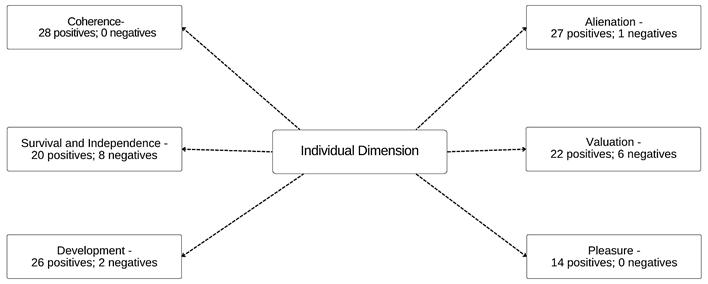
Figure 1.
Individual dimension of work meaning – Women in the tattoo professional field
Source: Research data.
The coherence context unit revealed that all participants place work at the center of their lives, expressing full identification with tattooing as a craft. This connection is evident in statements such as, “Absolutely! (I identify). I can’t see myself doing anything else” (Tattoo Artist 01) and “Yes, for sure. I would only do something I enjoyed, something that made sense to me” (Tattoo Artist 10). Such alignment between what they do and who they are reinforces the idea that meaningful work becomes intertwined with personal identity, as proposed by Rohm and Lopes (2015). For these women, tattooing is not merely a profession—it is the materialization of values, desires, and lifestyles. This corroborates with the notion of work meaning as a subjective and relational construction (Morin, 2007). By recognizing themselves in their work, tattoo artists find a space for affirmation and belonging, which strengthens their self-image and engagement.
Regarding alienation, although interviewees generally demonstrated clarity and awareness about their work objectives—evidenced in 27 instances—one statement reflected uncertainty, totaling 28 occurrences within this unit. To deepen understanding of alienation at work, participants were asked to describe their activities and reflect on their clarity regarding the purpose and usefulness of their work. Overall, tattoo artists displayed substantial understanding of the reasons behind their practice. As one explained, “The fact that I’m there, providing a tool for someone to materialize a desire, is very important” (Tattoo Artist 02). However, the intensity of daily routines can make such reflection difficult. Tattoo Artist 12 acknowledged that while she understands the meaning of her work, she can get caught in the “flow of routine,” while Tattoo Artist 10 expressed a more ambivalent view: “I don’t know if it’s something I often reflect on.” These findings indicate that while work tends to be experienced as meaningful, there are moments of detachment and automation that strain that meaning. This supports the idea that alienation is not a fixed state, but a fluctuating and context-dependent process, as discussed by Vilas Boas and Morin (2016). Reflection on what one does and why one does it is essential for sustaining meaningful work. As Rohm and Lopes (2015) note, active participation in the work process enables individuals to see themselves as subjects, reframe experiences, and reduce alienation.
Recognition of tattoo artists’ work is largely anchored in client appreciation, particularly through positive feedback, recommendations, and identification with the artist’s style. “Getting reviews from friends and family is very important” (Tattoo Artist 03); “I notice when the audience connects with my style” (Tattoo Artist 06). These examples show that symbolic recognition—especially affective and aesthetic—is pivotal to the construction of work meaning. However, this recognition is often challenged by experiences of social and economic undervaluation. The need to lower prices, as one participant mentioned, reveals how tattooing is still marginalized in certain contexts, particularly when practiced by women. This underscores how symbolic recognition is unstable and shaped by gender and class disparities . Morin (2004) emphasizes that work meaning is linked to self-esteem and social recognition, pointing to the importance of symbolic exchanges in professional identity construction. Similarly, Araújo et al. (2022) demonstrate that recognition of tattoo artists’ skills reinforces their confidence and fulfillment, especially when occupying spaces still marked by stigma. Thus, recognition emerges as an ambivalent factor: it can reinforce work meaning, but also expose the fragility of tattooing’s social legitimacy, particularly for women.
Pleasure for the interviewees is associated not only with the act of tattooing but also with the relational experiences it enables. Participants reported satisfaction in building rapport with clients, engaging in the creative process, and witnessing the emotional impact of the tattoo. “I love the whole process” (Tattoo Artist 08); “You kind of get energized when you finish a tattoo” (Tattoo Artist 10). These occurrences reinforce that pleasure is less about technical execution and more about the affective and symbolic dimensions of the activity. The literature supports this link between pleasure and meaning: Piccinini et al. (2004) identify pleasurable experiences at work as central to its meaningfulness, while Canholi et al. (2016) note that pleasure acts as a mediator between daily practice and perceived purpose. For tattoo artists, pleasure is not merely a sign of satisfaction but also a form of resistance against social undervaluation and market pressures, which enhances its analytical significance. In this way, pleasure in tattooing is not reducible to an individual feeling but functions as a structural component of work meaning, especially in contexts marked by informality and unstable recognition.
Personal and professional development emerged as a primary element of work meaning for participants. All 14 tattoo artists reported positive subjective changes linked to tattooing—such as increased confidence, sociability, and creativity—while 12 mentioned technical or artistic growth. This finding reinforces the link between work meaning and opportunities for improvement, as noted by Morin, Tonelli, and Pliopas (2007), who argue that meaningful work stimulates skill acquisition and strengthens professional identity. Some statements evidence this development as transformative: contact with clients boosted confidence (Tattoo Artist 01), artistic experimentation increased motivation (Tattoo Artist 06), and consistent practice was seen as a space for continuous learning (Tattoo Artist 12). This pattern aligns with recent studies connecting work meaning to creative experiences, autonomy, and stimulation of social exchanges (Hidayat et al., 2023; Letona-Ibañez et al., 2021; Zhang & Xie, 2024; Duan et al., 2023). However, two interviewees pointed to limitations: one mentioned infrequent learning opportunities (Tattoo Artist 02) and another described a sense of stagnation (Tattoo Artist 04). These cases illustrate that development is not homogeneous and may be hindered by contextual factors such as excessive routine, lack of external stimulation, or absence of recognition. In this sense, the perceived absence of growth undermines work meaning, as Morin et al. (2007) argue that stagnation can weaken identification with one’s profession and reduce its potential for self-realization.
In the survival and independence context unit, financial return emerges as a relevant component in attributing work meaning. Most participants evaluated their tattooing income positively, noting that it provides stability and meets basic needs. Several highlighted the work as their main or sole source of family income (Tattoo Artists 01, 10, 11, 13), underscoring its economic and symbolic centrality. However, this view was not unanimous. Some expressed dissatisfaction with remuneration, citing instability and difficulty covering living expenses solely through tattooing (Tattoo Artists 08 and 12). These accounts reveal an ambivalent experience—sometimes as a source of autonomy, other times as precarious work. According to Tolfo and Piccinini (2007), work meaning is directly linked to the ability of the activity to satisfy both material and symbolic needs, such as financial return, social recognition, and self-fulfillment. The data analyzed suggest that tattooing can provide economic autonomy for women—particularly in an informal context—but is also vulnerable to instability, reflecting the contradictions of the professional experience.
The analysis of the individual dimension of work meaning reveals a complex and ambivalent experience. Participants demonstrate strong identification with tattooing, attributing existential centrality to it, which reinforces the idea of work as internally coherent and aligned with personal identity (Rohm & Lopes, 2015). Nonetheless, the intensity of the routine can limit continuous reflection on work purpose, generating occasional moments of alienation. Pleasure, symbolic recognition, and opportunities for personal and professional growth emerge as structuring elements in the construction of meaning, contributing to participants’ self-worth. Financial return, in turn, presents an ambivalent role: while many report stability and autonomy, others experience insecurity and precariousness. These findings reveal that the meanings attributed to work are shaped by tensions between fulfillment and frustration, autonomy and vulnerability, highlighting the contradictory nature of professional experiences in informal and creative contexts.
4.2 Organizational Dimension of Work Meaning
Overall, the organizational dimension of work indicates that, for work to hold meaning for the worker, it must produce tangible results, have organizational or group relevance, and offer some form of utility. Furthermore, the analysis underscores the importance of interpersonal relationships and work organization, as illustrated in Figure 2.

Figure 2.
Organizational dimension of the meaning of work – Women in the tattooing profession
Source: Research data.
The context unit “utility” reveals how tattoo artists perceive their work as essential both to client satisfaction and to their own sense of purpose, generating positive impacts on business growth and development, whether personal or collective. This perception appears in both practical aspects—such as covering scars and other bodily marks—and emotional aspects, related to clients’ self-esteem and well-being. All 14 tattooists reported meeting or exceeding client expectations, reinforcing their sense of utility in the profession. Examples include: “Yes, sometimes the client wants a cover-up or to hide a scar. I always get positive feedback.” (Tattooist 01); “Oh, I think so… I think it meets expectations. Sometimes it even exceeds them. It’s a very unique process and everyone has their own idea, right?” (Tattooist 02). This perception of utility and aesthetic contribution aligns with Oliveira et al. (2004), who associate meaningful work with a sense of relevance in the tasks performed and the recognition of the value added for others.
The context unit “work organization” examines how the structure and dynamics of work influence the meaning tattooists attribute to their profession. Eight coding units were identified, reflecting perceptions related to autonomy, creative freedom, routine, innovation, and challenges in practice. When asked whether their work was routine, 12 tattooists considered it varied—highlighting the diversity of projects and client interactions—while two perceived some repetitiveness, particularly in studios running promotional campaigns that led to recurring designs. This illustrates differences in how each tattooist experiences daily practice: “No, quite the opposite—it’s super variable, the routine changes a lot. It’s very diverse.” (Tattooist 07); “Yes, it’s routine. The tattoo process is always the same. It’s almost like a ballet.” (Tattooist 13). All interviewees considered their work challenging, emphasizing the high degree of responsibility given its permanent outcome. This challenge, both technical and emotional, contributes significantly to their sense of meaning: “It’s challenging… You are marking someone for life. It’s a huge responsibility.” (Tattooist 02); “Yes, definitely. Creating something that goes beyond what the client wants… exceeding expectations.” (Tattooist 11). The tension between creativity and standardization illustrates how concrete work organization can either expand or constrain meaning at work.
Autonomy has emerged as another key factor, as tattooists emphasized creative freedom and decision-making power in their practice. This was especially notable in predominantly female studios, where flexibility and openness to new ideas were more present: “I have complete creative freedom. My suggestions are generally well received and implemented.” (Tattooist 01); “I think I do have autonomy… This is one of the most positive aspects of working with tattoos.” (Tattooist 06). According to Tolfo and Piccinini (2007), autonomy is essential for workers to find meaning in their activities, as it allows them to use creativity independently and address challenges constructively. In the case of tattoo artists , autonomy translates into artistic freedom, control over scheduling, and the ability to develop a personal style, responding to client demands in personalized and innovative ways.
The context unit “interpersonal relationships” explores how the work environment and social interactions shape meaning for tattooists. Questions were asked regarding relationships with colleagues, interactions with customers , and discrimination in tattooing spaces. In 23 instances, tattooists described the work environment as favorable, valuing the opportunity to meet new people, hear their stories, and create meaningful connections during the tattooing process. As one participant pointed out: “It’s interesting—the contact with the client, the stories, the trust they place in you, the affection I receive at work.” (Tattooist 02).
However, subtle or explicit discrimination—particularly due to being women—was mentioned by five interviewees as a factor that undermines their sense of meaning. Several reported facing prejudice, often being underestimated compared to male colleagues: “The main issue isn’t being a tattooist, but being a female tattooist… People will always prefer male tattooists.” (Tattooist 14); “The work environment is good, but there’s always that judgment for being a woman… I’ve lost clients who thought I wasn’t serious enough.” (Tattooist 07). The male-dominated nature of the tattoo industry can create additional barriers for women, who often face challenges their male peers do not: “I think that as women we face certain difficulties that men don’t, even within tattooing.” (Tattooist 13). Despite this, nine tattooists reported not having experienced discrimination, suggesting variability in individual experiences. Even in contexts of apparent creative freedom, symbolic and social structures shaped by patriarchy continue to reproduce gender inequality, while also offering spaces for empowerment and resistance (Alvesson & Billing, 2009; Mifflin, 2013). For many, tattooing serves as an affirmation of identity, enabling them to challenge stigma and achieve both personal and professional fulfillment (Thompson, 2015).
An analysis of the organizational dimension reveals a predominance of positive perceptions (104 coded instances) regarding the meaning of work, associated with task diversity, autonomy, and interpersonal relationships. Only eight instances indicated an absence of meaning in this dimension, related to experiences of discrimination and repetitiveness. These findings reaffirm the relevance of organizational structure as a space for recognition and creative freedom, while also highlighting the limits imposed by persistent gender inequalities in the daily lives of female tattooists.
4.3 Social Dimension of Work Meaning
In the social dimension of work, tattooing is perceived as meaningful when it contributes to and benefits society, and when it is valued by it. Compared to the aspects of utility and interpersonal relations addressed in the organizational dimension, and the emphasis placed on the individual dimension, the social dimension provides a broader perspective. This is because it encompasses not only the development of the business or the individual, but also the well-being of society as a whole. When work does not offer benefits or fails to contribute to others or to society, it tends to lose its meaning (Oliveira et al., 2004).
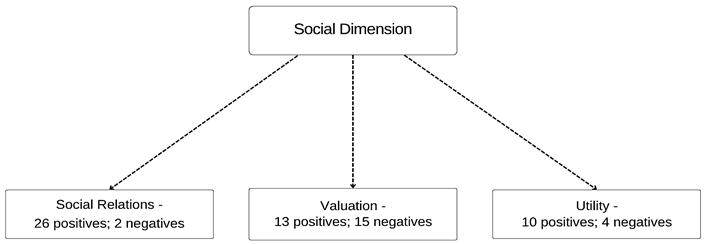
Figure 3.
Social dimension of work – Women in the tattooing profession
Source: Research data.
In the utility context unit, participants’ perceptions of the social utility of tattooing proved to be ambiguous. While some interviewees recognized that their activity significantly contributes to society, others still face the weight of prejudice and stigma, often stemming from a lack of understanding about the importance and impact of tattoos, which diminishes the perceived social value of their work. Although progress has been made in terms of recognition—particularly from customers and within the profession itself—attitudes remain divided. Of the 14 reports recorded, 10 tattooists considered their work socially contributive, while 4 expressed perceptions of lacking social meaning in what they do.
Some participants directly linked their practice to emotional transformation and self-esteem. Tattooist 03 noted that many people understand tattooing as a form of expression and a means of enhancing self-esteem, whereas Tattooist 02 emphasized that individuals who do not get tattooed may fail to grasp its significance, sometimes still associating it with marginality. In addition, the tattooists highlighted ways in which their practice goes beyond aesthetics, serving a public utility role. Tattooist 08 mentioned that some tattoos are intended to provide medical information, such as blood type, and that partnerships with institutions—such as the Women’s Police Department—demonstrate the recognized social relevance of tattooing. Not only do these initiatives promote processes of re-signification and empowerment, but they also reveal the capacity of tattooists’ work to contribute to individual well-being and safety, as well as to engage in social causes. As Morin (2001) suggests, meaningful work is what contributes to others and to the collective.
Regarding recognition, the findings reveal an ambivalence between social acknowledgment and invisibility of tattoo artists’ work. Analysis of this context unit identified 28 occurrences, of which 15 reflected an absence of recognition or appreciation from society, while the remaining 13 expressed positive perceptions indicating social recognition and appreciation of the profession. Responses revealed a dichotomy in perceptions of social recognition: some reported positive and increasing recognition—especially among clients and in specific contexts—while others described ongoing challenges related to stigma and lack of understanding of the profession’s value. Tattooist 02 stressed that ingrained sexism in society means women must make greater efforts to be recognized, often having to face additional barriers compared to their male colleagues—findings that align with Araújo et al. (2022).
This perspective was echoed by Tattooist 05, who, despite acknowledging that tattooing is becoming more popular, still observed that female tattooists must fight for recognition and respect in a historically male-dominated field. Similarly, participants’ experiences show that even as recognition grows, prejudices and stigmas persist, as highlighted by Tattooist 11, who pointed to the need for greater appreciation of women in the profession. This ambivalence reflects an ongoing struggle for recognition and equality, illustrating that the social valuation of tattooists’ work remains an evolving issue. Here, the meaning of work is anchored both in the practice itself and in the fight for recognition, echoing Adams’ (2009) argument that work is socially meaningful when it enables the worker to be recognized as an active and competent subject both inside and outside their profession.
Concerning interpersonal relations outside the workplace, participants reported diverse experiences. The majority (26 accounts) indicated positive experiences, describing a welcoming social environment marked by recognition and acceptance of the profession within their social circles, contributing to the construction of work meaning. Less frequently, 2 occurrences expressed perceptions of discrimination or differential treatment due to tattooing as a profession.
Tattooists reported a range of experiences regarding social acceptance of their work. Tattooist 02, for example, shared a perception of discrimination: “Everyone knows. It’s my livelihood, it’s what I love to do, I’m not hurting anyone. […] Negatively, maybe it’s more about underestimating me.” This reflects a challenge faced by some professionals, who feel their work is undervalued or misunderstood. In contrast, Tattooist 03 stated: “Yes, they know. […] Some people change their attitude when they learn I’m a tattoo artist . Sometimes they get curious, which is nice, but when it’s negative, I don’t really care (though it happens).” This example suggests that, although curiosity and acceptance exist, moments of resistance or prejudice remain.
Regarding social acceptance, Tattooist 06 remarked: “Yes, everyone who knows me is aware. […] No, I think because of the circle I’m in. But I don’t usually worry about it,” pointing to a favorable social context for her profession. Similarly, Tattooist 07 noted: “Yes. Everyone knows. I’ve never felt I was treated differently for being a tattooist; I’m always in the same circles, with the same people, so I’ve never felt that happen.” This sense of acceptance was reinforced by Tattooist 09: “Yes, everyone is aware. […] What’s different is sometimes people treat me well when they find out I’m a tattoo artist.” These examples illustrate that, overall, social acceptance of tattooing contributes to constructing a sense of meaningful work. However, experiences of discrimination and perceptions of an unfavorable social environment, though less frequent, reveal persistent challenges.
The social recognition of the tattooing profession is thus mediated by structural power relations—consistent with Araújo et al. (2022), who claim that female tattooists must continually reaffirm their legitimacy in a traditionally male field. These accounts should not be interpreted as absolute expressions of meaning or its absence, but rather as situated experiences marked by nuances, ambivalences, and tensions. Social relations, in this sense, do not operate unilaterally, and can both reinforce and undermine how work is perceived by these professionals..
| Empirical Findings | Dialogue with the Literature | New Contributions of the Study |
| Identification with the profession reinforces the meaning of work, articulating fulfillment, personal values, and identity construction. | As indicated by Morin (2007), Tolfo and Piccinini (2007), and Rohm and Lopes (2015), who associate meaning with coherence between work and self-perception. | The centrality of this identification in creative professions, where the emotional bond with tattooing precedes formal professionalization. |
| Emotional connection with the practice prevents alienation, making work more conscious and meaningful. | In line with Vilas Boas and Morin (2016) and Rohm and Lopes (2015), who emphasize the role of awareness and subjective involvement in reducing alienation. | Among tattoo artists, this connection is linked to the autonomous choice of profession and the desire for permanence, even in the face of instability. |
| Recognition from clients strengthens the meaning of work and professional self-esteem. | Morin (2004) and Araújo et al. (2022) emphasize external validation as a component of meaning at work. | The central role of recognition in legitimizing tattooing as “real work” in women’s career trajectories.. |
| The pursuit of freedom and the rejection of rigid rules drive the choice to become a tattoo artist, reflecting the desire for coherence between personal values and professional practice. | The choice of non-conventional career paths as a way of constructing meaning is discussed by Antunes (2009), Costa et al. (2022), and Morin (2001), who highlight the role of autonomy in the perception of coherence and purpose. | This research shows that tattooing can be understood as a strategy for affirming professional identity among women who reject traditional forms of labor market integration. |
| Customer satisfaction and the positive impact on their lives confer utility to the work, especially in scar cover-ups. | Oliveira et al. (2004) associate utility with the perception of contributing to others’ well-being. | The study highlights the symbolic and therapeutic value of restorative tattoos, such as scar coverage, revealing an emotional dimension of utility still underexplored. |
| The historically male-dominated tattoo environment poses challenges but generates opportunities for resistance and self-affirmation as well. | Alvesson and Billing (2009), Mifflin (2013), Thompson (2015), and Araújo et al. (2022) discuss gender, work, and resistance. | Tattooing emerges as a space of symbolic dispute, where women reconfigure norms and assert their presence as a political act. |
| The meaning of work is redefined over the career trajectory, especially following career transitions and personal challenges, evidencing the emotional bond with artistic practice. | Schweitzer et al. (2016) and Canholi et al. (2016) address the dynamic nature of work meanings, influenced by emotional experiences, changes in context, and subjective reinvention of work. | The reconfiguration of meaning through personal experiences highlights tattooing as a therapeutic practice and a form of subjective reconstruction for the women interviewed. |
| The informality of the profession allows greater control over schedules and routines but also entails the absence of rights and instability, affecting the sense of security at work. | Antunes (2009) discusses the ambiguities of informality in contemporary work, highlighting its advantages and weaknesses in terms of social protection and recognition. | Informality expands autonomy but intensifies vulnerabilities related to harassment, devaluation, and exclusion from legitimized spaces, highlighting specific aspects that are little explored in studies on creative work. |
| Some tattoo artists report subtle or explicit discrimination in the workplace, being underestimated for being women. Despite the growth of tattooing as a recognized field, stigmas and social resistance persist, affecting women more strongly and impacting professional recognition and legitimacy. | Mifflin (2013), Thompson (2015), and Alvesson and Billing (2009) address gender inequalities in professional settings. | The study identifies the simultaneous presence of inclusion and exclusion within the same workspace, revealing ambivalences rarely explored in the literature. |
| Learning and career advancement in tattooing often occur through self-taught or informal networks, which may limit access to spaces of greater visibility and professional prestige. | Zimmermann (2023) highlights the challenges faced by women in building professional credibility in traditionally male and informalized spaces. | The lack of formal training structures and the competition for visibility reveal specific gender barriers that affect the technical and artistic recognition of women tattoo artists. |
| Tattooing fosters support networks between tattoo artists and clients, creating spaces of care, listening, and mutual trust, especially among women. | Butler (2003) underscores the links between identity, body, and social practices, suggesting that working with the body can constitute forms of resistance and the creation of affective communities. | The creation of networks of support and affection among tattoo artists and clients is highlighted as a form of resistance to hierarchical and exclusionary work models. |
It is important to highlight that the adoption of dichotomous categories throughout the analysis—such as the presence or absence of meaning—was a methodological strategy aimed at organizing the data and facilitating the systematization of the findings. This structure is not intended to exhaustively represent the complexity of the experiences narrated by the participants, nor to reduce the meanings of work to fixed and mutually exclusive poles. On the contrary, the accounts reveal nuances, ambivalences, and contradictions that transcend binary logic. Therefore, the analytical model adopted should be understood as a tool that enables an initial reading of the dimensions investigated, without disregarding the fluid and multifaceted nature of the meanings attributed to work by women tattoo artists
5 CONCLUSIONS
This study aimed to understand the meanings of work for women in the tattooing profession, based on the individual, organizational, and social dimensions proposed in the theoretical model by Morin, Tonelli, and Pliopas (2003/2007). The findings indicate that, for the participants, tattooing is strongly associated with autonomy, artistic expression, and financial stability, while also being marked by challenges such as economic instability and social stigma.
Results show that, in the individual dimension, working as a tattoo artist is linked to personal and ethical values, serving as a source of pleasure, coherence, independence, and fulfillment, despite challenges such as financial instability that, for some, undermine the perception of success. Low levels of alienation and strong identification with artistic practice reinforce the connection between profession and identity. In the organizational dimension, work is valued for its perceived utility by clients and for creative autonomy, yet it still faces prejudice and discrimination. In this regard, the results underscore the importance of work environments that acknowledge gender diversity and foster egalitarian relationships, offering insights for diversity management initiatives and professional training in creative contexts. Thus, tattooing can be understood not only as an aesthetic practice, but also as a form of cultural, artistic, and social intervention, with the potential to engage in public policies related to art, culture, and health.
The findings of this study are specific to the contexts in which the tattoo artists operate: half work in tattoo studios, while the other half work in private studios in the city of Fortaleza. The research focused on a specific group of tattoo artists, limiting the generalizability of the conclusions to other contexts. The analysis revealed a certain homogeneity in the responses, suggesting a shared perspective among participants. This pattern may be related to the concentration of participants in similar contexts and shared professional experiences. Although no significant differences were identified in relation to length of professional experience, the consistency of responses offers a cohesive picture, but also limits deeper exploration of individual variations. Future studies could compare the dimensions and meanings of work across creative professions involving direct public interaction, enabling a broader analysis of perceptions in different professional configurations. Moreover, examining how the meaning of work manifests in male-dominated professions, such as engineering and technology, could shed light on the influence of gender and organizational factors on professional experiences, thereby expanding understanding of the dynamics and valuation of work in diverse contexts.
Among the theoretical contributions of this study is the extension of Morin’s (2003/2007) model to artistic and informal contexts, demonstrating its applicability to non-traditional organizational settings. Furthermore, the results highlight gender as a structuring category of the meanings of work, revealing how experiences of autonomy, symbolic recognition, and stigma management are shaped by social markers. This perspective contributes to contemporary debates on gender and work—especially within creative professions still underexplored in the literature—while recognizing the limits of an exclusively binary approach.
Additionally, comparative investigations between female and male tattoo artists would be pertinent to gain deeper insight into the role of gender in constructing the meanings of work in creative contexts. It is equally relevant to include individuals of diverse gender identities, such as trans and non-binary people, whose work experiences remain largely invisible in academic research, yet may reveal alternative ways of challenging, reframing, or expanding the meanings attributed to work. Furthermore, extending such studies to other creative and informal professions with a strong aesthetic component—such as artistic makeup, signature gastronomy, or independent fashion—may contribute to greater theoretical and empirical diversification on the topic.
In conclusion, this study revealed that, for most participants, the tattooing profession provides a sense of personal fulfillment and autonomy, qualities that enhance its appeal for those seeking to express creativity independently. However, despite these benefits, significant challenges persist, particularly regarding the social stigma associated with tattooing and the lack of recognition of the practice as a profession. In many cases, tattoo artists continue to face prejudice in both personal and professional spheres, directly affecting their value in the labor market and in society. This finding reinforces the need for actions aimed at strengthening the profession within the scope of public policies, aesthetic education, and the creative economy. In this sense, the research emphasizes the importance of promoting awareness of tattooing as a legitimate form of art and cultural expression, underscoring the need for initiatives that strengthen its social and professional recognition—both in the artistic and economic fields—thus expanding the visibility and respect for the profession.
REFERENCES
Adams, J. (2009). Marked difference: Tattooing and its association with deviance in the United States. Deviant Behavior, 30, 266–292. https://doi.otg/10.1080/01639620802168817
Adams, J. (2012) Cleaning up the dirty work: Professionalization and the management of stigma in the cosmetic surgery and tattoo industries. Deviant Behavior, 33(3), 149-167. https://doi.org/10.1080/01639625.2010.548297
Alexandrino, T. N. B., Zluhan, M. R., & Corrêa, S. S. (2025). Sentidos ambivalentes atribuídos pelos professores ao trabalho docente. Revista on Line de Política e Gestão Educacional, 29, e025012. https://doi.org/10.22633/rpge.v29i00.20286
Alvesson, M., & Billing, Y. D. (2009) Understanding Gender and Organizations. London: Sage.
Antunes, R. (1999). Os sentidos do trabalho: Ensaio sobre a afirmação e a negação do trabalho. São Paulo, SP: Boitempo Editorial.
Antunes, R. (2006). Adeus ao trabalho? Ensaio sobre as metamorfoses e a centralidade do mundo do trabalho. São Paulo, SP: Cortez.
Araújo, R. A., Catrib, I. C., Paiva, L. E. B., & Lima, T. C. B. (2022) Cadê o tatuador? Construção da identidade profissional e estigma de mulheres na profissão tatuadora. Gestão & Regionalidade, 38(114), 41-62. https://doi.org/10.13037/gr.vol38n114.7497
Blanco, R. (2019). Mujer, género, queer: Un vocabulario reciente para las ciencias sociales locales. In M. Casarín & P. Arán (Eds.), Ciencias sociales: Balance y perspectivas desde América Latina (pp. 55–74). Centro de Estudios Avanzados. https://doi.org/10.2307/j.ctv31vqp9q.7
Butler, J. (2018). Problemas de gênero: Feminismo e subversão da identidade. 16. ed. Civilização Brasileira.
Canholi, C., Junior, Lima, T. C. B., Lima, M. A. M., & Viana, L. M. M. (2016) Sentidos do trabalho para trabalhadores do saneamento básico. EnANPAD XXVIII Encontro da ANPAD – Associação Nacional de Pós-Graduação e Pesquisa em Administração. Curitiba, Paraná.
Costa, S. D. M., & Vieira, M. K. C. (2024). Sentidos do Trabalho: Itinerários de Pesquisas em uma Revisão Sistemática da Literatura. Revista Gestão & Conexões, 13(3), 204-204. https://doi.org/10.47456/regec.2317-5087.2024.13.3.43643.204.224
Costa, S. D. M., Paiva, K. C. M. P., & Rodrigues, A. L. (2022). Sentidos do trabalho: possibilidades de diálogos entre Estelle Morin e Ricardo Antunes? Revista Gestão e Planejamento, 23, 573–588. https://doi.org/10.53706/gep.v.23.7248
Dall'Bello, C. (2019) Vida e sentidos na perspectiva de Viktor Frankl: Um estudo sobre o sentido da vida e do trabalho na atualidade. Dissertação (Mestrado em Envelhecimento Humano) - Universidade de Passo Fundo, Passo Fundo, RS. http://tede.upf.br:8080/jspui/handle/tede/1889
Degelman, D., & Price, N.D. (2002). Tattoos and ratings of personal characteristics. Psychological Reports, 90, 507–514. https://doi.org/10.2466/pr0.2002.90.2.507
Duan, J., Wang, X., Liu, Y., & Han, L. (2024). Linking paternalistic leadership to employee creativity: A meaning-based perspective. Leadership & Organization Development Journal, 45 (2), 283-303. https://doi.org/10.1108/LODJ-11-2021-0497
Ferraz, D. L. S., & Fernandes, P. C. M. (2019). Desvendando os sentidos do trabalho: Limites, potencialidades e agenda de pesquisa. Cadernos de Psicologia Social do Trabalho, 22(2), 165-184. https://doi.org/10.11606/issn.1981-0490.v22i2p165-184
Ferreira, S. (2023). A análise de conteúdo: Um método para a análise de dados em pesquisas qualitativas. Revista Pesquisa Qualitativa, 11(26), 202–224. https://doi.org/10.33361/RPQ.2023.v.11.n.26.502
Fontana, C. P. (2021). A evolução do trabalho: Da pré-história até ao teletrabalho. Revista Ibero-Americana de Humanidades, Ciências e Educação, 7(7), 1155–1168. https://doi.org/10.51891/rease.v7i7.1759
Frankl, E. (2018) Psicoterapia para todos. 3. ed. Petrópolis: Vozes.
Galvão, A. A., Casa Nova, S. P. C., & Círico, J. (2025). Pessoas não-binárias no mercado de trabalho: Uma revisão integrativa da literatura. Revista Catarinense de Ciências Contábeis, 24, 1-22. https://doi.org/10.16930/2237-766220253618
Hennink M., & Kaiser, B. N. (2022). Sample sizes for saturation in qualitative research: A systematic review of empirical tests. Social Science & Medicine, 292, e114523. https://doi.org/10.1016/j.socscimed.2021.114523
Hidayat, S., Eliyana, A., Pratama, A. S., Emur, A. P., & Nugraha, B. K. (2023) Building creativity in the television industry: The mediating role of meaning of work. Problems and Perspectives in Management, 21(2), 347-355. https://doi.org/10.21511/ppm.21(2).2023.34
Hu, J., & Zhang, T. H. (2024) National unemployment rates and the meaning of work: A cross-level examination. European Journal of Work and Organizational Psychology, 1-14, 2024. https://doi.org/10.1080/1359432X.2024.2323221
Kluger, N. (2015) Tatoués, qui êtes-vous? Caractéristiques démographiques et comportementales des personnes tatouées. Annales de Dermatologie et de Vénéréologie. Elsevier Masson. 410-420. https://doi.org/10.1016/j.annder.2015.03.014
Letona-Ibañez, O., Martinez-Rodriguez, S., Ortiz-Marques, N., Carrasco, M., & Amillano, A. (2021). Job crafting and work engagement: The mediating role of work meaning. International Journal of Environmental Research and Public Health, 18(10), 5383. https://doi.org/10.3390/ijerph18105383
Martins, B. V., & Oliveira, S. R. (2017). Qualificação profissional, mercado de trabalho e mobilidade social: Cursos superiores de tecnologia. Sociedade, Contabilidade e Gestão, 12(2), 21-45. https://doi.org/10.21446/scg_ufrj.v12i2.13404
Mata, V. A. (2022). O trabalho em Hegel e Marx: Formação e deformação do humano. Cadernos do GPOSSHE On-line, 6(2). https://doi.org/10.33241/cadernosdogposshe.v6i2.9336 .
Mattos, F. A. M. (2015) Avanços e dificuldades para o mercado de trabalho. Estudos avançados, 69-85. https://doi.org/10.1590/S0103-40142015008500006
Mifflin, M. (2013). Bodies of Subversion: A Secret History of Women and Tattoo. Seal Press.
Moraes, L. S. (2021). O homem e a ocupação: uma discussão acerca da relação do homem com o trabalho. In J. C. P. Souza, D. R. C. Cavalcante & S. C. G. Figueiredo (Orgs.). A saúde mental em discussão: volume 1 (pp. 115-130). Belo Horizonte: Poisson. https://doi.org/10.36229/978-65-5866-086-6.CAP.07
Morin, E. M. (2001). Os sentidos do trabalho. RAE - Revista de Administração de Empresas, 41(3), 08-19. https://doi.org/10.1590/S0034-75902001000300002
Morin, E. M. (2004). The meaning of work in modern times. Conference: 10th World Congress on Human Resources Management, Rio de Janeiro, Brazil.
Morin, E. M., Tonelli, M. J., & Pliopas, A. L. V. (2007). O trabalho e seus sentidos. Psicologia & Sociedade, 19(1), 47-56. https://doi.org/10.1590/S0102-71822007000400008
Morin, E., Tonelli, M. J., & Pliopas, A. L. V. (2003). O trabalho e seus sentidos. In.: Encontro Nacional de Programas de Pós-Graduação em Administração, 27, 2003, Atibaia.
Neves, D. R., Nascimento, R. P., Felix, M. S., Jr., Silva, F. A., & Andrade, R. O. B. (2018). Sentido e significado do trabalho: Uma análise dos artigos publicados em periódicos associados à Scientific Periodicals Electronic Library. Cadernos EBAPE.BR, 16(2), 318–330. https://doi.org/10.1590/1679-395159388
Oliveira, R. C. A. A., & Moura, R. G. (2021). Profession: Female tattoo artist - Workers in an Eminently Male World (and Market). Revista FSA - Revistas do Centro Universitário Santo Agostinho, 18(6), 1-12. https://doi.org/10.12819/2021.18.6.2
Oliveira, S. R., Piccinini, V. C., Fontoura, D. S., & Schweig, C. (2004). Buscando o sentido do trabalho. In: Anais do XXVIII Encontro da Associação Nacional de Pós-Graduação e Pesquisa em Administração. Porto Alegre, RS, ANPAD.
Pereira, J. R., Paiva, K. C., & Irigaray, H. A. (2021). “Trabalho sujo”, significado, sentido e identidade: Proposição de análise integrada e perspectivas de pesquisas. Cadernos EBAPE.BR, 19(4), 829-841. https://doi.org/10.1590/1679-395120210167
Peres, V. L. A. (2019) Qualitative research and subjectivity: The construction of information processes. Rev. Bras. Psicodrama, 27(1), 132-135. https://doi.org/10.15329/0104-5393.20190016
Peterson, J. B. (2018) 12 regras para a vida: um antídoto para o caos. Rio de Janeiro: Alta Books.
Piccinini, V. et al. (2004) Buscando o sentido do trabalho. Relatório de Pesquisa. Porto Alegre: UFRGS/CNPq.
Rodrigues, A. L., Barrichello, A., & Morin, E. M. (2016). Os sentidos do trabalho para profissionais de enfermagem: Um estudo multimétodos. Revista de Administração de Empresas, 56(2), 192-208. https://doi.org/10.1590/S0034-759020160202
Rohm, R. H. D., & Lopes, N. F. (2015) O novo sentido do trabalho para o sujeito pós-moderno: uma abordagem crítica. Cadernos EBAPE.BR, 13(2), 332-345. https://doi.org/10.1590/1679-395117179
Sá, J. G. S., Lemos, A. H. C., & Oliveira, L. B. (2022). Para além dos estereótipos: Os sentidos do trabalho para mulheres da Polícia Militar do Estado do Rio de Janeiro. Cadernos EBAPE.BR, 20(4), 1-14. https:// doi.org/10.1590/1679-395120210109
Schlösser, A., Giacomozzi, A. I., Camargo, B. V., Silva, E. Z. P. D., & Xavier, M. (2020) Tattooed and non-tattooed women: Motivation, social practices and risk behavior. Psico-USF, 25(1), 51-62. https://doi.org/10.1590/1413-82712020250105
Schweitzer, L., Gonçalves, J., Tolfo, R. S., & Silva, N. (2016). Bases epistemológicas sobre sentido(s) e significado(s) do trabalho em estudos nacionais. Revista Psicologia Organizações e Trabalho, 16(1), 103-116. https://doi.org/10.17652/rpot/2016.1.680.
Silva, F. B., & Berrá, L. (2018) Desafios das mulheres em cargos de liderança. Revista Destaque Acadêmico, 10(1), 166-185. https://doi.org/10.22410/issn.2176-3070.v10i1a2018.1750
Siqueira, D. P., & Samparo, A. J. F. (2017) Os direitos da mulher no mercado de trabalho: Da discriminação de gênero à luta pela igualdade. Revista Direito em Debate, 26(48), 287-325. https://doi.org/10.21527/2176-6622.2017.48.287-325
Thompson, B. Y. (2015) Covered in ink: Tattoos, women and the politics of the body. NYU Press. https:/doi.org/10.18574/nyu/9780814760000.001.0001
Thompson, B. Y. (2019) Women covered in ink: tattoo collecting as serious leisure. International Journal of the Sociology of Leisure, 2(3), 285-299. https://doi.org/10.1007/s41978-018-00027-7
Tolfo; R., & Piccinini, V. (2007) Sentidos e significados do trabalho: Explorando conceitos, variáveis e estudos empíricos brasileiros. Psicologia & Sociedade, 19(spe.1), 38-46. https://doi.org/10.1590/S0102-71822007000400007
Veschi, B. (2019) Etimologia de trabalho. Portal Etimologia.https://etimologia.com.br/trabalho
Vilas Boas, A. A., & Morin, E. M. (2016) Indicadores de qualidade de vida no trabalho para professores de instituições públicas de ensino superior: Uma comparação entre Brasil e Canadá. Contextus - Revista Contemporânea de Economia e Gestão, 14(2), 170-199. https://doi.org/10.19094/contextus.2023.88623
Zhang, Z., & Xie, J. (2024) How and when does boundary spanning behavior influence employees’ creative performance? The roles of meaning of work and team Chaxu climate. Current Psychology, 43, 1–11. https://doi.org/10.1007/s12144-024-05911-y
Zimmermann, L. S. (2023). El rol de las epistemologías feministas y trans* en la deconstrucción de la ciencia androcéntrica y [cis]sexista. Ciencia Política, 18(35), 61–91. https://doi.org/10.15446/cp.v18n35.104940
Información adicional
redalyc-journal-id: 5707