2025
23
17042025
26072025
 Valéria Gonçalves Vieira goncalvesvieira.valeria@gmail.com
 Luiza Reis Teixeira luizareisteixeira@gmail.com
Fernando Antonio de Melo Pereira Lhamas fernando.melo@ufba.br
Abstract:
Background: Social entrepreneurship has gained prominence as an innovative strategy for addressing complex social challenges through purpose-driven initiatives and measurable social impact. Despite growing academic interest, gaps remain in understanding its defining characteristics and how these manifest across different levels.
Purpose: This study aims to describe the structural elements that characterize social entrepreneurship at the individual, organizational, and institutional levels, synthesizing findings from the academic literature and identifying how these elements are expressed at each level.
Method: A systematic literature review was conducted following the PRISMA 2020 protocol. The search was performed in the Web of Science and Scopus databases. Data were analyzed using Descending Hierarchical Classification with the IRaMuTeQ software, enabling the identification of lexical patterns and thematic categories.
Results: At the individual level, key traits and competencies of social entrepreneurs include empathy, persistence, moral obligation, compassionate love, and leadership grounded in transparency and integrity. At the organizational level, the alignment of mission and strategy, social impact measurement, and hybrid models that balance social and economic goals are central to performance. At the institutional level, social entrepreneurship is shaped by public policies, inter-institutional arrangements, and social capital, while also having the potential to transform institutional structures and drive systemic change.
Conclusions: Achieving the goals of social entrepreneurship requires the interplay of individual competencies, organizational practices, and institutional influences. By synthesizing previously fragmented knowledge, this study provides a structured understanding of the research streams and analytical categories that define the field, offering valuable insights for researchers, practitioners, and institutional players.
Keywords: multilevel analysis, social entrepreneurship, PRISMA 2020, IRaMuTeQ, systematic review.
Resumo:
Contextualização: O empreendedorismo social tem ganhado destaque como uma estratégia inovadora para enfrentar problemas sociais complexos, por meio de iniciativas orientadas por propósito e impacto social. Apesar do interesse crescente pela temática, ainda existem lacunas quanto à compreensão das suas características e de como elas se expressam em diferentes níveis.
Objetivo: Descrever os elementos estruturais que caracterizam o empreendedorismo social nos níveis individual, organizacional e institucional, a partir da síntese dos achados da literatura acadêmica, considerando suas formas de manifestação em cada nível.
Método: Pesquisa bibliográfica por meio de revisão sistemática, conduzida com base no protocolo PRISMA 2020. A busca foi realizada nas bases Web of Science e Scopus. Para análise dos dados, utilizou-se a Classificação Hierárquica Descendente por meio do software IRaMuTeQ, permitindo a identificação de padrões lexicais e categorias temáticas.
Resultados: No nível individual, destacam-se competências e traços específicos que impulsionam o empreendedor social, como empatia, persistência, obrigação moral e amor compassivo, além de habilidades de liderança pautadas na transparência e integridade. No nível organizacional, se sobressaem a integração entre missão e estratégia, a mensuração de impacto social, e a articulação de modelos que conciliem impacto social e sustentabilidade econômica, como fatores centrais para o desempenho das iniciativas. No nível institucional, o empreendedorismo social é influenciado por políticas públicas, arranjos interinstitucionais, e capital social, tendo também potencial de transformar estruturas institucionais e promover mudanças sociais.
Conclusões: O alcance dos objetivos do empreendedorismo social pressupõe a interação entre competências individuais, aplicadas em práticas organizacionais, as quais são, por sua vez, influenciadas e potencializadas pelo contexto institucional. Ao sintetizar conhecimentos anteriormente dispersos, este estudo oferece uma compreensão estruturada dos fluxos de pesquisa e das categorias analíticas que definem o campo do empreendedorismo social, com potencial para orientar pesquisadores, executores e atores institucionais.
Palavras-chave: análise multinível, empreendedorismo social, PRISMA 2020, IRaMuTeQ, revisão sistemática.
Resumen:
Contextualización: El emprendimiento social ha cobrado relevancia como estrategia innovadora para enfrentar problemas sociales complejos mediante iniciativas orientadas por propósito e impacto social. A pesar del creciente interés, persisten lagunas en la comprensión de sus características y de cómo se expresan en diferentes niveles.
Objetivo: Describir los elementos estructurales que caracterizan el emprendimiento social a nivel individual, organizacional e institucional, a partir de la síntesis de hallazgos de la literatura académica, considerando sus formas de manifestación en cada nivel.
Método: Investigación bibliográfica mediante revisión sistemática, realizada según el protocolo PRISMA 2020. La búsqueda se efectuó en Web of Science y Scopus. Para el análisis, se aplicó la Clasificación Jerárquica Descendente con el software IRaMuTeQ, lo que permitió identificar patrones léxicos y categorías temáticas.
Resultados: A nivel individual, se destacan competencias y rasgos que impulsan al emprendedor social, como empatía, persistencia, obligación moral y amor compasivo, junto con habilidades de liderazgo basadas en transparencia e integridad. A nivel organizacional, sobresalen la integración entre misión y estrategia, la medición del impacto social y la articulación de modelos que concilien impacto social y sostenibilidad económica. A nivel institucional, el emprendimiento social está influido por políticas públicas, acuerdos interinstitucionales y capital social, además de tener potencial para transformar estructuras y promover cambios sociales.
Conclusiones: El logro de los objetivos del emprendimiento social presupone la interacción entre competencias individuales, aplicadas en prácticas organizativas, las cuales están influenciadas y potenciadas por el contexto institucional. Al sintetizar conocimientos previamente dispersos, este estudio ofrece una visión estructurada de los flujos de investigación y categorías analíticas que definen el campo, con potencial para orientar a investigadores, ejecutores y actores institucionales.
Palabras clave: análisis multinivel, emprendimiento social, PRISMA 2020, IRaMuTeQ, revisión sistemática.
Structure of social entrepreneurship: Multilevel analysis of its characteristics in scientific literature
Estrutura do empreendedorismo social: Multinível Análise de suas características na literatura científica
Estrutura do empreendedorismo social: Análise Multinível de suas características em o Literatura científica
Valéria Gonçalves Vieira goncalvesvieira.valeria@gmail.com
Luiza Reis Teixeira luizareisteixeira@gmail.com
Fernando Antonio de Melo Pereira Lhamas fernando.melo@ufba.br

Recepción: 17 Abril 2025
Aprobación: 26 Julio 2025
Publicación: 10 Septiembre 2025
Social entrepreneurship is characterized by a series of stages through which entrepreneurs create social value by combining resources in innovative ways to promote societal change (Chui et al., 2023; Lam-Lam et al., 2019). Within this context, social entrepreneurship seeks to develop solutions that generate positive social impact, directly contributing to the improvement of people’s living conditions (Ramírez & Zarazúa, 2021).
The recognition of social entrepreneurship as a tool for addressing social and environmental issues has contributed to its widespread diffusion (Kamaludin et al., 2024). Furthermore, the rise of social entrepreneurship has been attributed to the growing relevance of social issues for businesses (Battilana et al., 2017) and to the need to address significant gaps left by traditional organizations and the State, which often fail to meet the demand for social services (McMullen & Bergman Jr., 2017; Santos, 2012).
The goal of solving social problems finds its main agent in the social entrepreneur, as it is through their motivation that the desired social outcomes are achieved (Dacin et al., 2010). Accordingly, conceptualizations of the field predominantly involve aspects such as social value, innovation, creative actions, social problems, and social transformation (López et al., 2022), all of which are driven by individuals with pro-social traits such as positive social motivation, moral authority, and ethical behavior (Dees, 1998).
Although social entrepreneurship has attracted interest across various disciplines, it still lacks a universal definition, remaining a broad and multidisciplinary concept that bridges fields such as sociology, economics, ethics, and entrepreneurship (Klarin & Suseno, 2023; Wang et al., 2024; Saebi et al., 2019). This conceptual diversity results in a multiplicity of theoretical foundations and a wide range of topics explored in studies on the subject (Turner et al., 2014).
In this regard, Lehner and Kansikas (2013) highlight the need for a paradigmatic shift in social entrepreneurship research toward a more integrated understanding of the phenomenon, with reduced conceptual dispersion and more structured theoretical advancement. One strategy to address this challenge, as suggested by Saebi et al. (2019), is the adoption of a multilevel analysis that integrates the individual, organizational, and institutional dimensions of the phenomenon. This proposal aligns with the typology of Cukier et al. (2011), which organizes social entrepreneurship into three levels of analysis: the micro level, encompassing entrepreneurs’ characteristics and motivations (Turner et al., 2014; Saebi et al., 2019); the meso level, focused on the processes and structures of social initiatives; and the macro level, addressing interactions with the institutional environment and the systemic impacts of entrepreneurial action.
Considering this analytical structure, this article seeks to answer the following question: How does the scientific literature describe the structural elements of social entrepreneurship at the individual, organizational, and institutional levels, considering their forms of manifestation and interconnections? The aim is to describe the structural elements that characterize social entrepreneurship at these three levels, based on a synthesis of findings from the academic literature, considering their manifestations at each level, in order to contribute to the theoretical foundations of the field by providing a more comprehensive and integrated understanding of the phenomenon.
Although there are several review studies on the topic, few have sought to synthesize the established research streams in the field of social entrepreneurship (Klarin & Suseno, 2023). This study contributes to addressing this gap, not only by synthesizing existing findings but also by proposing a new perspective for interpreting the phenomenon through a multilevel lens. This approach is expected to contribute to the advancement of the field, since, as Saebi et al. (2019) point out, social entrepreneurship research often focuses on a single level of analysis, which can distort understanding of the phenomenon and limit knowledge development by disregarding its inherently multilevel nature.
To achieve the proposed research objective, a systematic literature review was conducted following the criteria established by the PRISMA 2020 protocol (Preferred Reporting Items for Systematic Reviews and Meta-Analyses), a set of guidelines designed to ensure methodological rigor and transparency in the conduct and reporting of systematic reviews and meta-analyses (Rethlefsen et al., 2021). Guided by this protocol, the review was structured according to the components described below:
(i) Data sources and search strategy: A bibliographic search was carried out in the Web of Science and Scopus databases, selected for their extensive coverage of peer-reviewed literature at the international level. The search included all articles published up to December 2024. To ensure the retrieval of publications addressing the characteristics of social entrepreneurship in alignment with the research objective, the following search criteria were applied: the presence in the title of at least one of the following descriptors: "social entrepreneurship" AND characteristics, OR "social entrepreneurship" AND processes, OR "social entrepreneurship" AND impact. These descriptors were chosen for their comprehensiveness and relevance in capturing the interaction among different levels of analysis.
(ii) Eligibility criteria: Prior to initiating the selection process, the information extracted from the databases such as titles, abstracts, keywords, and other relevant metadata was organized in an Excel spreadsheet, and duplicate records were removed. An initial screening of titles and abstracts was then performed to assess alignment with the study objective. Following this stage, the articles deemed eligible were examined in full to determine their inclusion. To address the specific research question, all studies that did not describe and/or examine the social entrepreneurial process and its characteristics at least one level of analysis, as well as those without full-text access, were excluded.
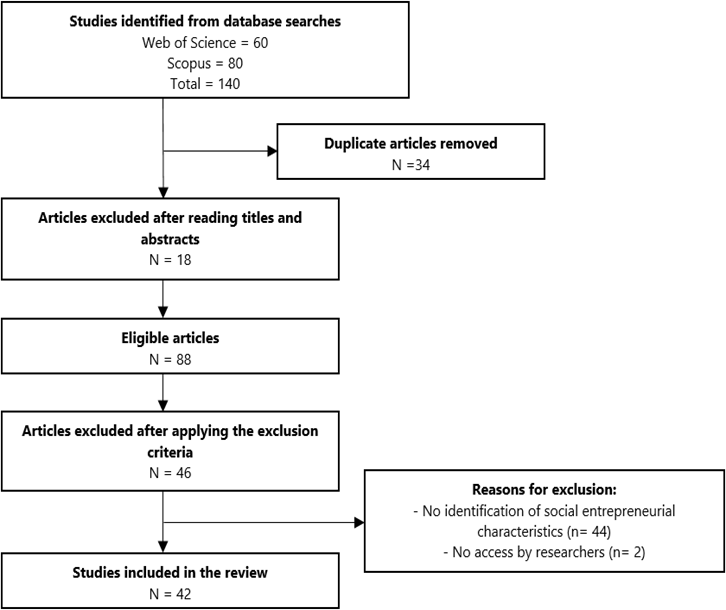
(iii) Corpus of analysis: The initial search yielded 140 articles when combining the results from both databases (Web of Science and Scopus). After removing 34 duplicates, 106 articles remained for screening. Of these, 18 were excluded during title and abstract review for not addressing aspects relevant to the research question. Consequently, 88 articles were considered eligible for full evaluation regarding their relevance and adherence to the research objective. In this process, 46 articles were excluded, 44 for not identifying social entrepreneurial characteristics at any level of analysis, and 2 due to lack of full-text access.
To facilitate understanding of the methodological process, Figure 1 presents the flow diagram outlining the steps followed in conducting the systematic review.
The analysis of the results was conducted in two stages. In the first stage, an overview of the data was presented, including the publication periods, the geographical distribution of the investigated contexts, and the methodological approaches adopted in the studies. In the second stage, a lexical analysis was performed on the textual corpus composed of the titles, abstracts, and keywords of the selected articles, using the Descending Hierarchical Classification (DHC) technique. For these analyses, the data were processed with the aid of the IRaMuTeQ software, which stands for Interface de R pour les Analyses Multidimensionnelles de Textes et de Questionnaires (Camargo & Justo, 2013). This open-source software is linked to the R statistical environment and programmed in Python (Ratinaud, 2018). The use of analytical tools such as IRaMuTeQ has the potential to enhance methodological robustness, minimize biases, and provide more consistent research findings (Ratinaud, 2018).
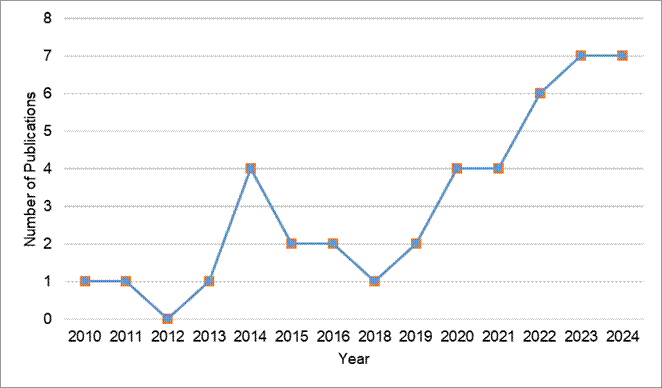
The analysis of the articles covers a period of 14 years (2010–2024), with a higher concentration of publications between 2020 and 2024 (Figure 2), reflecting changes in global social demands such as climate change, the COVID-19 pandemic, and armed conflicts. In this context, social entrepreneurship has emerged as a relevant approach to mitigating crises and rebuilding communities (Sharma & Rastogi, 2022), which may explain the growing research interest in the topic.
The studies present geographical diversity, with Asia leading in the number of publications (12), particularly in countries such as China, India, and Pakistan. Europe appears next, with six studies distributed across different regions, ranging from Nordic countries to southern nations such as Portugal and Italy. Africa and Latin America each account for five studies, reflecting interest in emerging contexts such as Colombia and Nigeria. North America has three studies, all concentrated in the United States. Additionally, four studies were classified as global in scope, analyzing multiple regions. Two studies did not specify a geographical location, while five were based on literature reviews and conceptual analyses.
In the analyzed context, differences were observed between developed and developing countries in the study of social entrepreneurship characteristics. In general, developed countries prioritize analyses of long-term and replicable models (Bacq & Eddleston, 2018; Christopoulos et al., 2024; Perrini et al., 2010), aiming to expand social impact in contexts with high institutional structuring. In developing countries, research emphasizes the potential of social entrepreneurship to address structural problems typical of these contexts (Ciruela-Lorenzo et al., 2020; Maseno & Wanyoike, 2020; Rosca et al., 2020).
From a methodological perspective, the articles comprising the analytical base of this review adopted quantitative (18) and qualitative (18) research approaches in equal proportion. Quantitative studies focused on measuring impact, evaluating institutional factors, and analyzing relationships between variables. Qualitative approaches relied on interviews, case studies, and descriptive analyses to deepen the understanding of the phenomenon. In addition, two studies employed a mixed-methods approach, combining quantitative and qualitative techniques. Four literature reviews and syntheses were also identified, highlighting conceptual frameworks and gaps in the field.
3.2 Lexical analysis and Descending Hierarchical Classification (DHC) of the textual corpus
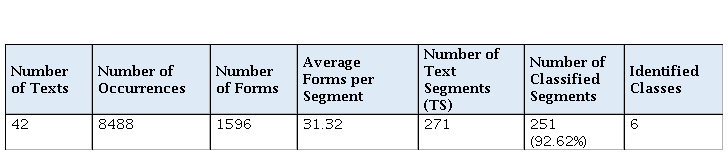
The analysis of the textual corpus, composed of the 42 selected articles, resulted in 271 text segments (TS). Of these, 251 were considered valid for analysis, representing 92.62% of the total corpus. This percentage is well above the minimum threshold of 70% recommended by Camargo and Justo (2013), ensuring the reliability of the results obtained. In the analyzed corpus, 8,488 word occurrences were identified, distributed across 1,596 distinct forms, resulting in an average frequency of 31.32 forms per segment. Table 1 presents a summary of the results obtained from the lexical analysis.
The analysis produced six main classes, representing the predominant thematic categories in the corpus. These classes reflect the most relevant lexical and semantic patterns for the study’s objective, enabling a detailed understanding of the topics addressed in the texts. Through the Descending Hierarchical Classification (DHC) technique, it was possible to identify the distribution and organization of these classes, based on word co-occurrence and textual segmentation.
For the descriptive analysis of the vocabulary in each class, the criterion proposed by Camargo and Justo (2013) was adopted, recommending the selection of words with a chi-square (χ²) value of association with the class equal to or greater than 3.84, ensuring a statistical significance level of p < 0.05. This criterion ensures the selection of terms with a strong association to the analyzed classes. Figure 3 presents the dendrogram resulting from the DHC analysis, detailing the relationships between the identified classes and their respective contents. The dendrogram data are in English due to the original language of the articles analyzed.
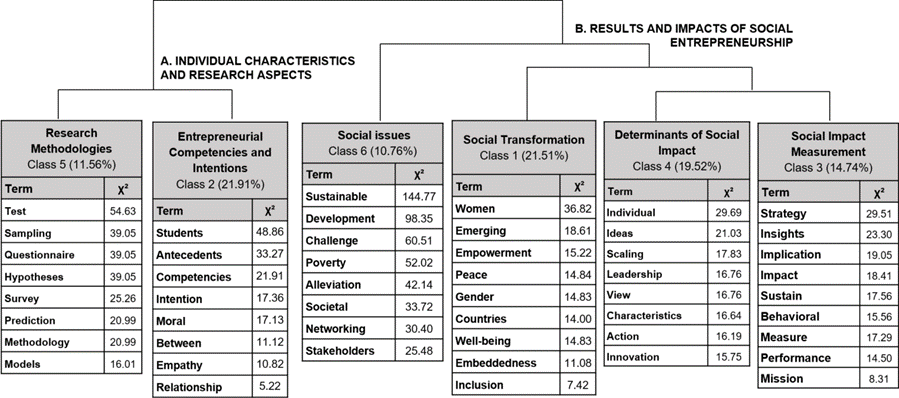
The dendrogram divides the corpus into six classes that are hierarchically connected. At the broadest level, it represents the set of elements that characterize social entrepreneurship, which is divided into two thematic axes: (a) Individual Characteristics and Research Aspects and (b) Results and Impacts of Social Entrepreneurship. These will be detailed in the following sections.
The thematic axis (a) Individual Characteristics and Research Aspects comprises Classes 5 and 2, titled Research Methodologies and Entrepreneurial Competencies and Intentions, respectively, which are directly connected. This axis addresses the methodological foundations guiding the analyzed studies, as well as the individual characteristics of social entrepreneurs.
Class 5 – Research Methodologies accounts for 11.55% of the analyzed text segments, with emphasis on terms such as Test, Sampling, Questionnaire, Hypotheses, and Survey, indicating progress in the use of quantitative methodologies for validating the characteristics of social entrepreneurship. This scenario suggests an evolution in the field, as earlier studies, such as those by Capella-Peris et al. (2018), Kannampuzha and Hockerts (2019), and Short et al. (2009), highlighted the predominance of conceptual approaches and the limited application of validated scales. More recent works, such as Xiabao et al. (2022) and Zulkefly et al. (2022), demonstrate the use of advanced tools, including structural equation modeling and predictive models based on machine learning, to investigate relationships between variables and validate interventions. Other studies have also employed statistical techniques, questionnaires, and robust samples to characterize social entrepreneurship and seek generalization of results (Arejiogbe et al., 2023; Assaf, 2024; Bacq & Eddleston, 2018; Kedmenec et al., 2015; Kelly et al., 2022; Sezen-Gultekin & Gur-Erdogan, 2016; Sukumar et al., 2022).
Class 2 – Entrepreneurial Competencies and Intentions encompasses 21.90% of the analyzed text segments and reflects individual characteristics that define the behavior of social entrepreneurs. Terms such as Antecedents, Competencies, Intention, Moral, Empathy, Between, and Relationship highlight the focus on personal and contextual variables that influence social entrepreneurial behavior.
In this regard, Yunfeng et al. (2022) emphasize that empathy, self-efficacy, and moral obligation influence social entrepreneurial competencies, being fundamental for shaping entrepreneurial behavior and subject to improvement through the combination of theoretical concepts with practical experiences. Kedmenec et al. (2015) identify creativity, proactivity, and empathy as determining factors in social entrepreneurial activity, in addition to compassionate love as a distinguishing feature between social and commercial entrepreneurs. Mgueraman and El Abboubi (2024), in turn, examined the impact of social capital on entrepreneurial intention, identifying that personal support networks (friends, family, and community) and institutional networks (formal entities such as NGOs, governments, universities, and private-sector organizations) directly influence entrepreneurial intentions. These findings corroborate those of Ghazali et al. (2021), who identified social support as an antecedent to perceptions of feasibility and desirability in social entrepreneurship. Yunfeng et al. (2022) also highlight the influence of social support on the behavior and motivation of social entrepreneurs. Thus, the evidence gathered by El Abboubi (2024), Ghazali et al. (2021), and Yunfeng et al. (2022) reinforces the understanding that contextual factors influence both intentions and competencies in the realm of social entrepreneurship.
A connection between Classes 2 and 5 is established through the frequent use of quantitative methodologies to investigate social entrepreneurial competencies and intentions. Moreover, the university environment stands out as a relevant field of analysis, which explains the high incidence of the term Students in Class 2. Examples include the studies by Kedmenec et al. (2015) and Mgueraman and El Abboubi (2024), both of which targeted university students as their primary participants.
The thematic axis (b) Results and Impacts of Social Entrepreneurship comprises Classes 6, 1, 4, and 3, which together illustrate how social entrepreneurship addresses social challenges, generates social change, and has its impacts analyzed.
Class 6 – Social Issues represents 10.80% of the analyzed text segments, with emphasis on terms such as Sustainable, Development, and Poverty, which point to the social challenges that social entrepreneurship seeks to address. The literature highlights its role in tackling issues such as poverty, inequality, climate change, and environmental degradation (Arejiogbe et al., 2023; Singh et al., 2023). Singh et al. (2023), for example, underscore the relevance of social entrepreneurship in achieving the Sustainable Development Goals (SDGs), including SDG 1 (No Poverty) and SDG 8 (Decent Work and Economic Growth), due to its ability to generate jobs and improve access to goods and services, promoting social inclusion. They also emphasize SDG 13 (Climate Action), reinforcing the connection between social entrepreneurship and global environmental challenges.
Additionally, the terms Networking and Stakeholders reinforce the importance of connections and stakeholder engagement to ensure the impact of these initiatives. Bacq and Eddleston (2018) note that the impact of social entrepreneurship initiatives is related to organizational capacities to engage stakeholders, generate income, and attract governmental support. Akoh and Lekhanya (2022) stress that the absence of robust networks hinders resource access and project expansion. The lack of partnerships and networking with other social entrepreneurs, weak connections with businesses and government, were identified as obstacles to creating social value (Akoh & Lekhanya, 2022; Ismail, 2024). Some of these aspects complement the discussion on the determinants of social impact, explored further in Class 4.
Complementing the aspects inherent to the results of social entrepreneurship and in direct connection with Class 6, Class 1 – Social Transformation emerges. Accounting for 21.50% of the analyzed text segments, this class addresses the social transformations promoted by social entrepreneurship initiatives in response to social challenges. Elements such as Women, Empowerment, Well-being, Peace, Gender, and Inclusion are central to this class. Studies grouped in Class 1 underscore the impacts of social entrepreneurship on women’s lives, especially in vulnerable contexts. For example, Ciruela-Lorenzo et al. (2020) examined social entrepreneurship as a tool for empowering women affected by armed conflict in Colombia, demonstrating its potential to foster socioeconomic development, strengthen women’s agency, and contribute to peacebuilding. Rosca et al. (2020) also analyzed the work of women social entrepreneurs in Colombia and India, highlighting that inclusive strategies, such as job creation, enable disadvantaged populations to be integrated into value chains, either as suppliers or as producers. These actions not only reduce poverty but also transform communities, promoting social and economic inclusion. A common aspect of these studies is the emphasis on the potential of social entrepreneurship to generate positive impact in developing countries, given its capacity to drive systemic changes in these contexts. This also explains the occurrence of the terms Emerging and Countries. The emergence of the term embeddedness is also noteworthy, indicating that social entrepreneurship is rooted in social relationships that shape its practices, strategies, and impacts (Afridi et al., 2021; Ciruela-Lorenzo et al., 2020; Deng et al., 2020; Rosca et al., 2020).
Following this, Class 4 – Determinants of Social Impact represents 19.52% of the analyzed text segments and addresses the factors that influence the capacity of social entrepreneurship initiatives to generate impact. Terms such as Individual, Scaling, Leadership, Characteristics, Action, and Innovation highlight both the individual characteristics of entrepreneurs and contextual and institutional factors. Kelly et al. (2022) demonstrate the role of authentic leadership, grounded in transparency, ethics, and self-awareness, as essential for creating innovative solutions, strengthening trust, and fostering collaboration in social entrepreneurship, thereby expanding its impact. Lan et al. (2014) argue that characteristics such as self-determination, proactivity, self-control, and persistence are indispensable for social entrepreneurs operating in contexts marked by institutional challenges. They also emphasize that leadership skills, such as credibility and integrity, are critical for gaining community trust and support, ensuring the success of initiatives. Moreover, Narang et al. (2014) highlight the importance of systemic vision, innovation capacity, and resource mobilization by entrepreneurial leaders for scaling social impact. These findings align with Williams et al. (2023), who emphasize that the characteristics of social entrepreneurs play a key role in their ability to generate impact.
Considering that Class 4 focused mainly on individual characteristics as determinants of impact, the study by Bacq et al. (2015) stands out for analyzing the effects of the creative mobilization of resources, or bricolage, in social entrepreneurship. Although this term did not emerge directly in the coded segments, it is a behavior frequently associated with social entrepreneurs. According to Baker and Nelson (2005), bricolage refers to the ability to use scarce resources creatively to solve problems and seize opportunities, which is especially common among social entrepreneurs who, as noted by Peredo and McLean (2006), often operate in resource-constrained environments. Bacq et al. (2015) show that this practice helps overcome constraints and expand the impact of social entrepreneurship.
Beyond the influence of individual attributes in determining impact, Christopoulos et al. (2023) stress the relevance of multi-sector articulation in building and legitimizing social entrepreneurship. The authors identify three central dynamics in this process: the consensus dynamic, which involves actors working to define shared values and legitimacy criteria, reconciling different views on social and financial returns; the field-formation dynamic, in which actors such as governments, civil society organizations, investors, and universities strategically mobilize to define roles and establish institutional relationships that structure the operating ecosystem; and the State-facilitation dynamic, characterized by the direct role of the State in creating policies, legal instruments, and financing mechanisms to strengthen these initiatives.
The final class within thematic axis (b) Results and Impacts of Social Entrepreneurship is Class 3 – Social Impact Measurement, representing 14.70% of the analyzed text segments. Terms such as Strategy, Insights, Impact, and Performance refer to aspects related to the evaluation, communication, and sustainability of social impact. The analysis of these aspects is relevant because, according to Smith and Woods (2015), legitimacy in the context of social entrepreneurship is linked to the ability to create social value. Therefore, ventures must provide evidence that they are fulfilling their mission and generating positive social impact, which helps build trust and, consequently, stakeholder support. However, measuring impact faces challenges due to varying interpretations of the concept, requiring precise theoretical and empirical models (Williams et al., 2023).
In this regard, Ormiston and Seymour (2011) stress the importance of aligning mission, strategy, and impact measurement in social entrepreneurship, warning of the “mission measurement paradox,” in which convenient numerical metrics are used but fail to adequately reflect the social changes achieved. They suggest using qualitative data and beneficiary feedback. Rawhouser et al. (2019) categorize approaches to conceptualizing and measuring impact into two main dimensions: the stage in the impact process and generalizability, covering implemented activities, outcomes, and multi-sector or sector-specific analyses. In the ongoing debate on impact measurement, it is also noted that individual characteristics influence this process. Ebrashi (2013) shows that entrepreneurial intentions, comprising attitudes, subjective norms, and perceived behavioral control, are essential for developing strategies aligned with the social mission, influencing even the way impact is conceived and measured. Depending on their intentions, entrepreneurs may prioritize metrics that value structural, long-term transformations over immediate or quantitative indicators.
Finally, Muñoz and Gamble (2024) contribute to the analysis of Class 3 by identifying forms of discursive construction adopted by social entrepreneurs when communicating impact. The authors show that social entrepreneurs construct arguments for worth when speaking in ways aligned with the mission, reinforcing ethical commitments and transformative experiences, and arguments for legitimacy when addressing institutional partners, presenting data, measurable goals, and formal documents as evidence of performance and impact. Muñoz and Gamble (2024) observe this duality as part of the legitimation dynamic faced by social enterprises, arguing that balancing these two practices is essential for navigating between external demands and fidelity to the internal mission.
Based on the dendrogram (Figure 2), it can be observed that Class 4 (Determinants of Social Impact) and Class 3 (Social Impact Measurement) are directly connected, both linked through Class 1 (Social Transformation). This relationship is explained by the interaction between the factors that generate social impact, the transformative changes resulting from these initiatives, and the need to measure them to validate results.
The characteristics identified in the DHC analysis were structured according to the classification proposed by Cukier et al. (2011), Turner et al. (2014), and Saebi et al. (2019), encompassing the individual, organizational, and institutional levels. This organization reflects the main categories of analysis indicated in the literature for characterizing social entrepreneurship, aligning with the objective of this research, as illustrated in Figure 4.
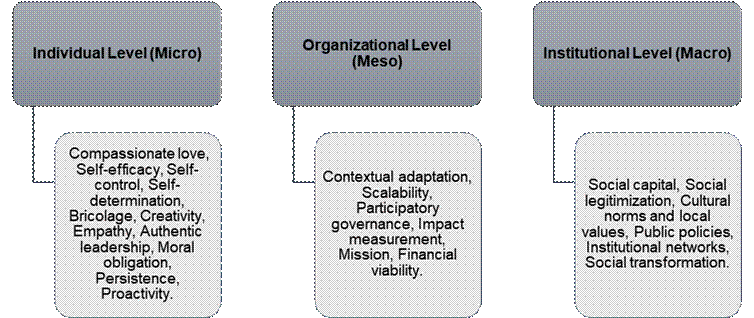
At the individual level (micro), competencies and personal traits that drive social entrepreneurs toward their goals were highlighted. Characteristics such as self-efficacy, proactivity, and creativity are common to other types of entrepreneurs; however, specific traits distinguish the social entrepreneur, such as empathy to understand community needs (Kedmenec et al., 2015; Yunfeng et al., 2022), persistence to overcome structural challenges (Lan et al., 2014), moral obligation related to responsibility toward social norms and ethical challenges (Yunfeng et al., 2022), and compassionate love for humanity, guiding actions toward collective well-being (Kedmenec et al., 2015). Leadership aspects involving transparency and integrity are fundamental for building trust and influencing the success of social entrepreneurship initiatives (Kelly, 2022; Lan et al., 2014). These elements were mainly reflected in Class 2 – Entrepreneurial Competencies and Intentions and Class 4 – Determinants of Social Impact in the DHC analysis. It is also noteworthy that, although individual attributes are not central aspects of Class 3 – Social Impact Measurement, they nevertheless emerged as influences on impact measurement strategies.
The organizational level (meso) focuses on organizational practices and strategies that contribute to the sustainability and scalability of the impact of social entrepreneurship initiatives. The reviewed literature highlights the importance of integrating mission, strategy, and organizational practices to ensure the effectiveness of initiatives (Ebrashi, 2013), with the social mission as the central element guiding strategic and operational decisions. Scaling these initiatives requires replicating successful models, adapting to beneficiary needs, and engaging multiple sectors (Narang et al., 2014; Christopoulos et al., 2024). The literature also points to the management of tensions between the social mission and financial viability, as highlighted in the dynamics presented by Christopoulos et al. (2023), which underscore the need for organizations to articulate models that reconcile social impact with economic sustainability. This reconciliation requires governance mechanisms capable of balancing mission fidelity with funder requirements, affecting strategic decisions, resource allocation, and goal-setting. Furthermore, impact measurement is understood not only as a control mechanism but also as a strategy to mobilize support and ensure the continuity of actions, being once again influenced by the social mission and entrepreneurial intentions (Ormiston & Seymour, 2011; Rawhouser et al., 2019; Ebrashi, 2013). These elements were mainly reflected in Class 3 – Social Impact Measurement and Class 4 – Determinants of Social Impact in the DHC analysis.
The institutional level (macro) revealed aspects concerning the role of institutional structures in enabling and expanding social entrepreneurship. In this context, the role of the State stands out. Christopoulos et al. (2023), for example, emphasize the importance of State support through policies, regulatory frameworks, and funding. Complementarily, Ormiston and Seymour (2011) note that government policies can both facilitate and constrain the development of social entrepreneurship, with bureaucracy and the absence of adequate regulation being limiting factors. Beyond the State’s role in isolation, the importance of interinstitutional arrangements is also emphasized, including collaboration among governments, NGOs, and companies, which is essential for mobilizing resources, gaining legitimacy, and expanding impact (Akoh & Lekhanya, 2022; Christopoulos et al., 2024; Ismail, 2024).
While social entrepreneurship is influenced by the institutional structures in which it operates, it also demonstrates potential to transform them. In this sense, the analysis identified that social entrepreneurship emerges to fill gaps left by the market or the public sector, addressing global challenges such as poverty, inequality, environmental sustainability, and climate change (Arejiogbe et al., 2023; Singh et al., 2023). Thus, the interaction among institutional networks, collaborative arrangements, and contextual adaptation proves essential for achieving its objectives, promoting social impact and transformation. These aspects were mainly reflected in Class 1 – Social Transformation and Class 6 – Social Issues in the DHC analysis.
Overall, it is evident that the effectiveness of social entrepreneurship is linked to the interaction among the three levels of analysis. Social entrepreneurs possess specific characteristics and competencies that drive their activities, influencing organizational practices and impact strategies. In turn, social organizations operate within an institutional environment that can facilitate or hinder their performance. Consequently, the institutional context not only affects organizations but also their entrepreneurs, shaping their opportunities, challenges, and motivations.
This study identified the structural elements that characterize social entrepreneurship at the individual, organizational, and institutional levels, its treatment in the academic literature, and its interdependence in building a broader understanding of the phenomenon. It recognizes the multidimensional nature of social entrepreneurship, without dissociating the enterprise from the entrepreneur, the organizational context, and its environment.
The findings indicate that achieving the objectives of social entrepreneurship depends on the interaction among the three levels: individual competencies are applied in organizational practices, which, in turn, are influenced and enhanced by the institutional context. This relationship demonstrates that social entrepreneurship does not occur in isolation but emerges from the continuous dynamic among individuals, organizations, and the institutional environment. Furthermore, the literature underscores its relevance in mitigating social challenges, particularly in developing countries, where it plays a key role in promoting sustainable solutions and social transformations.
Despite this systematization, it is important to highlight some observations regarding the predominant approaches in the literature reviewed. For example, there is a concentration of studies focusing on entrepreneurial intentions and competencies based on samples of university students (Kedmenec et al., 2015; Mgueraman & El Abboubi, 2024; Sezen-Gultekin & Gur-Erdogan, 2016; Yunfeng et al., 2022). While this approach is valid and contributes to understanding relevant predispositions in the early stages of social entrepreneurship, the recurring emphasis on a relatively homogeneous audience may limit understanding of how these predispositions translate into effective practices in more diverse social contexts.
This study stands out for its methodological rigor by using studies indexed in the Web of Science and Scopus databases, recognized among the leading sources of peer-reviewed scientific literature. However, this choice also imposes a limitation, as these databases, despite their breadth, may not capture certain regional perspectives due to editorial criteria, language, and coverage. In this sense, a future research agenda could replicate this analysis with the inclusion of regional databases and other sources, such as dissertations and technical reports, which would broaden the understanding of social entrepreneurship in specific contexts, especially in developing countries where the phenomenon has been gaining prominence.
Additionally, it is recommended to further develop the elements identified in this study based on a broader theoretical foundation, with the aim of transforming them into empirical indicators to be tested with social entrepreneurs operating in different practical contexts. It is also proposed to replicate studies conducted with student samples in applied contexts to assess the validity of the findings among active social entrepreneurs and potential entrepreneurs embedded in different social and professional settings. This study also encourages the development and validation of integrated theoretical models that encompass the interaction among the individual, organizational, and institutional levels of social entrepreneurship. Along these lines, future research could explore mediating and moderating variables that influence these relationships, considering different socioeconomic and cultural contexts.
Thus, the main academic contribution of this study lies in offering a holistic view of the characteristics of social entrepreneurship, providing a basis for building theoretical models and measurement instruments from a multidimensional perspective. The relevance of the IRaMuTeQ software is also highlighted, as its application in the statistical analysis of text segments, in comparison with the reviewed literature, enabled a deeper understanding of the dimensions investigated. The methodological design adopted not only offers a comprehensive view of the topic but also has potential for replication in other studies due to its detailed description.
Moreover, this systematic review provides a structured understanding of the research streams and analytical categories that characterize the field of social entrepreneurship, with potential to guide researchers, practitioners, and institutional actors.
redalyc-journal-id: 5707
