
Esta obra está bajo una Licencia Creative Commons Atribución-NoComercial 4.0 Internacional.
Recepción: 04 Febrero 2025
Aprobación: 12 Abril 2025
Publicación: 13 Agosto 2025
DOI: https://doi.org/10.36517/contextus.2025.94919
Abstract:
Contextualization: Religion and concerns about financial resources have accompanied humanity from its earliest days to the present. In Christianity, discussions arise about how religious doctrines can influence the behavior of believers. In this context, it is relevant to understand how Christians (both Catholics and Protestants) manage financial matters in their daily lives.
Objective: This study aims to examine how religion influences the financial behaviors of its followers.
Method: A quantitative approach was adopted, applying 513 questionnaires (268 Catholics and 245 Protestants) containing 29 items rated on a 0-to-10 agreement scale, which were grouped into eight constructs. The study employed Exploratory Factor Analysis (EFA), Ordinary Least Squares (OLS), and Generalized Linear Models (GLM) as estimation methods.
Results: The findings indicate that religion influences aspects such as financial education, monitoring, overconfidence, saving behavior, conscious spending, risk tolerance, and financial planning. Differences between Catholics and Protestants were observed only in monitoring and risk tolerance.
Conclusions: This study contributes to financial education practices grounded in ethical and religious principles while also informing public policies and financial products tailored to different beliefs.
Keywords: religion, Christians, personal finance, behavior, estimation methods.
Resumo:
Contextualização: A religião e a preocupação com recursos financeiros acompanham a humanidade desde os primórdios até os dias atuais. No cristianismo, discute-se como essa doutrina pode influenciar o comportamento de seus fiéis. Nesse sentido é relevante compreender como os cristãos (católicos e evangélicos) lidam com questões financeiras em sua rotina.
Objetivo: O objetivo deste estudo é verificar como a religião influencia os aspectos financeiros dos seus fiéis.
Método: Adotou-se uma abordagem quantitativa, aplicando 513 questionários (268 católicos e 245 protestantes) com 29 itens em escala de concordância (0 a 10) e que foram agrupados em oito constructos. Como estimadores, realizou-se Análise Fatorial Exploratória (AFE), Mínimos Quadrados Ordinários (MQO) e Modelo Linear Generalizado (MLG).
Resultados: Os resultados indicam que a religião influencia aspectos como educação financeira, monitoramento, excesso de confiança, poupança, gastos conscientes, tolerância a riscos e planejamento. Diferenças entre católicos e evangélicos foram observadas apenas em monitoramento e tolerância a risco.
Conclusões: O estudo contribui para orientar práticas de educação financeira baseadas em princípios éticos e religiosos, além de subsidiar políticas públicas e produtos financeiros adaptados a diferentes crenças.
Palavras-chave: religião, cristãos, finanças pessoais, comportamento, estimadores.
Resumen:
Contextualización: La religión y la preocupación por los recursos financieros han acompañado a la humanidad desde sus inicios hasta la actualidad. En el cristianismo, se debate cómo las doctrinas religiosas pueden influir en el comportamiento de sus fieles. En este contexto, es relevante comprender cómo los cristianos (tanto católicos como protestantes) manejan las cuestiones financieras en su vida cotidiana.
Objetivo: Este estudio tiene como objetivo analizar cómo la religión influye en los aspectos financieros de sus seguidores.
Método: Se adoptó un enfoque cuantitativo, aplicando 513 cuestionarios (268 católicos y 245 protestantes) con 29 ítems en una escala de acuerdo de 0 a 10, los cuales fueron agrupados en ocho constructos. Como métodos de estimación, se emplearon Análisis Factorial Exploratorio (AFE), Mínimos Cuadrados Ordinarios (MCO) y Modelos Lineales Generalizados (MLG).
Resultados: Los hallazgos indican que la religión influye en aspectos como educación financiera, monitoreo, exceso de confianza, ahorro, gasto consciente, tolerancia al riesgo y planificación financiera. Se observaron diferencias entre católicos y protestantes solo en monitoreo y tolerancia al riesgo.
Conclusiones: Este estudio contribuye al desarrollo de prácticas de educación financiera basadas en principios éticos y religiosos, además de servir como base para políticas públicas y productos financieros adaptados a diferentes creencias.
Palabras clave: religión, cristianos, finanzas personales, comportamiento, métodos de estimación.
1 INTRODUCTION
Religion has been interconnected with humanity since the earliest expressions of prehistoric spirituality to the contemporary religions of today. Within the Christian community, it is posited that doctrine can significantly influence the manner in which believers address their diverse needs in economic and financial facets (Sarofim; Minton; Bartholomew; Zehra; Montford; Cabano & Paul, 2020; Xavier, 2023). This study examines Brazilian individuals who adhere to the Christian faith, specifically Protestants and Catholics, and their financial relationships.
Religion can be defined as an organized system of beliefs and devotion to a higher being, typically accompanied by a framework of moral principles, including honesty, respect, and virtue. This practice is often embraced by specific communities, such as churches, sects, or denominations (Yayeh, 2014). Conversely, personal financial management can be conceptualized as the manner in which an individual understands (Barreto & Costa, 2022), plans, and executes decisions regarding their expenditures and income, while also engaging in planning across various time horizons.
There exists a prevailing perspective within contemporary finance theory that posits that individuals are responsible for their financial decisions, endeavoring to maximize the utility of their choices (Vasconcelos et al., 2014). Conversely, there are proponents who advocate for the influence of external factors, such as randomness or luck (Renneboog & Spaenjers, 2012). On the other hand, an alternative viewpoint highlights the evidence that religion significantly influences the preferences and behaviors of believers concerning their financial decisions (Ashqar & Lobão, 2024; Clifton; Brewer & Upenieks, 2023; Renneboog & Spaenjers, 2012; Sarofim et al., 2020).
Countries where the majority of the population practices Catholicism, for instance, exhibit lower rates of debt default and individualism (Ashqar & Lobão, 2024). Furthermore, Christian mutuality, characterized by the principles of giving and receiving, imposes an obligation on social elites to educate the workforce regarding financial matters (Kaell, 2024). The doctrine frequently emphasizes discipline and prudence in resource management, which directly influences the manner in which justice pertains to monetary matters and personal financial education (Clifton et al., 2023).
Another important aspect is the role of religious scriptures, which can serve as a guide for enhancing individuals' level of trust in God (Bartel, 2021; Sarofim et al., 2020) or potentially foster overconfidence in their financial decision-making. Theologies advocate for trust in God, recognition of divine ownership, and the practice of saving with the intent of sharing and collective care. Consequently, it is assumed that all resources originate from God, and Christians bear the responsibility to manage them as stewards of divine gifts. Individuals with a high level of devotion are shaped by values that significantly influence their decisions (Mahdzan; Zainundin & Shaari, 2023). A person's attitudes may be attributed to both religious principles and the influences of their peers (Agarwala et al., 2019). This relationship of social transmission within the group is reflected in their religiosity through the teachings they receive and their approach to personal finances (Yayeh, 2014). Given the information presented, we pose the following research question: Does religion influence the personal financial management practices of individuals within your faith?
In Brazil, where the population comprises 50% Catholic and 31% Protestant (DataFolha, 2020), the predominance of Christianity renders this research pertinent. Therefore, the objective of this study is to ascertain whether religion influences the personal financial management of its adherents. Furthermore, we analyzed potential differences between Catholics and Protestants with regard to financial aspects. Although numerous studies have examined the effects of religion on financial behavior in global contexts (Ashqar & Lobão, 2024; Clifton et al., 2023; Renneboog & Spaenjers, 2012; Sarofim et al., 2020), there exists a dearth of research specific to Brazil. In this regard, we endeavor to contribute towards bridging this gap. The article employed a quantitative approach, utilizing 513 questionnaires, of which 268 were from Catholics and 245 from Protestants, across eight constructs, alongside conducting Exploratory Factor Analysis (EFA), Ordinary Least Squares (OLS), and Generalized Linear Model (GLM) as estimators. The findings indicate that religion influences various aspects including the level of financial education, monitoring, overconfidence, ability to generate savings, conscious spending, risk tolerance, and planning. Additionally, differences were identified between Catholics and Evangelicals solely concerning monitoring and risk tolerance.
Consequently, comprehending the impact of religion on the financial decisions of its adherents is pertinent for a deeper understanding of the economic dynamics within society. By incorporating the religious aspect into the analysis, this article enhances the comprehension of the factors influencing individuals' financial behaviors. The findings of this research may assist adherents of Protestantism and Catholicism in developing practices related to financial education and facilitating more effective management of financial resources, while integrating ethical and moral considerations.
The results may be utilized by religious institutions to advocate for financial education programs among adherents, thereby aligning religious principles with responsible financial practices. Financial institutions, including banks and other entities, have the opportunity to develop products specifically tailored to the needs and behaviors of various religious communities. Furthermore, it is feasible to encourage discourse and the formulation of public policies that integrate financial education with cultural and religious values.
This paper consists of five sections, including this introduction. Section 2 offers an overview of the topic of religion and finance, along with the hypotheses. Section 3 analyzes the data and sample, models the econometrics, and defines the variables. Section 4 showcases the main findings. Section 5 deliberates on the results. Section 6 wraps up the study.
2 MOTIVATION AND HYPOTHESES
Individuals possessing a high level of financial education and religious involvement exhibit a reduced likelihood of encountering financial difficulties (Feng; Ahmad & Zheng, 2023; Mahdzan et al., 2023; Sarofim et al., 2020). Conversely, individuals who commence their lives without the requisite knowledge or skills to effectively manage their finances, savings, and financial affairs are at a distinct disadvantage (Keister, 2023). This situation reinforces the notion that individuals with low financial literacy are more susceptible to experiencing financial troubles and accruing debt (Mahdzan et al., 2023). Moreover, nations where a significant majority of the population adheres to the Catholic faith report a lower incidence of financial challenges (Ashqar & Lobão, 2024). Furthermore, educated individuals derive benefits from the social interactions facilitated within the religious context, thereby underscoring the importance of education in enhancing community connections and the favorable social outcomes associated with religiosity (Glaeser & Sacerdote, 2008). In this framework, individuals nurtured within religious traditions that emphasize education may possess a comparative advantage in the attainment and accumulation of wealth (Keister, 2023).
In the realm of Protestantism, the doctrine emphasizes the importance of discipline and prudence in the management of resources, which is evident in the manner in which adherents approach financial matters and pursue financial education (Clifton et al., 2023). The integration of education and theology establishes a robust framework for the cultivation of effective financial discipline, enabling the faithful to achieve improved living conditions and enhanced material comfort. The knowledge gained through this guidance empowers individuals to administer their finances with greater efficacy, thereby facilitating the establishment of goals and promoting increased economic stability (Mahdzan et al., 2023). In light of this information, the initial research hypothesis is formulated:
H1: Religion has a positive influence on the financial education of the faithful.
Financial control is established as a preventive measure in response to unforeseen circumstances (Nunes, 2006). It encompasses the monitoring and documentation of income and expenditures to discern priorities and patterns, and to effectuate adjustments when warranted. Furthermore, it facilitates the conscious utilization of available resources, thereby preventing the incurrence of unnecessary debts (Rosa & Moraes, 2023) and promoting enhanced economic stability.
In religious contexts, the practice of control enables the prudent management of resources to be perceived as a manifestation of the spiritual responsibilities of each believer. Control over material resources is regarded not only as a practical concern but also as a spiritual one, reflecting the perspective that financial decisions are directed by a higher power (Mahdzan et al., 2023). Consequently, financial control also encompasses an ethical and spiritual dimension, alongside individual cognizance of the necessity to attain personal goals and objectives.
The interplay between religion and financial management is complex, emphasizing discipline, accountability, and moderation in the utilization of financial assets (Sarofim et al., 2020). This complexity is exemplified in the prioritization of prudent management practices, shaped by a direct interpretation of biblical teachings (Clifton et al., 2023). Consequently, the practice of financial oversight arises from a commitment to effective management and adherence to religious principles among adherents.
The positioning of individuals concerning control is not confined to abstract precepts; rather, it is supported by evidence indicating that the sense of financial responsibility is heightened among those who adhere to religious beliefs (Mahdzan et al., 2023). This sense of control is directly associated with an increased sense of financial responsibility, which results in religious principles guiding their economic decisions. Consequently, the second research hypothesis is formulated.
H2: Religion has a positive influence on the financial control of believers.
Religious and non-religious groups exhibit significant variations in their financial decision-making processes, particularly concerning the emphasis placed on organizational structure and future management (Mahdzan et al., 2023). In this regard, Catholics typically engage in longer planning periods in comparison to non-religious households (Renneboog & Spaenjers, 2012). Likewise, effective financial management among Protestants is closely associated with religious morality, wherein financial planning is congruent with the principles of prudence and moderation as outlined in the Holy Bible (Bartel, 2021). Organizational patterns established during one's youth tend to endure throughout life, as behaviors adopted in the formative years of employment lay the financial groundwork for the accumulation of wealth in later stages (Keister, 2023). Individuals who nurture their religious beliefs from an early age are likely to develop sound financial habits and exhibit more consistent financial planning (Ma et al., 2018). This phenomenon holds particular significance when addressing economic challenges that may arise over the course of one's life. Religious adherents generally adopt long-term perspectives in their financial decision-making, opting to defer immediate gratification in favor of greater rewards in the future (Ashqar & Lobão, 2024). Through the implementation of financial planning practices, individuals aspire to foster economic security and cultivate enduring wealth. In this context, religion provides a framework of essential skills, including economic discipline and financial prudence (Renneboog & Spaenjers, 2012). In this light, the third hypothesis emerges:
H3: Religion has a positive influence on the financial planning of believers.
The practice of saving represents not only a financial strategy but also a reflection of ethical principles that underscore the significance of utilizing the gifts received judiciously. Research indicates that religious families exhibit a higher propensity to save money compared to their non-practicing counterparts (Ma et al., 2018; Renneboog & Spaenjers, 2012). This tendency originates from a viewpoint that perceives saving not merely as a material necessity but as an expression of faith and a sense of duty towards God.
The influence of religious affiliation on the inclination to accumulate resources indicates that Christian adherents exhibit a heightened propensity to save their income (Yayeh, 2014). Devout Catholics place significant emphasis on the practice of saving financial resources (Ashqar & Lobão, 2024). Similarly, Protestants, recognized for their financial prudence, manifest a greater tendency to allocate additional funds for savings (Ma et al., 2018). Consequently, the act of saving transcends mere material considerations, serving as a reflection of intrinsic values grounded in prudence.
In this regard, the focus on saving emerges when one adopts a mindset of simplicity and minimizes the acquisition of material possessions, placing a higher value on the sharing of wealth through interpersonal relationships, worship, spirituality, and service (Yayeh, 2014). Additionally, religion fosters values such as diligence, saving, and the restriction of specific forms of unproductive consumption, thereby reinforcing practices that promote the accumulation of financial resources. In light of this, the fourth hypothesis is established:
H4: Religion positively influences the financial savings of believers.
Individuals possessing firmly established religious convictions, particularly those associated with Protestantism, exhibit a tendency to engage in more deliberate and responsible expenditure practices (Agarwala et al., 2019). The objective is to curtail expenses that surpass disposable income and to circumvent excessive financial outlays (Mahdzan et al., 2023). Consequently, there are endeavors to modify behavior in the name of faith, particularly regarding priorities, resulting in alterations in spending patterns.
The purpose of stewardship within the Protestant Church is to inspire followers of Jesus Christ to exhibit fidelity through the prudent management of all that He has entrusted to them. This encompasses the careful management of personal resources, including time, skills, and finances, which significantly influences individuals' spending habits. Religious teachings reinforce this mindset, promoting a more prudent relationship with money while mitigating social pressures to engage in excessive spending, particularly among adherents of Pentecostal traditions (Ashqar & Lobão, 2024).
For individuals who adhere to religious beliefs, engaging in deliberate financial expenditure transcends mere fiscal decision-making; rather, it constitutes an ethical practice deeply entrenched in their convictions. The financial resources they acquire are allocated with discernment, both within familial contexts and throughout the community, eschewing frivolous expenditures on non-productive endeavors. Consequently, religion not only influences personal conduct but also fosters a cultural inclination towards more responsible consumption. In consideration of the aforementioned factors, the fifth research hypothesis is proposed:
H5: Religion has a positive impact on the conscious management of spending among its followers.
Adherence to religious beliefs and financial knowledge serves to mitigate the propensity for financial risks (Mahdzan et al., 2023). Research conducted by Ashqar and Lobão (2024) and Ma et al. (2018) indicates that individuals who hold religious beliefs are generally more risk-averse, and hence, less inclined to invest in the stock market. Furthermore, religious norms significantly influence investment decisions (Benjamin et al., 2016). One rationale for this phenomenon is that the pattern is more pronounced among individuals who are actively engaged in their religious communities, as these connections foster greater interdependence, responsibility, and risk aversion (Agarwala et al., 2019; Ma et al., 2018). Religious individuals typically adopt more cautious and responsible attitudes. In this context, religion contributes to the development of specific mindsets, values, and perceptions of wealth within religious groups, thereby influencing preferences related to risk (Feng et al., 2023).
Religion consists of individuals who exhibit caution in relation to risk, striving to alleviate anxiety associated with uncertainty (Hilary & Hui, 2009). It plays a role in shaping the mindsets and values among members of religious communities, subsequently affecting their behavioral preferences and attitudes towards risk (Feng et al., 2023). In light of these considerations, hypothesis six is supported:
H6: Religion has a negative influence on risk tolerance.
Among religious individuals, there exists a notable degree of self-confidence rooted in the belief that their lives possess a divine purpose (Renneboog & Spaenjers, 2012). In this context, religiosity signifies adherence to sacred texts that serve as a behavioral guide, thereby fostering a heightened level of trust in God among individuals (Bartel, 2021; Sarofim et al., 2020). Consequently, the relationship between religiosity and financial well-being is mediated by a sense of certainty, as individuals who are more religious may exhibit greater self-confidence. Nevertheless, it is important to note that overconfidence can cause individuals to overestimate their own abilities and knowledge. By underestimating risks, such individuals may engage in impulsive financial decision-making or place excessive trust in their forecasting and resource management skills (Mättö & Niskanen, 2019). Elevated levels of trust can lead to detrimental financial outcomes, including hesitance to seek a second opinion and susceptibility to fraudulent schemes (Sarofim et al., 2020). In light of these considerations, the seventh research hypothesis is proposed:
H7: Religion positively impacts the overconfidence.
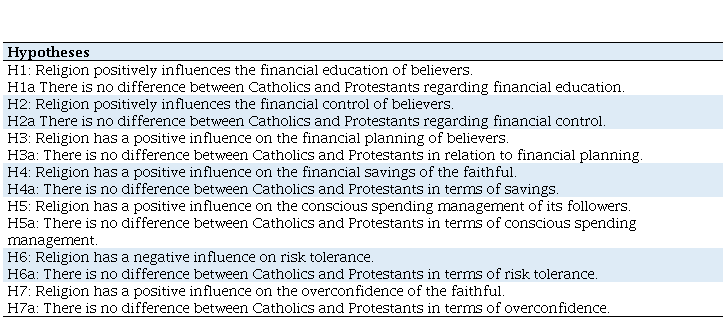
Furthermore, the objective was to confirm the existence of variations in financial behavior between Catholics and Protestants concerning the previously mentioned hypotheses. Accordingly, Table 1 presents a summary of the hypotheses examined in this study.
Study hypotheses
Source: Prepared by the authors.
3 METODOLOGIA
The population of this study comprises individuals from Brazil who adhere to either Catholicism or Protestantism, as these are the predominant religions in the country. Due to the infeasibility of conducting a census-type survey in this instance, a non-probabilistic sampling method was employed. During the months of May and June 2024, a total of 120 online responses were collected for the pilot test, and an additional 513 responses were gathered for the final sample, which included 268 Catholics and 245 Protestants. It is important to note that the pilot test sample is not included in the final sample.
To analyze the relationship between religion and finance, the following econometric model was adopted (Equation 1):

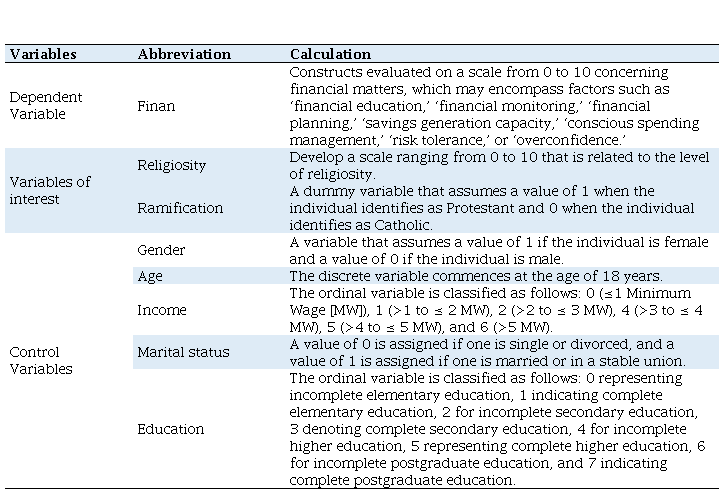
Table 2 provides a comprehensive summary of the study variables, as well as their respective operationalization.
Study variables
Source: Prepared by the authors.
The data collection instrument employed was a questionnaire consisting of questions on 11-point scales (ranging from 0 to 10) pertaining to levels of (dis)agreement, which were subsequently organized into constructs. To ensure the quality of the data, the inclusion criterion stipulated that respondents must identify as Catholic or Protestant. In terms of exclusion criteria, individuals who identified as non-practicing members of a religious faith or who had converted within the past two years were excluded from participation.
In light of the absence of validated scales for all the constructs utilized, the items of the questionnaire were either developed or adapted in accordance with existing literature. A thorough analysis was conducted by a team of four specialized researchers to ascertain the validity of the content and to confirm the rigor of the instrument.
A pilot study was conducted involving 120 respondents, aimed at assessing the necessity for modifications pertaining to either the format or the content. Utilizing the initial data obtained, an exploratory factor analysis was executed to confirm the alignment of the items with the constructs and adherence to the fundamental assumptions of factor analysis, which include Cronbach's Alpha, the Kaiser-Meyer-Olkin (KMO) measure, Bartlett's test of sphericity, commonalities, and the proportion of explained variance.
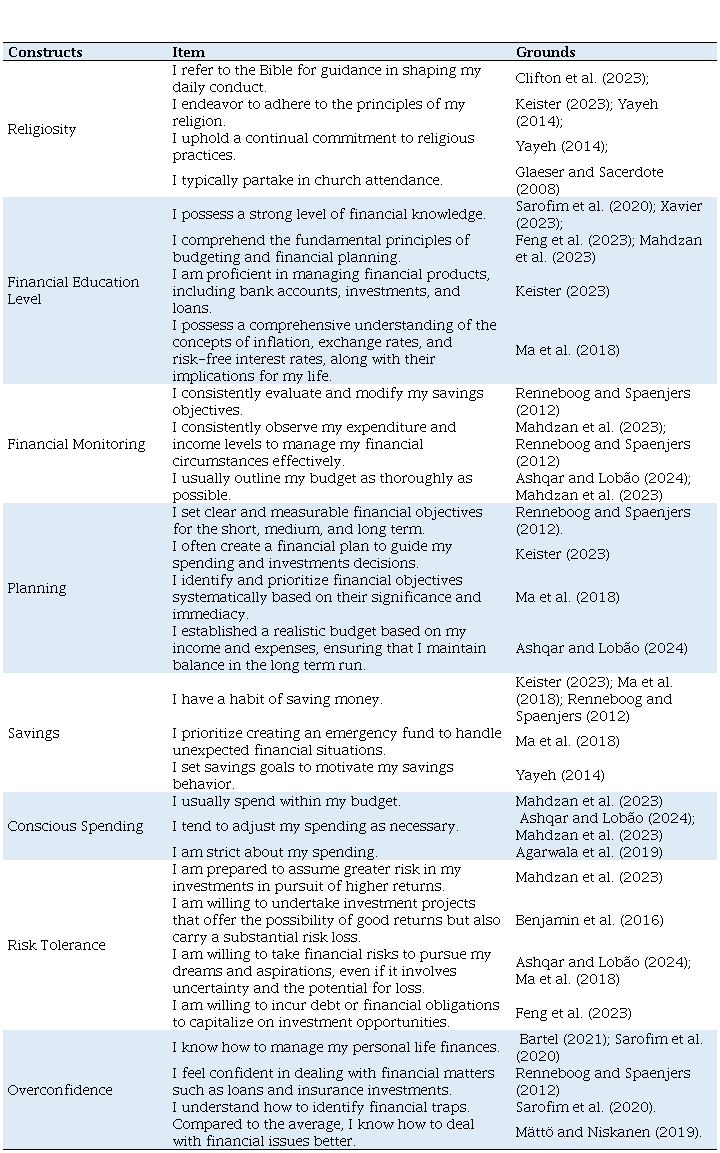
Items that did not conform to the assumptions were excluded from the questionnaire. Ultimately, the respondents from the pilot test were eliminated, and a new sample was collected. The composition of the constructs, along with their respective foundations, is presented in Table 3.
Constructs
Source: Prepared by the authors.
Ultimately, the connection to the Google Forms inquiries was disseminated through social media channels, alongside the provision of the Free and Informed Consent Form, taking into account the endorsement granted by the Ethics Committee under registration number 79251124.3.0000.0055.
4 ANALYSIS AND DISCUSSION OF RESULTS
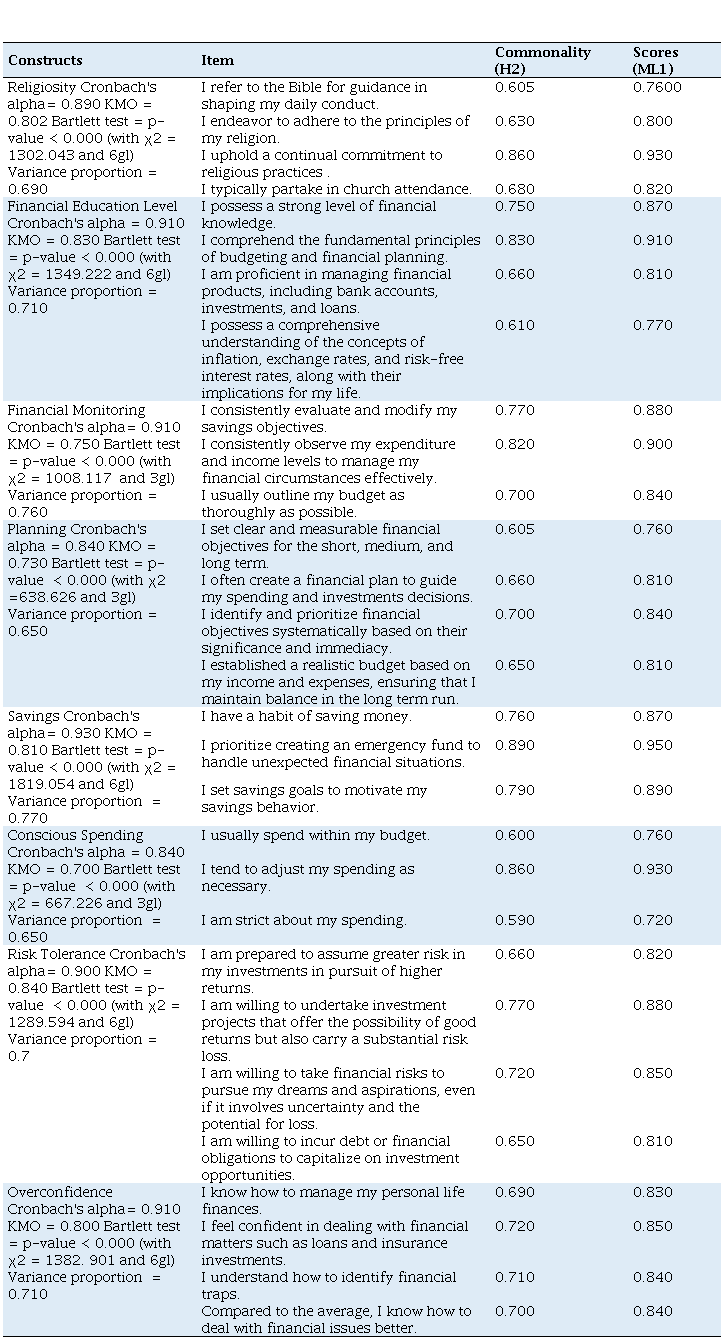
The initial phase of the analysis involved the verification of the adequacy and consistency in the measurement of the constructs, as presented in Table 4. The thirty items were categorized into eight distinct constructs. These constructs accounted for 65% to 77% of the variance observed in the items. Furthermore, the factor scores exceeded 0.720, the communalities were above 0.6, the results of the Kaiser-Meyer-Olkin (KMO) tests surpassed 0.700, Bartlett's sphericity was significant at the 1% level, and Cronbach's alpha was greater than 0.84, all of which indicate a high level of reliability in the scales across all models.
Adequacy and consistency of the analysis constructs
Source: Prepared by the authors.
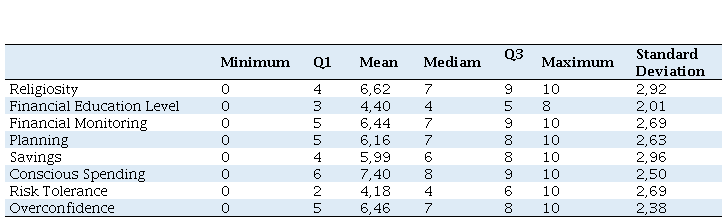
According to the principles governing Exploratory Factor Analysis (EFA), the items were consolidated through the computation of the weighted average of the scores assigned by each respondent. Subsequently, measures of central tendency were derived, including the arithmetic mean and median, in addition to the quartiles. Furthermore, the dispersion of the data was examined through a descriptive analysis, as illustrated in Table 5.
Position measures of the analysis constructs
Source: Prepared by the authors.
The data acquired indicates a moderate distribution, characterized by a standard deviation of less than three. Furthermore, the proximity of the mean and the median (Q2) corroborates this observation, suggesting a minimal occurrence of outliers—values that significantly deviate from the rest of the data set.
The findings demonstrate that both the mean and median reflect a moderate level of religiosity and financial education among respondents. Additionally, there exists a high level of conscious spending management among individuals with religious affiliations, who tend to possess limited financial education and exhibit risk-averse behavior. Based on the analysis of the mean and median, the examined indicators appear to be generally favorable. The sample reveals comparable levels of religiosity, overconfidence, savings, financial control, and financial planning, as indicated by the median values.
4.1 Hypothesis testing
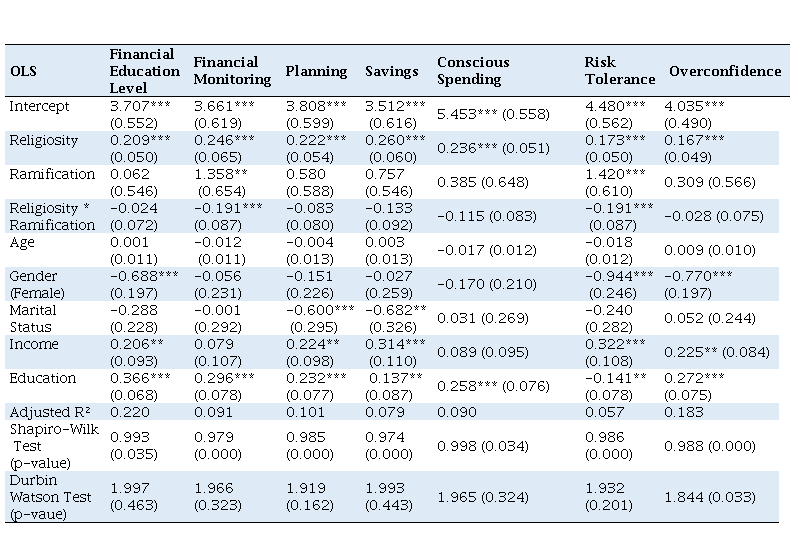
To evaluate the established hypotheses, we utilized MQO and GLM estimates, treating the constructs of ‘Financial Education’, ‘Conscious Spending Management’, ‘Overconfidence’, ‘Savings’, ‘Financial Control’, ‘Risk Acceptance’, and ‘Financial Planning’ as dependent variables. Each model incorporated the variable of interest, ‘Religiosity’, along with its interaction with the branch (Religiosity * Branch), as well as several control variables, including ‘age’, ‘marital status’, ‘gender’, ‘income’, and ‘education’. The estimates can be found in Table 6.
Ordinary Least Squares
Source: Prepared by the authors.
The findings derived from the Ordinary Least Squares (OLS) estimator, as displayed in Table 6, underscore the importance of considering the influence of religion on financial decision-making. There exists a significant positive relationship between religiosity and various financial attributes, including financial education, conscious spending management, savings, financial control, financial planning, overconfidence, and risk acceptance. However, the analysis revealed distinctions among the different religious affiliations solely in terms of financial control and risk acceptance. The estimates indicate that Protestants exhibit a higher level of financial monitoring and demonstrate greater risk aversion compared to Catholics.
The adjusted R² values range from 5.7% to 22%, reflecting variability in the model fit. The Shapiro-Wilk test results indicate that the residuals of all tested models do not conform to a normal distribution, thereby violating the regression assumption of normality. Additionally, the Durbin-Watson test confirms the absence of autocorrelation within the residuals. Heteroscedasticity was addressed through the application of robust standard errors.
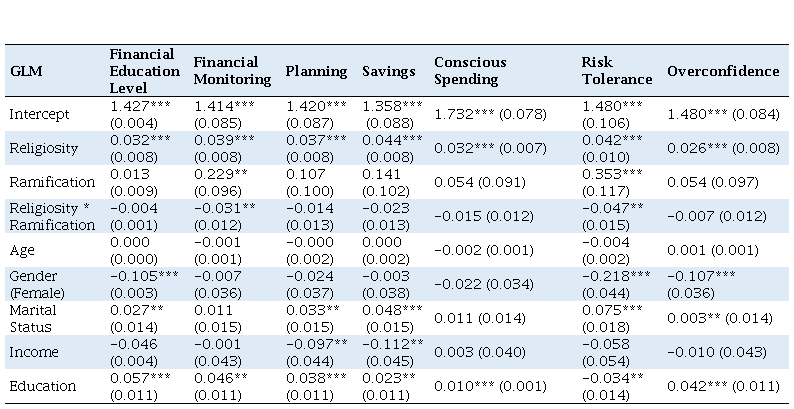
Although the assumption of normality can be relaxed based on the central limit theorem, the selection of the Generalized Linear Model (GLM) estimator was made to leverage its nonparametric characteristics, thereby enhancing the robustness of the results, as indicated in Table 7.
Generalized Linear Model (GLM)
Source: Prepared by the authors.
In the second analysis employing the Generalized Linear Model (GLM) method, the results affirm that religiosity remains significant and positively contributes to elucidating decisions related to financial education, expense management, overconfidence, savings, financial control, risk acceptance, and financial planning. Reinforcing the initial analyses, these results offer a robust foundation for comprehending the influence of the Catholic religion on the financial decisions of adherents.
Concerning the control variables, both in the Ordinary Least Squares (OLS) and GLM analyses, age does not exert a significant effect on the financial variables examined. In terms of the gender variable, it appears that women exhibit significantly lower levels of financial education, overconfidence, and risk acceptance in comparison to men. Those who are married or in a stable union demonstrate lower levels of savings behavior and financial planning when compared to their single or divorced counterparts.
Furthermore, as individual income increases, so too does the level of financial education, overconfidence, savings, reduced risk aversion, and enhanced financial planning. However, no correlation is found with conscious spending or the level of financial monitoring. Lastly, educational attainment has a positive and significant relationship with all financial variables analyzed.
4.2 Discussion
4.2.1 Financial Education
In a religious context, financial education is perceived as an extension of biblical principles that encourage responsible management. Individuals from traditions that emphasize education are more likely to accumulate wealth and develop robust financial skills (Keister, 2023). This perspective is supported by a positive correlation between religiosity and levels of financial knowledge, suggesting that the religious environment not only promotes morality and spirituality but also enhances economic competence (Yayeh, 2014). The integration of theological doctrines with effective educational practices results in superior financial well-being among adherents (Clifton et al., 2023). These findings are consistent with previous studies (Ashqar & Lobão, 2024; Feng et al., 2023; Keister, 2023). Therefore, both hypotheses H1 and H1a are accepted, as religion has a positive influence on the financial education of its adherents, with no discernible differences between Catholics and Protestants in this context.
In this regard, churches may serve as advantageous environments for the dissemination of knowledge, employing religious language and values to address financial topics. Additionally, there exists the potential for partnerships between churches and educational institutions, which could broaden the reach of financial education, particularly in regions characterized by low levels of education.
4.2.2 Financial Monitoring
The attitudes of individuals towards the examination and regulation of their finances are influenced by their beliefs. Religion, by underscoring the significance of moderation and responsibility, fosters practices of self-control and prioritization of needs, thereby contributing to a more balanced and sustainable approach to expenditure management. Individuals place considerable importance on the regulation of their financial resources, holding the belief that external forces, such as destiny or divine powers, play a role in shaping the outcomes of their lives (Renneboog; Spaenjers, 2012).
In addition, religious practices foster enhanced oversight by instilling responsibility through ethical and moral principles, while simultaneously promoting moderation and temperance. This leads to more balanced behavior and mitigates the risk of losing control. Consequently, the second hypothesis (H2) can be confirmed: religion exerts a positive influence on financial control. This finding aligns with the existing literature (Mahdzan et al., 2023; Renneboog & Spaenjers, 2012).
In light of the results obtained, variations were observed regarding the issue of control, with Protestants demonstrating greater attentiveness compared to Catholics in this domain. One plausible justification for this difference is that, while Catholicism emphasizes detachment from material possessions as a spiritual ideal, evangelical religion adopts a more pragmatic perspective, advocating that financial organization is integral to a balanced and productive life. Furthermore, for Protestants, financial control serves as an indication that resources must be managed judiciously, as they are ultimately owned by God. Therefore, H2a should be rejected.
4.2.3 Planning
Financial planning originates from ancient religious practices and teachings that emphasize the importance of organization and responsible management of financial resources. Families adhering to Catholic or Protestant traditions tend to exhibit a broader perspective compared to other groups (Bartel, 2021). This tradition of organization is reinforced by the belief that all resources are divine gifts and, consequently, should be managed with accountability.
Faith encourages the adoption of a long-term perspective in financial decision-making, reflecting a significant tendency to prioritize future rewards over immediate gratification. The focus on prudence and familial responsibility prompts individuals of faith to engage in financial behaviors that encompass the formulation and implementation of long-term strategies, aimed at securing a stable future, which also supports public retirement policies.
Therefore, it can be inferred that hypothesis three (H3) should not be dismissed, suggesting that religion exerts a positive influence on the financial planning practices of the faithful. Similarly, H3a remains supported, as no substantial differences were identified between Catholics and other groups Protestants.
4.2.4 Savings
Christianity places a high value on frugality, encouraging its adherents to live simply and to eschew the pursuit of material ostentation. Consequently, Christian doctrine advocates for the cultivation of saving habits as a means to ensure the financial protection of the family and the fulfillment of personal responsibilities. This practice is vividly illustrated in biblical wisdom that advises individuals to learn from the ant, which diligently stores its food during the summer, symbolizing a commitment to saving.
Religious families exhibit a greater propensity to save money, reflecting a significant correlation between religious affiliation and the willingness to accumulate resources (Renneboog & Spaenjers, 2012). For devout believers, the practice of saving is intricately related to the appreciation of virtues such as temperance and prudence, alongside an effort to prevent losses and waste. This emphasis on saving arises from the adoption of simplicity, prioritizing the sharing of wealth through interpersonal relationships, worship, spirituality, and service.
Religious values contribute to the development of competencies and habits that significantly influence decisions pertaining to savings (Keister, 2023; Mahdzan et al., 2023). The act of saving is perceived as an expression of virtue, in alignment with the principles of responsibility and the prudent management of resources entrusted by God. Therefore, the hypothesis that religiosity positively influences the level of savings among the faithful (H4) and the assertion that there exists no difference between Catholics and Protestants concerning savings (H4a) cannot be dismissed.
4.2.5 Conscious Spending
Both Catholic and Protestant scriptures articulate that careful management of expenditures is a virtue. Biblical teachings underscore the necessity of avoiding waste and advocating for judicious spending, emphasizing the importance of deliberate consideration prior to undertaking any purchase. Prudent expenditure is depicted as a pathway to prosperity, whereas reckless spending is regarded as imprudence that may culminate in financial devastation. These biblical principles exhort believers to live within their means, thereby fostering a balanced financial posture.
Adherence to religious tenets that endorse prudence and frugality culminates in more responsible and conscientious financial behaviors. This advantageous influence engenders a more moderate, prudent, and responsible approach to spending. Consequently, there is a heightened awareness of future implications and budgetary oversight, which impels believers to assume greater accountability for their personal financial security.
Religious practices significantly shape the values that govern individuals’ financial choices, particularly in regard to expenditures. The findings align with prior research (Mahdzan et al., 2023; Sarofim et al., 2020). In this context, the hypotheses suggesting that religiosity positively influences deliberate spending management and that there exist no distinctions between Catholics and Protestants cannot be endorsed rejected.
4.2.6 Risk Tolerance
With regard to risk tolerance, the findings suggest that individuals who are religious tend to exhibit a greater tolerance for risk, which contradicts existing literature (Agarwala et al., 2019; Ashqar & Lobão, 2024; Hilary & Hui, 2009; Ma et al., 2018; Mahdzan et al., 2023). One potential explanation for this phenomenon is that individuals possessing high levels of religiosity demonstrate a trust in divine providence, operating under the belief that their actions are guided or protected by a higher power. This belief may enhance risk tolerance by mitigating the fear of failure and fostering a greater willingness to seize financial opportunities that promote growth and sustainable development.
Furthermore, religion provides a balanced perspective on risk, advocating neither absolute aversion nor indiscriminate action. Numerous biblical passages underscore the significance of prudence and faith in God when faced with decisions involving risk. The book of Proverbs extols the virtue of prudence, indicating that while it is crucial to exercise caution, risk-taking is not inherently discouraged provided that it is undertaken responsibly. Consequently, the hypothesis suggesting that religion exerts a negative influence on risk tolerance (H6) should be dismissed.
The study delineated distinctions between Protestants and Catholics concerning risk tolerance, revealing that Protestants exhibit a lower level of aversion to risk. One plausible explanation for this disparity is that Protestant churches esteem individualism and autonomy, inspiring adherents to make bold decisions and confront risks with assurance. Conversely, Catholicism appears to prioritize moderation and prudence, often resulting in a preference among Catholics for security and stability. Thus, the hypothesis positing that no difference exists between Catholics and Protestants in terms of risk tolerance (H6a) should also be dismissed.
4.2.7 Overconfidence
Trust represents a highly regarded attribute within the Christian tradition, wherein faith in God and His divine plans is perceived as a fundamental source of peace and security. This trust is frequently reinforced by the emphasis on diligent effort and personal responsibility, which are central characteristics of numerous Protestant denominations. Furthermore, the support found within these congregations promotes a healthy sense of self-confidence, thereby enabling believers to confront challenges with resilience. Nevertheless, this circumstance necessitates a discussion within churches regarding the preference for more responsible risk-taking, emphasizing prudence and planning as opposed to blind faith.
The findings corroborate previous research. Mättö and Niskanen (2019) indicate that, in Christian nations, religion serves to augment the self-confidence of believers. Renneboog & Spaenjers (2012) associate this trust with the Protestant ethic, which advocates for financial prudence. However, it can escalate to excessive levels (Sarofim et al., 2020), resulting in the underestimation of risks and the neglect of critical guidance, ultimately jeopardizing personal financial well-being. Consequently, the hypotheses positing that religiosity heightens overconfidence (H7) and that no distinction exists between Catholics and Protestants (H7a) should be dismissed.
4.2.8 Summary of hypotheses
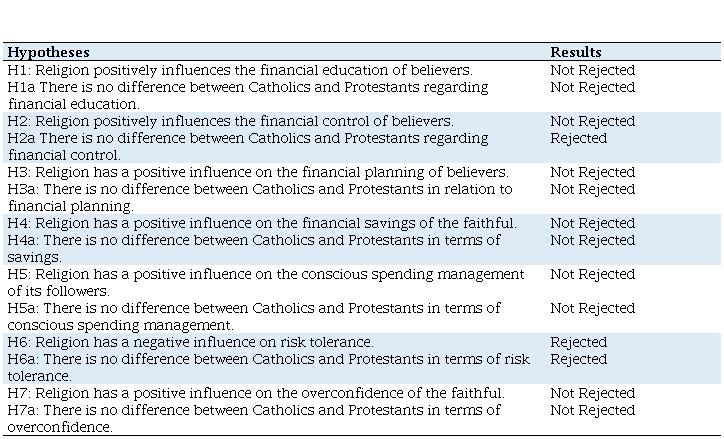
Table 8 summarizes the results of the hypotheses:
Summary hypotheses
Source: Prepared by the authors.
5 FINAL CONSIDERATIONS
This article aims to ascertain whether religion exerts an influence on the personal financial management practices of its adherents. The findings underscore that religion significantly affects the financial behaviors of its followers, particularly concerning levels of financial literacy, monitoring practices, overconfidence, savings capacity, conscious spending, risk tolerance, and financial planning. Therefore, it plays a crucial role in elucidating financial-related behaviors.
The first hypothesis (H1) explored the proposition that religion positively influences the financial education of believers. The results substantiate this hypothesis, indicating that religious institutions serve as platforms for the dissemination of financial education. Additionally, both Catholic and Evangelical groups derive benefits from religious influences in this context. In other words, hypothesis (H1a), which posits that no differences exist between various religions, was also upheld.
The second hypothesis (H2) examined the influence of religiosity on financial control. The findings indicate that religion exerts a positive impact on this dimension, facilitating its acceptance. However, a distinction was noted among the religious branches: Protestants exhibited greater attention to controlling their finances compared to Catholics. Consequently, while H2 was confirmed, hypothesis H2a, which posited no differences between the groups, was rejected.
Regarding financial planning (H3), the results illustrated that religiosity promotes long-term behaviors, indicating a positive relationship. No differences were observed among the religions in this context. In this regard, both H3 and H3a were accepted, signifying that religiosity is positively associated with financial planning across both groups. Likewise, the fourth hypothesis (H4) investigated the relationship between religion and savings. The positive influence of religion in this aspect was confirmed and, once again, no distinctions were found between Catholics and Evangelicals, leading to the acceptance of both H4 and H4a.
With regard to conscious spending management (H5), the data indicate that religiosity motivates individuals to spend responsibly. Both H5 and H5a were accepted, confirming that there is no difference between Catholics and Evangelicals in this behavior. However, concerning risk preference, religion was anticipated to have a negative influence on this aspect (H6); however, the results demonstrated that the faithful, particularly Protestants, are more willing to take risks. In this regard, both H6 and H6a were rejected.
Finally, the seventh hypothesis (H7) posited that religion positively influences the overconfidence of the faithful. This relationship was confirmed, yet it is noteworthy that this self-confidence can yield both beneficial and detrimental outcomes, depending on the individual's prudence. Despite this, no differences were identified between Catholics and Protestants in this area, leading to the acceptance of H7a.
The study enriches the literature by analyzing the relationship between an individual’s religiosity and their financial decisions, with a particular emphasis on the Brazilian context, which is characterized by a strong religious tradition. Furthermore, this research provides insights that can assist individuals in becoming more aware of the role that beliefs play in their economic choices. In this vein, the interaction between religious values and economic decisions reinforces the understanding that faith is not merely a spiritual practice, but also a guiding element that influences practical choices in everyday life.
The results also hold significant implications for the formulation of public policies. Firstly, considering that religious environments exert substantial social influence and outreach, establishing partnerships between public institutions and religious leaders can prove advantageous. Financial education programs, when integrated into religious activities or articulated in a manner congruent with biblical values and principles, are more likely to gain acceptance and foster engagement. Consequently, financial education policies can leverage the existing framework of religious communities as facilitators of knowledge, thereby cultivating educational agents among church members. This approach engenders a “peer education” model, which may enhance participant confidence and engagement.
Among the limitations identified, the reliance on self-reported data presents the potential for response biases, which may compromise the accuracy of the information obtained. Additionally, contextual factors, including socioeconomic and cultural variations across different regions of Brazil, were not accounted for in this study. Furthermore, it is important to note that data collection was conducted during a specific time frame, which may not adequately reflect potential behavioral changes over time, particularly in periods of economic crisis.
For future research, it is suggested that the model encompass additional religious groups, such as those of African origin and Judaism. Another recommendation is to conduct longitudinal studies to assess whether the observed effects remain consistent or exhibit asymmetry across various phases of economic cycles. Ultimately, it is advisable to evaluate how religion influences financial behavior from a generational perspective.
REFERÊNCIAS
Agarwala, R., Mishra, P., & Singh, R. (2019). Religiosity and consumer behavior: A summarizing review. Journal of Management, Spirituality & Religion, 16(1), 32-54. https://doi.org/10.1080/14766086.2018.1495098
Ashqar, R. I., & Lobão, J. (2024). Does religion influence the household finance? Evidence from Europe. Studies in Economics and Finance, 41(2), 286-311. https://doi.org/10.1108/SEF-02-2022-0107
Barreto, K. V., & Costa, D. H. (2022). Gestão financeira pessoal: Como potencializador para o controle de finanças. E-Acadêmica, 3(3), e5333351. https://doi.org/10.52076/eacad-v3i3.351
Bartel, R. C. (2021). Financializing the soul: Christian microfinance and economic missionization in Colombia. Critical Research on Religion, 9(1), 31-47. https://doi.org/10.1177/2050303220952861
Benjamin, D. J., Choi, J. J., & Fisher, G. (2016). Religious Identity and Economic Behavior. Review of Economics and Statistics, 98(4), 617-637. https://doi.org/10.1162/REST_a_00586
Clifton, T., Brewer, M., & Upenieks, L. (2023). Religious affiliation and debt among U.S. households. Social Science Research, 115, 102911. https://doi.org/10.1016/j.ssresearch.2023.102911
Data Folha. Como é a cara do evangélico brasileiro e quando o grupo será maioria no país; ouça. (2020, 13 de janeiro). Folha de S.Paulo. https://www1.folha.uol.com.br/podcasts/2020/01/como-e-a-cara-do-evangelico-brasileiro-e-quando-o-grupo-sera-maioria-no-pais-ouca.shtml
Feng, J., Ahmad, Z., & Zheng, W. (2023). Factors influencing women’s entrepreneurial success: A multi-analytical approach. Frontiers in Psychology, 13, 1099760. https://doi.org/10.3389/fpsyg.2022.1099760
Glaeser, E. L., & Sacerdote, B. I. (2008). Education and Religion. Journal of Human Capital, 2(2), 188-215. https://doi.org/10.1086/590413
Hilary, G., & Hui, K. W. (2009). Does religion matter in corporate decision making in America? Journal of Financial Economics, 93(3), 455-473. https://doi.org/10.1016/j.jfineco.2008.10.001
Kaell, H. (2024). A perfected bank: Catholic capitalism in early twentieth-century Quebec. History and Anthropology, 35(4), 848-870. https://doi.org/10.1080/02757206.2023.2172722
Keister, L. A. (2023). Beliefs About Poverty and Inequality: Du Bois and Ethnic Differences Among Catholics. Journal for the Scientific Study of Religion, 62(S1), 163-182. https://doi.org/10.1111/jssr.12853
Ma, X., Su, Z., & Huang, J. (2018). Religion, economic attitudes and household savings: Evidence from CGSS(2010). Journal of Interdisciplinary Mathematics, 21(2), 529-537. https://doi.org/10.1080/09720502.2018.1451608
Mahdzan, N. S., Zainudin, R., & Shaari, M. S. (2023). The influence of religious belief and psychological factors on borrowing behaviour among Malaysian public sector employees. Asia-Pacific Journal of Business Administration, 15(3), 361-385. https://doi.org/10.1108/APJBA-10-2020-0362
Mättö, M., & Niskanen, M. (2019). Religion, national culture and cross-country differences in the use of trade credit: Evidence from European SMEs. International Journal of Managerial Finance, 15(3), 350-370. https://doi.org/10.1108/IJMF-06-2018-0172
Nunes, P. (2006). Utilização da Contabilidade no planejamento e controle das finanças pessoais. Revista Catarinense Da Ciência Contábil, 5(15), 59-72. https://doi.org/10.16930/2237-7662/rccc.v5n15p59-72
Renneboog, L., & Spaenjers, C. (2012). Religion, economic attitudes, and household finance. Oxford Economic Papers, 64(1), 103-127. https://doi.org/10.1093/oep/gpr025
Rosa, G. S., & Moraes, R. C. (2023). Financial education in high school: a multicase study in the Municipality of Ilhabela – SP. Brazilian Journal of Business, 5(1), 93-104. https://doi.org/10.34140/bjbv5n1-006
Sarofim, S., Minton, E., Hunting, A., Bartholomew, D. E., Zehra, S., Montford, W., Cabano, F., & Paul, P. (2020). Religion’s influence on the financial well‐being of consumers: A conceptual framework and research agenda. Journal of Consumer Affairs, 54(3), 1028-1061. https://doi.org/10.1111/joca.12315
Vasconcelos, A. F., Antunes, G. A., & Silva, C. A. T. (2014). Avaliação de Perdas e Ganhos nas Decisões Financeiras: Uma Investigação à Luz da Prospect Theory. Revista Evidenciação Contábil & Finanças, 2(1), 22-38. https://doi.org/10.18405/recfin20140102
Xavier, É. T. (2023). Catolicismo: Missão e Influência no Brasil e no Continente Latino-Americano. Monumenta - Revista Científica Multidisciplinar, 5(1), 56-66. https://doi.org/10.57077/monumenta.v5i1.138
Yayeh, F. A. (2014). The Impact of Religion on Household Saving Behavior. SSRN Electronic Journal. https://doi.org/10.2139/ssrn.2518129
Información adicional
redalyc-journal-id: 5707
