2025
23
22012025
14042025
 Péricles Nóbrega periclesnobrega@gmail.com
Federal Institute of Sertão Pernambucano (IFSertãoPE), Brasil
Diva Ester Okazaki Rowe divarowe@gmail.com
Federal University of Bahia (UFBA), Brasil
Abstract:
Background: The widespread adoption of teleworking by the brazilian public administration could have implications for mental health, especially in the face of the Covid-19 pandemic. The literature points to both negative and positive impacts of the implementation of this way of working, so that, especially in the public service, its relationship with health processes remains poorly demarcated and poorly defined. Purpose: In this article, our aim is to conduct a scoping review (ScR) of the effects of telework on the mental health of civil servants and what strategies have been developed by public organizations to promote health by identifying, mapping and synthesizing existing studies. Method: This ScR includes 13 studies, identified from searches conducted in the Scielo, Spell, PePSIC and Web of Science databases, considering publications over a 10-year period (2014-2023), in the Brazilian ad international contexts, in accordance with the PRISMA guidelines. Results: The results show that there is a predominance of Brazilian production, which indicated that teleworking requires an articulation with an adequate work-family relationship, workload control, job crafting, autonomy and physical and personal structure for the perception of a healthy activity to occur. Conclusions: As a managerial contribution, the paper proposes an integrated model between the health perspective and ways to mitigate the negative effects of teleworking among civil servants. When it comes to theoretical contribution, the research describes which are the focuses of teleworking on public administration related to mental health, highlighting possibilities of new studies to provide better conditions to work.
Keywords: quality of work life, well-being, common mental disorders, occupational stress, job crafting.
Resumo:
Contextualização: A adoção generalizada do teletrabalho pela administração pública brasileira pode ter implicações para a saúde mental, especialmente em face da pandemia da Covid-19. A literatura aponta para impactos negativos e positivos da implementação dessa forma de trabalho, de modo que, especialmente no serviço público, sua relação com os processos de saúde permanece mal demarcada e mal definida. Objetivo: A adoção generalizada do teletrabalho pela administração pública brasileira pode ter implicações para a saúde mental, especialmente em face da pandemia da Covid-19. A literatura aponta para impactos negativos e positivos da implementação dessa forma de trabalho, de modo que, especialmente no serviço público, sua relação com os processos de saúde permanece mal demarcada e mal definida. Método: Esta ScR inclui 13 estudos, identificados a partir de buscas realizadas nas bases de dados Scielo, Spell, PePSIC e Web of Science, considerando publicações em um período de 10 anos (2014-2023), nos contextos brasileiro e internacional, de acordo com as diretrizes PRISMA. Resultados: Os resultados mostram que há uma predominância da produção brasileira, o que indicou que o teletrabalho requer uma articulação com uma adequada relação trabalho-família, controle da carga de trabalho, elaboração do trabalho, autonomia e estrutura física e pessoal para que ocorra a percepção de uma atividade saudável. Conclusões: Como contribuição gerencial, o artigo propõe um modelo integrado entre a perspectiva da saúde e as formas de mitigar os efeitos negativos do teletrabalho entre os servidores públicos. No que se refere à contribuição teórica, a pesquisa descreve quais são os focos do teletrabalho na administração pública relacionados à saúde mental, destacando possibilidades de novos estudos para proporcionar melhores condições de trabalho.
Palavras-chave: qualidade de vida no trabalho, bem-estar, transtornos mentais comuns, estresse ocupacional, redesenho do trabalho.
Resumen:
Contextualización: La amplia adopción del teletrabajo por parte de la administración pública brasileña podría tener implicaciones para la salud mental, especialmente ante la pandemia de Covid-19. La literatura apunta a impactos tanto negativos como positivos de la implantación de esta forma de trabajo, por lo que, especialmente en la función pública, su relación con los procesos de salud sigue estando poco delimitada y mal definida. Objetivo: En este artículo, nuestro objetivo es llevar a cabo una revisión de escopo (ScR) de los effectos del teletrabajo en la salud mental de los funcionários públicos y cuales las principales estratégias desarrolladas por las organizaciones publicas para la promoción de salud mediante la identificación, mapeo y síntesis de los estudios existentes. Método: esta ScR incluye 13 estudios, identificados a partir de búsquedas realizadas en las bases de datos Scielo, Spell, PePSIC y Web of Science, considerando publicaciones en un período de 10 años (2014-2023), en el contexto brasileño y internacional, de acuerdo con las directrices PRISMA. Resultados: Los resultados muestran que hay un predominio de la producción brasileña, lo que indica que el teletrabajo requiere una articulación con una adecuada relación trabajo-familia, control de la carga de trabajo, elaboración del trabajo, autonomía y estructura física y personal para que ocurra la percepción de una actividad saludable. Conclusiones: Como contribución gerencial, el trabajo propone un modelo integrado entre la perspectiva de salud y las formas de mitigar los efectos negativos del teletrabajo entre los funcionarios públicos. En cuanto a la contribución teórica, la investigación describe cuáles son los focos del teletrabajo en la administración pública relacionados con la salud mental, destacando las posibilidades de nuevos estudios para proporcionar mejores condiciones para trabajar.
Palabras clave: calidad de vida laboral, bienestar, trastornos mentales comunes, estrés laboral, rediseño del trabajo.
The effects of teleworking on the mental health of public servants: A scoping review
Os efeitos do teletrabalho na saúde mental de servidores públicos: Uma revisão de escopo
Los efectos del teletrabajo en la salud mental de los funcionarios públicos: Una revisión de escopo
Péricles Nóbrega periclesnobrega@gmail.com
Diva Ester Okazaki Rowe divarowe@gmail.com

Recepción: 22 Enero 2025
Aprobación: 14 Abril 2025
Publicación: 30 Julio 2025
The world of work has been going through a series of (r)evolutions, one of the most notorious of which is the widespread adoption of teleworking. This reality, which is nothing new, has been gaining momentum in the Brazilian public service since the Covid-19 pandemic. This has brought about a series of changes, adaptations and impacts on a wide range of organizations and working relationships (Rocha et al., 2021).
Teleworking is an ally in the State's need to accelerate reform. The Normative Instruction 65/2020 from the Ministry of Economy makes teleworking an official mode of work in the Management and Performance Program (PGD Portuguese acronym) to improve service provision. However, it could impact the mental health of public service teleworkers.
In a systematic review on teleworking, with studies prior to the pandemic period, Furuya et al. (2022) stated that there are few studies dealing with the effect of teleworking on mental health, and research is needed in this regard. This is justified by the lack of clarity about the real consequences of this type of work on the well-being of teleworkers (Crawford, 2022).
It's a proven phenomenon, so other systematic reviews have already been developed on the topic of telework. These reviews have diverse objectives, such as analyzing international production (Leite et al., 2019), Brazilian production (Oliveira & Pantoja, 2020), and conducting a meta-analysis on the impact of this work mode (Santana & Roazzi, 2021). However, no studies have described the impact of telework on civil servants' mental health. We must map and summarize existing work to inform future research and develop evidence-based practices.
In this article, our aim is to conduct a scoping review (ScR) of the effects of telework on the mental health of civil servants and what strategies have been developed by public organizations to promote health by identifying, mapping and synthesizing existing studies. As an overarching research question, we asked: What are the main effects of teleworking on the mental health of civil servants and what strategies have been developed by public organizations to promote health? We followed the PRISMA (Preferred Reporting Items for Systematic Review and Meta-Analysis) methodology with its extension for scoping reviews (PRISMA-ScR).
In order to accomplish the goal and answer the question that drives this research, the following will introduce the concepts of telework that are being adopted here. We will also discuss mental health and the constructs used in this study.
Although there is still no consensus, for the purposes of this study, telework can be understood as a way of performing work outside the physical structure of the organization, using information and communication technology (ICT) tools, and part-time or full-time communication (Leite et al., 2019). It should also be noted that home office and remote work are subtypes of telework.
This type of work has gained tremendous impact due to its accelerated implementation. Another highlight is that prior to the Covid-19 pandemic, it was usually associated with improvements in quality of life, mental health, and autonomy at work (Rocha & Amador, 2018).
In public organizations, positive aspects are highlighted, such as dynamism, since it is possible to develop synchronous and asynchronous activities (Kwon & Jeon, 2017). However, negative aspects have also been identified among Italian civil servants, such as the need for social interaction, the loss of bonds and a shift in the cost of the activity, leading to a preference for face-to-face work (Mele et al., 2021).
Given the speed with which teleworking is being implemented, where organizational and personal benefits are sought, it is still unclear what benefits will accrue to civil servants (De Vries et al., 2019). Therefore, it is necessary to seek an understanding of this phenomenon in order to avoid possible damage to physical and mental health.
When dealing with mental health, it is important to consider that the concept should be broadened and as comprehensive as possible, including well-being, quality of life, and intellectual and emotional completeness (Mota et al., 2020). Furthermore, Almeida (2018) states that the concept of health is still a "blind spot", meaning that there is no clear definition.
Given this complexity, this study adopts three perspectives to better understand the phenomenon of the impact of telework on the mental health of civil servants: Quality of Work Life (QWL), Well-being, and Common Mental Disorders (CMD). These constructs are directly related to the activity, acting directly on the body and in the face of new forms of work organization, affecting mental functioning (Dourado et al., 2021). In addition, occupational stress is also a topic of interest, considering that it has repercussions in the context of teleworking (Eidelwein et al., 2024).
Thus, the term CMD is the most widely used in scientific circles and can better contribute to tracking consequences and understanding impacts, especially when it comes to work, organization and management (Mota et al., 2020). This includes issues such as anxiety disorders and depression, which are among the most common causes of absenteeism among civil servants (Schlindwein & Morais, 2014).
It is also important to note that well-being comes in three forms: Well-being at work (WBW), which is related to the prevalence of positive emotions at work, as well as people feeling secure in achieving their life goals (Paschoal & Tamayo, 2008). Subjective well-being (SWB), in turn, refers to individual and subjective life experiences, including life satisfaction and feelings of affection (Woyciekoski et al., 2012). Psychological Well-being (PWS) is related to aspects such as autonomy and mastery of the environment that go beyond feelings of happiness and rely on personal characteristics that are more stable over time (Santana & Gondim, 2016).
Although there is no conceptual consensus on QWL, there is convergence on its importance for the organization and especially for employees (Paschoal et al., 2022). From an organizational perspective, it refers to practices that include mental health, recognition at work, and respect for individual characteristics (Aguiar et al., 2023).
Finally, the Quality of Life in Telework (e-QWL) arises from the need to adapt to teleworking and understand the challenges to workers' mental health (Velasco et al., 2023). It is important to consider health and illness in the public service. There will be growing interest in mental health at work as new work arrangements require a better understanding of their impact (Dourado et al., 2021).
We chose the extension for scoping reviews (PRISMA-ScR) because of the method's versatility. It maps key concepts, clarifies research areas, and suggests new avenues (Iwaya et al., 2022). This type of review is appropriate for three reasons. First, it fulfills the Population, Concept, Context (PCC) criterion. Second, it focuses on public servants, mental health, and telework. Third, it follows a checklist to ensure transparency. The protocol has three stages: planning, implementation, and results.
The ScR begins by identifying the need to use the method through reviews addressing the topic. No other reviews have examined the impact of telework on civil servant mental health. Databases were searched (Scopus, Web of Science, SPELL, and PEPSIC) using the terms "review," "telework," "mental health," "public service," and "public administration." No systematic reviews existed in the searched databases, indicating the need for this study.
The second step is to define the research questions (RQs) that will guide the entire study. Based on these, the ScR protocol will be formulated. Since the aim was to conduct a scoping review on the impact of telework on civil servants' mental health, the RQs were defined:
• RQ1.1: What is the nature of studies on the impact of teleworking on the mental health of civil servants? Objective: To understand the research approaches (quantitative or qualitative), which countries have been studying this topic, which careers have been investigated and which variables are being used.
• RQ1.2: What are the main health approaches investigated? Objective: To identify the most researched mental health approaches and their relationship with teleworking.
• RQ1.3: Which variables have been identified as possible promoters of mental health when working remotely? Objective: To identify possible variables for promoting mental health.
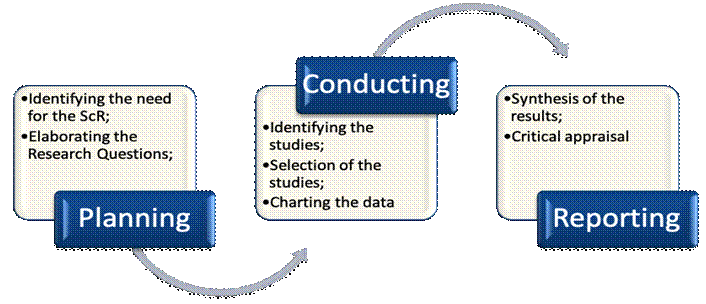
Finally, a detailed version of the ScR protocol was drafted, discussed and tested by the authors before it was applied. This ScR protocol is described in detail all the phases and stages of the methodology, as shown in Figure 1, according procedures indicated by Iwaya et al. (2022).
Figure 1 shows the second stage, the development of the ScR protocol. It involves searching several databases, including Scielo, Pepsic, Spell, and Web Of Science, which have more peer-reviewed data on mental health and public administration. A search was made for 2014-2023 publications in August 2023. To answer the RQs, keywords were used with the Boolean operators "E" and "AND," with the following combinations: "Teletrabalho e bem-estar"; "Teletrabalho e qualidade de vida"; "Teletrabalho e ansiedade e depressão". The search was limited to empirical articles published in English and Portuguese, excluding book chapters, theses, and dissertations.
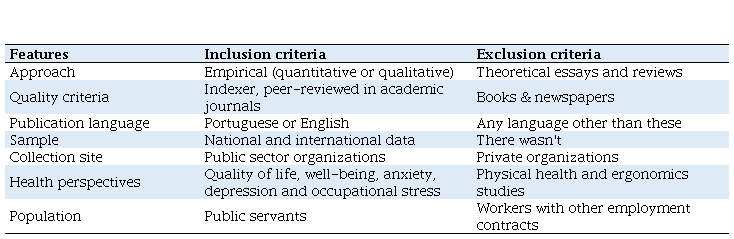
These words and their combinations were searched by filtering the titles, abstracts, keywords, and full text of the databases. Table 1 shows the inclusion and exclusion criteria of the articles. From this procedure, it is possible to filter and identify the studies that are the target of the research (Oliveira et al., 2022).
The studies were selected in two stages: first, titles, abstracts, and keywords were read; then, the studies were read in full. The following data were tabulated in an Excel spreadsheet: year, authors, keywords, abstract, theoretical model, health perspective
A procedure similar to that of Iwaya et al. (2022) was used to map the data, providing structured data of different kinds: quantitative (number of publications, distribution, per author) and qualitative (country, health, career, variable). This was done using Excel and Word software, generating tables and figures.
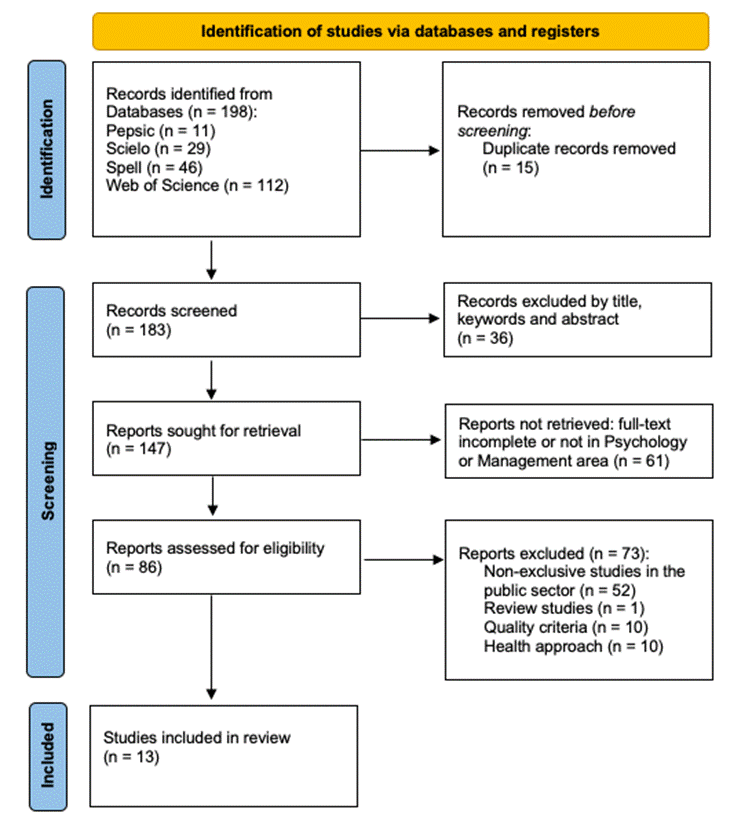
Figure 2 shows the flow of studies for this review. 198 studies were initially identified. After this stage, the reviewers removed 15 duplicate studies. 36 studies were excluded after checking title, abstract and keywords. Subsequently, 61 articles were removed for not fitting into the fields of psychology and management, or being incomplete. The inclusion and exclusion criteria were applied, leaving 13 articles in the final sample.
In fact, the small number of studies in the final sample is remarkable. This can be explained by the fact that, despite the increase in the number of organizations adopting telework, there is still a lack of theoretical and empirical studies, especially with regard to public administration. In addition, the Brazilian production stands out in comparison with other countries. Given this scenario, it is important to note that both the Covid-19 pandemic scenario and the implementation of the Management and Performance Program (PGD, Portuguese acronym) by the Brazilian government have stimulated research interest in a scenario that was limited due to the low investments allocated to technological advances in the public sector and the resistance that some countries have had to adopt teleworking (Mele et al., 2021; Melo & Demo, 2024).
Therefore, in order to answer RQ1.1, which describes the studies on the impact of telework on the mental health of civil servants, this part of the analysis maps the data against a distribution of various aspects. For example, the frequency of publications, the approaches used, the authors of the studies, the countries, and the careers studied.
Figure 3 shows that the first studies on this topic appeared in 2020, with the outbreak of the pandemic and the widespread adoption of teleworking. There has been some progress, but it is still tentative, reinforcing the need for more research.
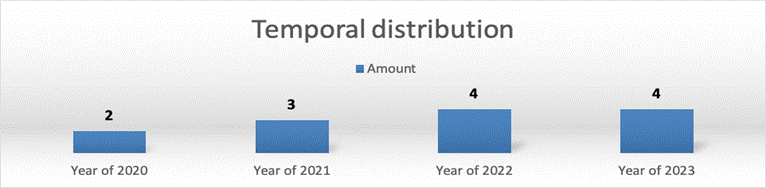
Table 2 shows how the studies were grouped by country, methodology, perspective and population, as recommended by Creswell and Creswell (2017). Ten studies were conducted in Brazil, one in France, one in Italy, and one in Australia. Research fields were diverse: psychology, management, public health, natural sciences, and occupational health. Nine were in Portuguese, four in English.
Among the most studied professions, the legal profession stands out. This is due to the fact that the judiciary is one of the most mature in terms of adopting telework. The National Council of the Judiciary (CNJ by its Portuguese acronym) has been authorizing and regulating this way of working since 2016, including the measurement of productivity rates, and teleworkers are required to increase the number of cases dispatched by thirty percent, according to Resolution 227 of June 15, 2016.
The studies focused on research with real subjects, i.e. primary data studies that analyzed the impact of telework on mental health using surveys (10 studies), open-ended questionnaires and interviews (2 studies each), and focus groups (1 study). Different scales were used, such as the Well-being at Work Scale (Paschoal & Tamayo, 2008), the Scale of Positive and Negative Experiences (SPANE), the Scale of Job Crafting Actions (Devotto & Machado, 2017), and the Well-being at Work (Demo & Paschoal, 2016). All others were requested in one study and in a questionnaire.
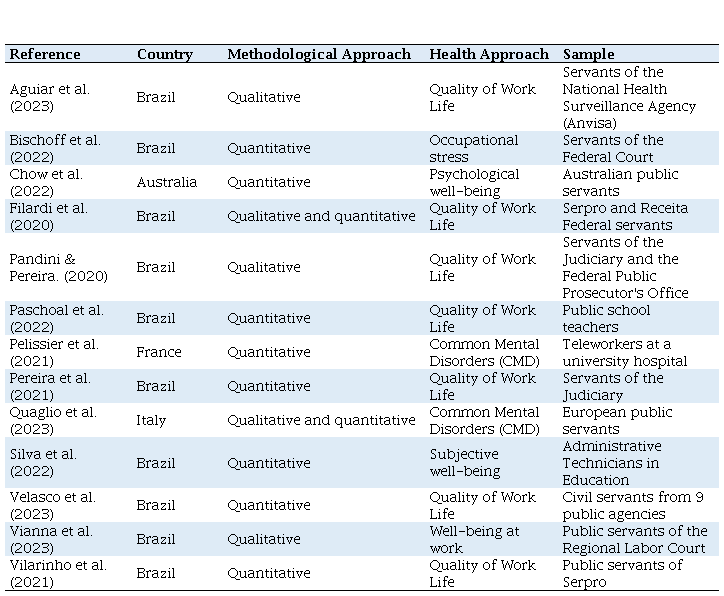
As for the authors of the studies, two authors contributed to two papers: Paschoal, T. and Demo, G. (Paschoal et al., 2022; Vilarinho et al., 2021). This indicates that both researchers associated with the University of Brasilia and researchers on issues related to human resources management in the public service have advanced the discussion on telework in public administration.
It is noteworthy that none of the 13 studies presented an analysis model on the topic under investigation. However, given the health approaches identified, researches were conducted with the aim of presenting possible variables that could contribute to the promotion of mental health in the face of the implementation of telework. In this sense, it is important to answer RQ1.2: What are the main health approaches studied?
Table 4 shows the most researched mental health approaches and their relationship to telework, with Quality of Work Life (QWL) being the most researched (7 studies), followed by Common Mental Disorders (CMD) (2 studies) and the others being adopted in one paper. What can be seen is that there is a tendency for each of them to be more taken up by a country or region, as will be seen below.
Studies on the relationship between telework and common mental disorders have been developed outside Brazil, specifically in France and Italy. For example, Pelissier and colleagues (2021) studied anxiety and depression among public employees in a French clinic. Similarly, Quaglio et al. (2023) found that CMDs were related to work overload. However, the two studies presented here show a positive perception of telework.
As far as well-being studies are concerned, the academic production is not yet well developed, with three studies found, each dedicated to one type. Two, in the Brazilian context, sought to verify the perception of civil servants regarding the impact of telework on their Work Well-Being (WBW) (Vianna et al., 2023) and Subjective Well-Being (SWB) (Silva et al., 2022).
With regard to the Australian reality, Chow et al. (2022) found that there are positive perceptions among health workers regarding the adoption of telework, especially in terms of developing the ability to concentrate and be more productive. However, they emphasized that this perception of psychological well-being (PWB) is linked to the ability to use ICT.
One issue society has discussed but studies of telework have not yet explored is the stress it causes. Bischoff et al. (2022) studied stress among civil servants in the judiciary. They found that self-efficacy at work protects against stress, while work overload increases stress.
Quality of life at work (QWL) was the most widely addressed in the studies, using different models. This was a national practice; all studies with this health perspective were conducted in Brazil. Another noteworthy aspect is the focus on the health perspective of QWL in articles on the advantages and disadvantages of telework (Filardi et al., 2020). The relationship between QWL and family dynamics and gender is also of interest (Aguiar et al., 2023; Velasco et al., 2023).
The concept of QWL is studied in two ways. One looks at traditional aspects like psychology, behavior, and motivation (Pereira et al., 2021). Another includes aspects like work activity and overload (Paschoal et al., 2022; Velasco et al., 2023). These studies also found satisfactory levels of quality of life at work and e-QWL, but these need regulating by family issues.
In view of the health approaches indicated, it is necessary to answer RQ1.3, which deals with the investigated variables that can contribute to the promotion of mental health when teleworking is adopted. As previously reported, although the studies did not aim to propose models, they did discuss ways to improve the activity or even identify possible causes of health damage.
Pelissier et al (2021) found that CMDs were more related to the amount of work, technical problems with ICTs, and work-family reconciliation. For it to become a way of working that actually leads to health benefits, the activities need to be better organized, with adequate staffing and space for a more appropriate work-family balance (Pelissier et al., 2021; Quaglio et al., 2023).
With regard to well-being at work (WBW) and subjective well-being (SWB), it has been found that there is a negative relationship, especially when there is work overload, but that factors such as autonomy, good communication and the possibility of reconciling work and family are essential for a positive relationship to occur (Silva et al., 2022; Vianna et al., 2023). It is important to note, however, that different variables have been identified in each type of well-being that may contribute to mental health.
Regarding the relationship between telework and WBW, a qualitative study by Vianna et al. (2023) found that teleworkers say they need relationships with colleagues, whether face-to-face or virtual, and that performance is affected. In light of this, job crafting was also found to be an effective alternative for improving perceptions of well-being at work.
A study on telework found that public service teleworkers had lower SWB and were more distracted by multitasking (Silva et al., 2022). People in non-traditional work environments should realize that they have autonomy and attention from managers in addition to receiving demands and being paid for them.
With regard to PWB, Chow et al. (2022) found that job crafting contributes to better performance, acting in the collective process of feeling that telematic activity contributes to health (Cordova et al., 2024; Devotto et al., 2022; Tashima-Cid et al., 2023). In addition, the ability to use ICT also acts as a facilitator in the health promotion process.
In turn, occupational stress needs to be understood on the basis of social, environmental, individual and, above all, emotional factors that affect the relationship between (tele)work and mental health (Eidelwein et al., 2024). In addition, work overload can lead to burnout, in addition to excessive managerial control (Cordova et al., 2024; Ferreira & Anderson, 2020).
The studies showed different ways to improve mental health at work. It was found that structural aspects influence teleworkers' satisfaction and perception of telework as healthy (Filardi et al., 2020; Velasco et al., 2023; Vilarinho et al., 2021). Adapting activities to family dynamics and job crafting can improve work health (Aguiar et al., Pandini & Pereira, and Paschoal).
It is well known that the public administration operates differently from private organizations, so Human Resource Management (HRM) actions must act as a mediator, promoting Quality of Life in Teleworking (QoLT), as well as indicating possibilities that go beyond salary demands, given that there is a strong difference between the management processes of these two realities (Melo & Demo, 2024; Schnacker et al., 2025). Finally, it is important to note that these actions mapped here contribute not only to health promotion, but also to the organization, considering that in public services, happier and healthier workers are more productive (Fogaça & Coelho., 2015).
The Center for Evidence Based Management (CEBMa) checklist should be used to assess studies, both qualitative and quantitative, to ensure they meet quality standards. The context is presented clearly and the studies justify the research, although one lacks a description of the data collection script. Analyses are generally well described, leading to good conclusions.
Two researchers with experience in systematic reviews conducted a critical analysis of the trials. The blind review technique was adopted, i.e. each person conducted their review without access to the other's notes, so that they could later cross-check the information and reach a consensus.
Moreover, only 3 studies employed a qualitative approach, which is vital for coding and generating themes (Iwaya et al., 2022). Table 4 shows studies using this approach have access issues but produce reliable results. These results are not generalizable, which is typical of qualitative research.

Table 5 shows the analysis of the quantitative studies. It includes quali-quanti papers, as the qualitative method supported the surveys, and these papers are included. The studies show adequate methods and sample selection, although only two studies used bias elimination techniques. The lack of sample size specification hinders adequate response rate checking.
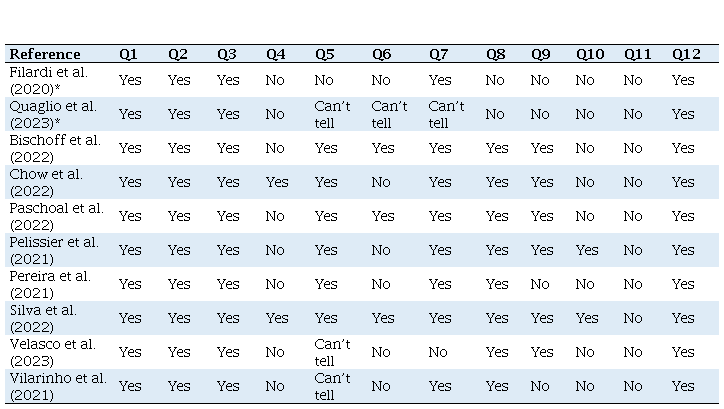
*Quali-quanti method approach
Instruments were chosen with care, including in quali-quanti studies with satisfactory Cronbach's alpha. Most studies do not report confidence intervals or address confounding factors, but the results can still be considered generalizable. The studies by Paschoal et al. (2022) and Silva et al. (2022) are notable for their rigorous methods and provide a reference point for other research; similarly, the study by Vianna et al. (2023) is noteworthy in qualitative research for its application of technique and accuracy.
In view of the results found and the critical analysis of the studies that made up the sample, it is possible to state that the issue of the impact of telework on the mental health of civil servants still needs further investigation. Especially with regard to CMDs, no studies were identified in Brazil; however, with regard to other health approaches, it dominates the scientific production.
Even with these limitations, it is possible to see evidence that could contribute to health promotion in the public service, given the adoption of telework. However, in order for this to actually happen, it is important to point out the gaps that should be filled by further research, given the evidence found, as can be seen below, in view of the relationship between telework and health approaches.
The relationship between work and family has affected research on implementing telework and civil servants' mental health. Studies have shown a balance between work and personal life, as well as greater family interaction, are positive for teleworkers' mental health (Filardi et al., 2020). Work-life balance can reduce perceptions of work overload and the demands of new technologies and the chance of working from home helps avoid conflicts in the relationship (Duxbury & Halisnki, 2014; Vianna et al., 2023). Research shows this work-life balance is crucial in public service for mental health. This space, once a family environment, now competes with work demands. We must rethink teleworking so it's beneficial for the family and civil servant, with gains in productivity and mental health (Santana & Roazzi, 2021).
The high demand and workload resulting from telework and its consequent negative impact on mental health have also been identified in other studies, indicating that there is indeed a causal relationship with common mental disorders, but they have been identified in the context of private organizations (Liu et al., 2021; Pinheiro & Coelho-Lima, 2022). Another factor worth mentioning is that, as this is a convergent phenomenon with the Covid-19 pandemic, the effects of this context may interact.
The Brazilian public service differs from others, so new studies should consider this. This could improve our understanding of telework and CMD, and help managers develop policies to promote workers' health. Both studies (Quaglio et al., 2023; Pelissier et al., 2021) used quantitative techniques, so further research should use a qualitative approach.
The effects work has on mental health is a current topic, but studies are still in their infancy, especially regarding teleworking. There is greater interest in private sector studies over public sector due to job demand, workplace conflict, etc (Khalid & Syed, 2024). This indicates a long way to go to understand this phenomenon and inform public managers of the relationship between using technology and well-being at work.
In support of the relationship between autonomy and SWB, Lizote et al. (2021), in a study of teleworkers at a community university, found that the widespread adoption of telework during the Covid-19 pandemic led to a sense of damage to subjective well-being, so that to compensate for this sense, autonomy leads to a greater perception of a healthy state for teleworkers. Furthermore, it is important to consider that this form of well-being is influenced by various factors, whether extrinsic or intrinsic, such as politics or health (Woyciekoski et al., 2012).
This shows an interest in how civil servants perceive the impact of telework on well-being, both subjective and objective aspects, such as happiness and performance. All three studies analyzed the perspective of non-managers, but research from a multilevel perspective (between managers and non-managers) is also important for understanding reality (Carvalho et al., 2023). In terms of the approaches used in the studies, there is a predominance of quantitative research. Given the importance of understanding the feelings and emotions generated in this context, there is also a need for more qualitative studies.
In fact, understanding the relationship between telework and well-being can help organizations, whether private or public, which are the focus of this study, to formulate HRM actions in a strategic way, considering the specificities of the workplace, contributing to greater effectiveness (Melo & Demo, 2024). This is especially important for public servants, who are often more motivated and less likely to prioritize reduced working hours as much as their counterparts in the private sector, potentially impacting their quality of life by avoiding overwork (Ryu, 2016).
If occupational stress does not receive the attention it deserves, it can be characterized as a disease (Leonelli et al., 2017). Especially in light of the Covid-19 pandemic, the period in which most of the studies were conducted, it is necessary to understand how social, environmental, individual and, above all, emotional factors interfere in the relationship between (tele)work and mental health (Eidelwein et al., 2024).
New studies on the relationship between telework and occupational stress are needed to contribute to the discussion on the effects of work overload and excessive managerial control (Cordova et al., 2024; Ferreira & Anderson, 2020). Furthermore, theoretical models are needed to address the factors that trigger negative reactions, as this is a new phenomenon. Karasek's (1979) model presents job crafting as a way to mitigate harm to employees' mental health. It was noted that several studies have used this variable to identify strategies for implementing telework (Paschoal et al., 2022; Vianna et al., 2023).
This construct is important, especially in a scenario of widespread teleworking, new psychosocial risks should not be ruled out, especially with regard to public administration, because faced with a feeling of constant availability, together with the rigidity of procedures that is common to the segment, occupational illnesses can arise (Morilla-Luchena et al., 2021; Wang et al., 2021). Adjustments should be considered to contribute to the best development of the activity, so that both levels can make the work environment more pleasant and tangible (Devotto & Machado, 2017).
New e-QWL studies could investigate changes in legislation and the Brazilian government's Management and Performance Program (PGD, Portuguese acronym), which aims to develop more effective practices by making teleworking official. In addition, in an effort to promote better working conditions as well as health, studies have looked at variables such as family dynamics, with satisfactory results (Aguiar et al., 2023; Velasco et al., 2023).
It is therefore necessary to think and reflect on HRM practices in the public sector in order to provide better services to the population, based on healthier and more satisfied civil servants. In light of what has been observed, and considering that the practice in public administration is more focused on the quality of service delivery, the requirements related to teleworking should be thought in such a way as to avoid work overload, provide better working conditions and the perception of QWL gains on the part of employees (Demo et al., 2024; Melo & Demo, 2024).
The studies were conducted during the pandemic, when teleworking was mandatory. Now that the emergency is over, it's time to study the quality of life in these new arrangements. Most of the research has been qualitative, so more is needed to understand the experiences of public servants in terms of QWL.
In view of what has been analyzed in the selected studies, Further investigation is needed into the relationship between telework and mental health in the public service. Figure 4 presents an integrated model for the promotion of mental health in the face of telework adoption in the public service.
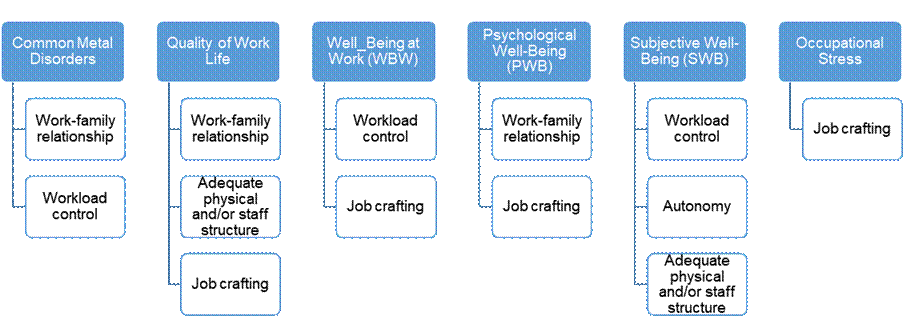
For public sector teleworkers to feel healthy at work, there must be integrated action with other constructs. The model shows that combating common mental disorders requires a harmonious work-family relationship and controlled activity. Well-being, with three types, must be articulated so actions can be developed to promote a healthy working environment. Properly perceiving SWB requires control over workload, autonomy for teleworkers, and an adequate structure for developing policies. SWB requires respect for the work-family relationship and the implementation of Job Crafting (JC). PWB also requires JC and the avoidance of work overload.
Although there has been little research on stress in the workplace, it cannot be ignored, and JC has been shown to be an effective tool in its prevention. Finally, quality of life at work can be properly perceived if there is an adequate physical and/or personal structure, if the work-family relationship is respected and if job crafting is also implemented.
The conduct a scoping review (ScR) of the effects of telework on the mental health of civil servants and what strategies have been developed by public organizations to promote health by identifying, mapping and synthesizing existing studies. The selected publications have worked with different approaches to health and health promotion. An analysis of the results suggests that the articulation between the themes presented here is unprecedented and should be encouraged. Moreover, given that there is still a lack of research on this subject in the public sector, this study also offers new ideas in comparison with the private sector. This opens up opportunities for managers, especially those in charge of HRM.
Studies indicate a rise in interest since 2020, coinciding with the pandemic and teleworking in the public sector. Most studies use a quantitative approach and are conducted in Brazil. They focus on quality of work life, with little on common mental disorders. There was one study each on occupational stress and aspects of well-being, indicating a need for more research. Studies show that work-family balance, good conditions, autonomy and control over the job are important for health promotion. Of these, job crafting is the most studied and has been shown to be effective.
The proposal of an integrated model between the health perspective and ways to mitigate the negative effects of teleworking among civil servants is not intended to end the discussion. Further studies are needed to identify the best ways of combining the two issues, with the aim of contributing to the mental health of civil servants and public administration. It should also be noted that there were limitations, mostly related to the small number of articles found and, above all, the lack of research in realities other than Brazil. Therefore, it is important not only to carry out new research on the phenomenon studied here, but also to develop further reviews in order to contribute to a better understanding of the scenario.
Finally, this study has contributed to the operationalization of future empirical research. Longitudinal studies are needed to analyze changes in legislation, organizational dynamics, and civil servants' health over time. New studies should also be developed in a post-pandemic scenario, given the widespread adoption of the PGD in the Brazilian public administration and the rise of teleworking.
redalyc-journal-id: 5707
