2025
23
15112024
27022025
 Henrique César Melo Ribeiro hcmribeiro@gmail.com
Federal University of the Parnaíba Delta (UFDPAR), Brasil
Abstract:
Background: The Clean Development Mechanism is the only “flexible mechanism” of the Kyoto Protocol that allows developing countries to participate so that they can reduce greenhouse gas emissions, particularly carbon, through projects, thus seeking to mitigate climate problems and, consequently, the pursuit of sustainable development. Purpose: To investigate the profile and behavior of scientific production of articles published on the CDM theme in Brazilian academia from the perspective of social network analysis from the perspective of SPELL. Method: Social network analysis was used in 41 articles identified on the CDM theme. Results: Decline of the CDM theme in Brazilian academia; RGSA was the most central journal; José Célio Silveira Andrade, Maisa de Souza Ribeiro and Antônio Costa Silva Júnior were the most central authors; USP, UFBA, UNIFOR and UFSM were the most central universities; Mari Elizabete Bernardini Seiffert and Ignez Vidigal Lopes were the most cited authors and the Interministerial Commission on Global Climate Change was the most cited entity; and clean development mechanism, sustainable development, Kyoto Protocol, carbon credits, CDM, sustainability, carbon credit, clean development mechanism (CDM), performance and renewable energy were the most central keywords. Conclusions: This study concludes by highlighting the CDM theme from the perspective of social network analysis, analyzing the structure and formation of the networks of actors involved in the process of construction and creation of academic value regarding the aforementioned and highlighted subject, thus contributing to its better understanding and, in parallel, to its comprehension, consequently influencing its development, its maturation, and its growth in the academic literature of Brazil.
Keywords: CDM, brazilian academy, brazilian journals, SPELL, SNA.
Resumo:
Contextualização: O Mecanismo de Desenvolvimento Limpo é o único “mecanismo flexível” do Protocolo de Kyoto que permite a participação de países em desenvolvimento, para que eles possam reduzir as emissões dos Gases de Efeito Estufa, em particular, do carbono, por meio de projetos, procurando, assim, a mitigação dos problemas climáticos e, por conseguinte, a busca do desenvolvimento sustentável. Objetivo: Investigar o perfil e o comportamento da produção científica dos artigos publicados sobre o tema MDL na academia brasileira sob a perspectiva da análise de redes sociais sob a óptica da SPELL. Método: Utilizou-se a análise de redes sociais em 41 artigos identificados sobre o tema MDL. Resultados: Declínio do tema MDL na academia do Brasil; RGSA foi o periódico mais central; José Célio Silveira Andrade, Maisa de Souza Ribeiro e Antônio Costa Silva Júnior foram os autores mais centrais; USP, UFBA, UNIFOR e UFSM foram as universidades mais centrais; Mari Elizabete Bernardini Seiffert e Ignez Vidigal Lopes, os autores mais citados e Comissão Interministerial de Mudança Global do Clima, a entidade mais citada; e mecanismo de desenvolvimento limpo, desenvolvimento sustentável, Protocolo de Quioto, créditos de carbono, MDL, sustentabilidade, crédito de carbono, mecanismo de desenvolvimento limpo (MDL), desempenho e energia renovável, as palavras-chave mais centrais. Conclusões: Esse estudo é concluído ao colocar em destaque o tema MDL sob a óptica da análise de redes sociais, analisando a estrutura e a formação das redes dos atores implicados no processo de construção e a criação do valor acadêmico a respeito do mencionado e realçado assunto, contribuindo, assim, para seu melhor entendimento e, paralelamente a isso, na compreensão, influenciando, por conseguinte, no seu desenvolvimento, na sua maturação, e no seu crescimento na literatura acadêmica do Brasil.
Palavras-chave: MDL, academia brasileira, periódicos brasileiros, SPELL, ARS.
Resumen:
Contextualización: El Mecanismo de Desarrollo Limpio es el único “mecanismo flexible” del Protocolo de Kioto que permite la participación de los países en desarrollo, para que puedan reducir las emisiones de gases de efecto invernadero, en particular de carbono, a través de proyectos, buscando así, la mitigación de los problemas climáticos y, en consecuencia, , la búsqueda del desarrollo sostenible. Objetivo: Investigación fue investigar el perfil y el comportamiento de la producción científica de artículos publicados sobre el tema MDL en la academia brasileña desde la perspectiva del análisis de redes sociales desde la perspectiva de SPELL. Método: se utilizó el análisis de redes sociales en 41 artículos identificados sobre el tema MDL. Resultados: Decadencia del tema MDL en la academia brasileña; RGSA era la revista más central; José Célio Silveira Andrade, Maisa de Souza Ribeiro y Antônio Costa Silva Júnior fueron los autores más centrales; USP, UFBA, UNIFOR y UFSM fueron las universidades más centrales; Mari Elizabete Bernardini Seiffert e Ignez Vidigal Lopes fueron los autores más citados y la Comisión Interministerial sobre Cambio Climático Global fue la entidad más citada; y mecanismo de desarrollo limpio, desarrollo sostenible, Protocolo de Kioto, créditos de carbono, MDL, sostenibilidad, crédito de carbono, mecanismo de desarrollo limpio (MDL), desempeño y energía renovable fueron las palabras clave más centrales. Conclusiones: Este estudio concluye resaltando el tema MDL desde la perspectiva del análisis de redes sociales, analizando la estructura y formación de redes de actores involucrados en el proceso de construcción y creación de valor académico en torno al tema mencionado y resaltado. contribuyendo a su mejor comprensión y, paralelamente, a su comprensión, influyendo así en su desarrollo, su maduración y su crecimiento en la literatura académica brasileña.
Palabras clave: MDL, academia brasileña, publicaciones periódicas brasileñas, SPELL, ARS.
Clean development mechanism: Profile and behavior in brazilian academia from the perspective of social network analysis
Mecanismo de desenvolvimento limpo: Perfil e comportamento na academia brasileira sob a perspectiva da análise de redes sociais
Mecanismo de desarrollo limpio: Perfil y comportamiento en la academia brasileña desde la perspectiva del análisis de las redes sociales
Henrique César Melo Ribeiro hcmribeiro@gmail.com

Recepción: 15 Noviembre 2024
Aprobación: 27 Febrero 2025
Publicación: 30 Abril 2025
The Clean Development Mechanism (CDM) was established under Article 12 of the Kyoto Protocol to assist developed countries in reducing greenhouse gas (GHG) emissions by transferring technologies to developing countries and creating a carbon credit market. Despite playing a crucial role in reducing GHG emissions, the CDM faced market uncertainties, inadequate GHG reduction targets among signatory countries, and political and institutional obstacles that led to a decline in CDM projects after 2012 (Shrivastava, Lourens, Sharma & Bajaj, 2024; Wan, Zhang & Chen, 2024).
Nevertheless, the CDM continues to enable developing nations to participate in the global effort to reduce GHG emissions, thereby addressing and understanding climate change. Thus, the implementation of CDM projects provides an opportunity for more developing countries to actively engage in global climate governance. In general, the emission reduction effects of different types of CDM projects vary significantly. Moreover, implementing CDM projects in developing nations can not only effectively replace traditional fossil energy but also improve energy utilization efficiency. Given this, China, India, and Brazil currently have the highest percentage of registered CDM projects worldwide (Shi, Wu & Kang, 2021; Bortoletto, Pacagnella Junior & Cabello, 2023; Chen, Zhang, Lau, Wang, Wang & Zhang, 2023; Shrivastava et al., 2024).
CDM projects undergo a rigorous approval process and must demonstrate that the achieved GHG emission reductions are additional to what would have occurred without the project. Therefore, it can be understood that the CDM is designed to focus on the sustainable development of the host country while simultaneously contributing on a global scale (Rivera-Niquepa, Zuluaga & Rojas, 2023). In this regard, the study by Godoy, Saes, Schnaider, and Piao (2024) examined the extent to which CDM projects contribute to sustainable development in Brazil. The authors found that most CDM projects in Brazil aim to contribute to sustainable development, particularly in social and economic aspects (Godoy et al., 2024). Therefore, it is observed that CDM projects should have the additional purpose of promoting environmental, social, and economic benefits that lead to the sustainable development of the country (Góes, Andrade, Silva & Santana, 2018).
This makes the CDM stand out as a concept within the scope of sustainability, a contemporary issue, as a result, it is considered a topic of continuous, representative, and crucial interest, serving as an important entry point for discussions related to climate change, this includes policies on energy transition, such as renewable energy pollution mitigation, and the reduction of GHG emissions, particularly carbon dioxide (CO₂). In summary, the CDM can be considered a trending and impactful topic in the field of sustainability (Morais, Zevericoski, Ferrarezi, Gehlen & Reis, 2017; Zhang, Liu, Han & Liao, 2022; Aboagye, Zeng, Owusu, Mensah, Afrane, Ampah & Brenyah, 2023; Zheng, Li & Chai, 2023; Androniceanu, Veith, Ionescu, Marinescu, Sima & Paru, 2024; Xu, Peng, Tian, Hu, Fu & Feng, 2024; Wang, 2024).
In this regard, the research by Bortoletto, Pacagnella Junior, and Cabello (2023) highlighted the evaluation of the evolution and updates in the international literature on the CDM topic, using indexing databases from Web of Science (WoS) and Scopus (SCP) and through a bibliometric analysis of 810 studies published between 1998 and 2021. The main findings of the study were as follows: The United States had the highest number of published studies, followed by Germany and China, with Energy Policy e Climate Policy as the main journals for disseminating research on the CDM topic. The study identified four key research lines of interest on the CDM theme over time, starting with the greenhouse effect and the Kyoto Protocol, followed by economic and business aspects, sustainable development and energy policy, and finally, technology transfer and innovation.
As a result, the following research question was formulated to support and guide this study: What is the profile and behavior of the scientific production of articles published on the CDM topic in Brazilian academia from the perspective of social network analysis and through the lens of SPELL? Thus, the objective of this research emerged: to investigate the profile and behavior of the scientific production of articles published on the CDM topic in Brazilian academia from the perspective of social network analysis through the lens of SPELL. The purpose of this research is argued by recognizing and understanding that the CDM is one of the flexible mechanisms established under the United Nations Framework Convention on Climate Change. Therefore, it is reiterated that the CDM allows developed countries to invest in emission reduction projects in developing countries and receive certified emission reductions as carbon credits.
It is further reinforced that the CDM is one of the greenhouse gas management instruments included in the Kyoto Protocol. Thus, the significance of conducting this study is justified by the fact that, in 2024, the Kyoto Protocol marks the 20th anniversary of its entry into force on a global scale, which occurred in 2005, along with the establishment of the CDM through Article 12 of the Protocol. This milestone has highlighted the CDM within the sustainable development landscape and, simultaneously, in the context of carbon credits, influencing the choice of this research objective (Mele, Paglialunga & Sforna, 2021; Rivera-Niquepa, Zuluaga & Rojas, 2023; Shrivastava et al., 2024). Another justification for conducting this research is that it highlights, for the first time and up to the present moment, the CDM topic in a study that emphasizes the scientific production of Brazilian research published in national journals. Thus, the relevance of this study is evident, as it is based on its originality and, consequently, contributes to the field of Administration, Accounting, and Tourism. Therefore, it is also important and, at the same time, beneficial for further investigations on the scientific production of the topic of the CDM to be developed and simultaneously disseminated, particularly in scientific journals, thereby contributing to a better understanding and greater comprehension of the topic. Consequently, this can influence, in a mutually reinforcing manner, its evolution in the scientific literature in Brazil.
Regarding Brazilian academic literature, the choice was made to Scientific Periodicals Electronic Library (SPELL) to address and simultaneously achieve the research question and objective of this study, as it is a scientific database that indexes open-access Brazilian scientific journals in the fields of Business Administration, Accounting, and Tourism. Currently, it includes 120 indexed journals, over 70,000 documents, more than 43 million accesses, and approximately 16 million downloads.Therefore, SPELL was created by the Brazilian scientific community in these fields of knowledge to fill the gap observed in databases and indexers focused on national academic journals. In summary, based on the inclusive logic, SPELL was launched in mid-2012 to incorporate most of the journals in the mentioned fields of knowledge, thus providing free access to all articles published on a single data platform. This allows researchers to search for and explore studies based on topics, terms, and themes (Ribeiro, 2024a; Rossoni & Rosa, 2024; SPELL, 2024).
It is clarified that Social Network Analysis (SNA), or sociometry, is used (Pereira, Lamenza, Faria & Pereira, 2014; Lima, Fernandes & Amâncio-Vieira, 2018; Ribeiro, 2020), due to its emphasis on the importance of interactions, thereby measuring both formal and informal relationships. Its purpose is to help understand the flows and the exchange of information, communication, and knowledge among the actors responsible for the construction, dissemination, and socialization of scientific knowledge in academia. It is further argued that the use of sociometry in this study is justified, as it is a distinctive methodological technique for analyzing research focused on the investigation of scientific production related to specific topics and terms (Ribeiro, Costa, Ferreira & Serra, 2014; Ferreira & Silva, 2019; Severiano Junior, Cunha, Zouain & Gonçalves, 2021; Ribeiro, 2024c).
This research contributes to Brazilian academic literature by assisting researchers in understanding and, concurrently, comprehending the state of the art of studies on the CDM topic from the perspective of Social Network Analysis (SNA) and through the lens of scientific journals indexed in the SPELL data platform. It thus provides and offers relevant data, information, and knowledge to support and guide future investigations. It is also desired that the results of this study provide contributions by offering references to support future studies by senior researchers and, particularly, by novice researchers in the academic field. Additionally, it aims to help policymakers become more aware of sustainable development through the CDM topic.
The CDM emerged in 1997 through a Brazilian proposal called the Clean Development Fund, with negotiations taking place between Brazil and the United States in the weeks leading up to the Kyoto Conference of the Parties. However, the proposal was modified, transforming into the CDM, and began to be implemented in 2005 (Cole, 2012; Mele, Paglialunga & Sforna, 2021). The CDM is one of the three flexible compliance mechanisms established under the Kyoto Protocol, the other two being Emissions Trading and Joint Implementation. It is worth mentioning that Article 12 of the Kyoto Protocol established the CDM, which includes the following aspects: renewable energy projects (wind, solar, and hydropower); energy efficiency projects; fuel switching; methane control from coal mines; and control of emissions from certain industrial gases, including hydrofluorocarbons (HFCs) and nitrous oxide (N₂O) (Shrivastava et al., 2024; Wang, 2024). It is also important to note that Brazil, for example, has great potential in renewable energy, such as wind, solar, and hydropower, and public policies can and should promote CDM projects that focus on reducing GHG emissions while simultaneously fostering sustainable development. In this way, by understanding that the development of a CDM project promotes sustainable development, public policies can take advantage of these CDM projects, thus combating climate change and its impacts (Godoy et al., 2024).
Per the above, it is added that there is a growing demand for Renewable Energy Certificates (RECs), which is related to the need to demonstrate the use of renewable energy in the energy mix of companies and, simultaneously, countries that are committed to a low-carbon economy, the CDM, sustainability performance standards, and Environmental, Social and Corporate Governance (ESG). Here, it is further emphasized that environmental governance has become a crucial issue in the global ecological community, as it, along with the CDM, which is the precursor to Certified Emission Reductions, plays a significant role in the development of the carbon emissions trading market. It directly influences the mitigation of pollution, the reduction of carbon, and other GHGs worldwide (Xu, Peng, Tian, Fu, Hu, Fu & Feng, 2024). Therefore, these referred RECs or green certificates enable the traceability of clean energy, thereby meeting various protocols in the development of inventories on GHG emission reduction. In this way, RECs play a significant role in a more sustainable energy transition and the promotion of low-carbon practices, acting as optimization mechanisms for the increased integration of renewable energy in a given energy mix and, in some cases, as credit currencies in the carbon market, through the cap and trade (Matos, 2024).
Still regarding Article 12 of the Kyoto Protocol, the countries eligible to host CDM projects are those in development classified as "Non-Annex I" under the United Nations Framework Convention on Climate Change (UNFCCC) which do not have emission reduction targets (Mele, Paglialunga & Sforna, 2021). That said, the CDM allows investors from developed countries to implement emission reduction projects in developing countries, thus contributing to the sustainable development of these nations. Therefore, the CDM is a win-win mechanism that helps developed countries meet some of their GHG emission reduction obligations while simultaneously assisting developing nations in achieving sustainable development (Shrivastava et al., 2024; Wang, Wang, Shi & Wu, 2024). Here, it is added that the main GHGs are: carbon dioxide (CO₂), chlorofluorocarbon (CFC), methane (CH₄), nitric oxide (HNO₃), ozone (O₃), among others (Freitas & Paiva, 2018).
Given the above, it is worth highlighting the research by Fernandes and Leite (2021) which analyzed the role of CDM projects in promoting sustainable development in Brazil. The findings of the cited authors concluded that the creation of the CDM was a significant advancement, mainly because it was one of the key mechanisms implemented under the Kyoto Protocol. Additionally, the CDM has also become an international historical milestone, as it is an innovative tool contributing to the mitigation of climate change. Finally, the researchers observed that Brazil has made significant progress in the number and types of registered CDM projects, especially in the energy sector. However, despite its global recognition and relevance, it was found that the CDM has weakened over time, leading to uncertainties regarding the validity of the Kyoto Protocol (Fernandes & Leite, 2021).
Thus, the Kyoto Protocol implemented the CDM and carbon credit trading as strategies to reduce global GHG emissions (Rivera-Niquepa, Zuluaga & Rojas, 2023). In light of the above, it is emphasized that CDM projects are relevant because the product they deliver, GHG emission reductions, can be sold in international markets without any physical infrastructure. Therefore, if transaction costs and other barriers can be minimized, even small-scale development initiatives can theoretically increase the amount of money flowing to developing countries through the emerging market for GHG reductions (Dirisu, Salawu, Ekpe, Udoye, Falodun, Oyedepo, Ajayi & Kale, 2024). In view of the above, it is evident that future energy policies may be strongly influenced by efforts to mitigate the effects of global climate change. Thus, the CDM is a valuable mechanism for significantly contributing to sustainable development through increased energy efficiency and conservation, job creation, more sustainable energy generation, and technology transfer between developed and developing countries (Dirisu et al., 2024).
It is further emphasized that climate agreements incorporate the relationship between sustainable development and climate change, particularly through the CDM. Thus, the goals of reducing GHG emissions and promoting sustainable development are integrated (Lazaro & Gremaud, 2017). That said, the research by Lazaro and Gremaud (2017) is highlighted as it evaluated the contribution of CDM projects to sustainable development in three Latin American countries: Brazil, Mexico, and Peru. The results found by the aforementioned authors show that, although the three nations have established criteria to assess sustainable development, they do not ensure that all CDM activities contribute to achieving it. Some CDM projects merely describe the reduction of a specific GHG emission to justify their contribution. In Brazil and Peru, the greatest contribution is from an economic perspective, while in Mexico, it is from an environmental standpoint (Lazaro & Gremaud, 2017).
It is further emphasized by highlighting the research of Godoy et al. (2024) which, in its findings, points out that, with regard to the number of projects, the sectors in Brazil that accumulate the highest number of CDM projects are: Biomass, Hydroelectric, Methane Prevention, and Landfill Gas. Among these, pig farming projects are the ones that engage in the most activities simultaneously, such as organic fertilizer production, development of courses for the local population, odor reduction on farms, encouragement of planting different crops, among other measures. It is interesting to note that the sectors with a very small number of projects, sometimes just a single project, show a greater impact on sustainable development. Additionally, some sectors, such as Biomass, more than others, already had a prevalence of projects that were sustainable even before the implementation of the Clean Development Mechanism (CDM) (Godoy et al., 2024).
In summary, it is emphasized that the CDM contributes to sustainability, especially in the environmental sphere. However, there is a concentration of CDM projects in a few countries and sectors. That said, it is observed that Brazil, Chile, China, India, Indonesia, Malaysia, Mexico, South Korea, Thailand, and Vietnam account for 87.4% of the total CDM projects worldwide, making these nations responsible for 89.4% and 87.1% of the total estimated GHG emission reductions in 2012 and 2020, respectively (Singh, 2024). Thus, it can be inferred that only a few developing countries have benefited from CDM projects. Consequently, it is observed that progress, both at the global level and within host countries, contradicts what is advocated by the Kyoto Protocol, which emphasizes the equitable geographical distribution of CDM projects.
In this regard, for widespread sustainable development benefits, policies should be designed to promote a greater distribution of projects among both developing and developed countries, as well as a diversification of CDM projects across different sectors (Hou & Wang, 2021; Singh, 2024). Therefore, it is evident that there is an urgent need to adopt measures to provide specialized knowledge and adequate support to CDM project participants in developing countries, helping them to host more projects under the CDM framework. Additionally, it is worth noting that, on a global scale, 69% of CDM projects are linked to the field of renewable energy, which represents a fundamental strategy for addressing climate change (Hou & Wang, 2021; Singh, 2024).
In summary, Article 12 of the Kyoto Protocol established the CDM, which included the following aspects: renewable energy projects such as wind, solar, and hydroelectric; energy efficiency projects; fuel switching; coal mine methane control; and the reduction of emissions from certain industrial gases, including HFCs and N2O. Then, in 2015, the Paris Agreement set long-term goals to guide all nations toward reducing GHG emissions while simultaneously mitigating climate change. The Paris Agreement emphasized the importance of accelerating initiatives across all sectors, including a call for governments to take action through public policies to hasten the energy transition from fossil fuels to renewable energy sources, such as wind and solar power, which play a crucial role in sustainable development (Wang, 2024). Here, it is worth noting that the CDM was incorporated into the Paris Agreement, thus remaining in effect beyond the Kyoto Protocol (Silva, Sarges, Gontijo, Oliveira & Rocha, 2024).
Finally, it is important to note that, in order to slow down global warming and achieve sustainable development, the Paris Agreement, in its Article 6, established cooperative approaches and the implementation of the Sustainable Development Mechanism (SDM) for carbon trading. The SDM is a mechanism that closely resembles the CDM but without the restriction that projects must be implemented in developing countries. That said, the SDM is recognized as a new approach that promotes both mitigation and sustainable development and is regarded as the successor to the CDM (Fawzy, Osman, Doran & Rooney, 2020; Deng, Su, Liao & Wu, 2022; Oliveira, 2022).
The objective of this study was to investigate the profile and behavior of scientific production in articles published on the topic of CDM in Brazilian academia from the perspective of social network analysis using SPELL. Methodologically, SNA was used to achieve this objective, as it enables the outlining and analysis of the structure and formation of social groups, as well as the interactions and positions of actors through symmetric and asymmetric matrices, and consequently, the graphical visualization of actors' social networks (Ferreira, 2011; Ribeiro, 2021). Therefore, SNA is a study method that emphasizes measures of position and relative power of actors, structural network measures, and measures of flows and resource exchange among social actors. Thus, SNA is an essential tool for investigating the relationships that foster the sharing of information and scientific knowledge among actors (Ferreira, 2011; Ribeiro, 2021).
Thus, SNA is a methodology that provides investigative resources to understand and explore relationships among actors. The most common applications of SNA focus on (one mode) research compared to (two mode) studies. In light of the above, it is emphasized that two mode (2 mode) networks encompass relationships between two different sets of actors. That said, the term “mode” refers to specific categories of actors. Regarding one-mode (1 mode) networks, these are characterized by consisting of actors within a network who have relationships with other actors of the same category, such as a network of researchers, in other words, co-authorship networks (Tomaél & Marteleto, 2013; Ribeiro, 2023b).
With regard to two mode networks, these are characterized by being formed by actors who have connections with actors from other categories. Thus, a two mode network is represented by the connection between different social actors within a single social system, that is, a collaboration network, such as the links between journals and authors (two distinct sets of actors) within the same social network (Tomaél & Marteleto, 2013; Ribeiro, 2023b). That said, it is emphasized that the structure and formation of social networks are investigated through their constituent elements, which are: nodes (the actors), ties (the links between actors), giant components (the largest cluster in the social network), small-worlds (clusters of actors with strong ties), structural holes or gaps (failures in the social network structure), density (the number of relationships that exist between actors), and centrality (actors with the highest number of interactions) (Vedres & Stark, 2010; Sampaio, Sacerdote, Fonseca & Fernandes, 2015; Pauli, Basso, Gobi & Bilhar, 2019; Köhler & Digiampietri, 2021; Ribeiro, 2023a).
It is emphasized that density measures indicate that the more reciprocal interactions exist within a given social network, the more data, information, communication, and knowledge will be shared among actors regarding what they are studying, researching etc. Therefore, density is a measure of the ratio between actual ties, which are the interactions established among actors in the social network; and possible ties, which are the feasible relationships that could be formed within this network. Thus, density indicates that the denser the social network, the closer its measurement will be to 1.0, meaning that interactions among actors are more harmonized. Conversely, a low-density network will have a value below 0.2, indicating a dispersed social network with low internal cohesion, which negatively impacts the flow and exchange of information, communication, and knowledge within the network (Santos & Farias, 2016; Coutinho, Martins, Marietto & Gomes, 2022; Ribeiro, 2024c).
Regarding centrality measures, (degree) centrality and (betweenness) centrality are among the most commonly used metrics in studies focused on SNA. Degree centrality considers the number of interactions (partnerships) an actor has with other actors in the social network, allowing for the specification of the actor’s structural position in comparison to others within the network. Thus, the higher the degree centrality measurement, the more central the actor will be (Grácio, 2018; Favaretto & Francisco, 2017; Facin, Barbosa, Matsumoto, Cruz & Salerno, 2022; Ribeiro, 2024c).
Betweenness centrality, on the other hand, is understood as the number of shortest paths between any two actors “a” and “b” that pass through actor “c.” In this way, betweenness centrality measures an actor’s ability to mediate the flow and exchange of communication, knowledge, information, and data among actors in the social network, particularly in relation to scientific research, concerning researchers and their respective Higher Education Institutions (HEIs) (Grácio, 2018; Favaretto & Francisco, 2017; Facin, Barbosa, Matsumoto, Cruz & Salerno, 2022; Ribeiro, 2024c). It is emphasized that, for this study, degree centrality was chosen to be measured in two-mode social networks, while betweenness centrality was calculated in one-mode social networks (Favaretto & Francisco, 2017; Facin et al., 2022; Urbizagástegui-Alvarado, 2022). That said, in order to investigate the structure and formation of a social network more thoroughly, this study placed particular emphasis on the concepts of network density and actor centrality, as both allow for the identification of the roles of these actors within the established social network (Grácio, 2018).
The research universe highlighted all articles from scientific journals indexed in the SPELL electronic library. The choice of the SPELL database for searching studies on the CDM theme in Brazilian academic literature is reiterated due to its primary purpose of promoting access, organization, dissemination, and investigation of scientific production in the fields of Administration, Accounting, and Tourism. In this way, SPELL fulfills a dual mission: (i) organizing a significant collection of knowledge within a single data platform and providing open access to researchers interested in analyzing the scientific production on various topics (IBEPES, 2024). Given the above, it is emphasized that SPELL is one of the main Brazilian databases used by researchers who wish to investigate academic production on various subjects through a systematic literature review (Ribeiro, 2023c), or through research with a sociobibliometric focus (Ribeiro, 2024b).
The process of collecting the sample of articles on the CDM topic was carried out as follows: a) entering the selected keywords into the SPELL search filter titled "drop-down boxes"; b) searching for articles on the CDM topic using the selected keywords in the fields: titles, abstracts, and keywords of the articles; c) selecting articles related to the CDM theme in SPELL; d) defining the sample of CDM themed articles by reading the titles and/or abstracts of each study. In SPELL, a filter was applied using the following keywords: "Mecanismo de Desenvolvimento Limpo", "MDL", "Clean Development Mechanism", "CDM", and "Mecanismo de Desarrollo Limpio". The choice of these keywords is defended and reinforced as they enable the search and selection of articles published on the CDM topic in journals indexed in the SPELL database. The use of these keywords is also justified because they are relevant to the CDM topic on a global scale (Bortoletto, Pacagnella & Cabello, 2023).
It is stated that the search period and subsequent tabulation of article data took place between October 26, 2024,and October 27, 2024. Consequently, the sample included 41 articles, covering a time frame from 2006 to 2024, totaling 19 years. It is emphasized that this time frame was determined by the articles available in the SPELL database. In other words, the first study on the CDM topic was only found in 2006, and the most recent publication was in 2024, specifically on October 27, 2024. It is also highlighted that the measurement of ARS indicators, that is, sociometric indicators, as well as the generation of symmetric matrices (one mode networks) and the creation of asymmetric matrices (two-mode networks) of the actors' social networks, along with their respective graphical visualizations, took place between October 27, 2024, and November 7, 2024.
The ARS data and information were measured using the UCINET software, while the graphical visualization of social networks was performed using NetDraw. It is also emphasized that the analysis of the 41 articles was conducted based on ARS (sociometric) indicators, which included: (i) two-mode networks of time periods and authors; (ii) two mode networks of journals and authors; (iii) co-authorship networks; (iv) collaboration networks of Higher Education Institutions (HEIs); (v) co-citation networks; and (vi) social networks of keywords. It is emphasized that, to better visualize the co-citation networks in this research, codes were created for the actors (Tomaél & Marteleto, 2013), for example, code 326, which is equivalent to the citation of Seiffert, M. E. B. (2009). Thus, these codes were created in the spreadsheets as citations were found and tabulated in the symmetric matrix of co-citation networks. This means that each code does not correspond to the influence position of the citation concerning betweenness centrality, but rather to the order in which these citations were found and recorded in the symmetric matrix of co-citation networks. Furthermore, it is added that the citation Seiffert, M. E. B. (2009) has the code 326 because it was the three hundred and twenty-sixth citation (following the spreadsheet's order) to be found and tabulated. Finally, Figure 1 provides a summary of the step-by-step methodological process of this research.

This section addressed the analysis and discussion of the results of the 41 articles published on the topic of CDM from the perspective of the journals indexed in the SPELL database.
Figure 2 visualizes the two-mode networks of periods and authors, which was composed of 14 periods and 97 authors. It is emphasized that the degree centrality was used to highlight the years with the highest number of researchers publishing studies on CDM in Brazilian academia, as reflected in the journals organized by SPELL. These more central periods, in descending order, were: 2008, 2007, 2010, 2011, 2009, and 2018.

It is interesting to note that, of these six most productive years, five fall between 2007 and 2011, showing that the MDL topic was more prominent in the national academic literature immediately after the entry into force of the Kyoto Protocol and, consequently, the establishment of article 12, which focuses on the MDL (Mele, Paglialunga & Sforna, 2021; Shrivastava et al., 2024; Wang, 2024). In addition to these prominent periods, others deserve mention, namely: 2012, 2014, 2013, and 2017.
For this reason, and still analyzing Figure 2, it can be observed that the temporal flow of publications on the CDM topic, through the authors, in Brazilian academia, is interconnected from the perspective of a giant componente (Ribeiro, 2023a), thus, it shows that there was more intense collaboration between different years (Sampaio et al., 2015), especially between the periods of 2007 to 2018, through the exchange of information and knowledge among researchers, in the dissemination of the CDM topic within the Brazilian scientific literature from the perspective of the journals organized by the SPELL database.
This observed fact, that the majority of the authors' publications are linked between the periods of 2007 to 2018, could directly impact the trend of disseminating the CDM topic in Brazil in a negative way. In other words, the topic under investigation, at present, has a potential tendency for decline in Brazilian scientific literature, particularly from the perspective of academic journals indexed in the SPELL electronic library. This finding is similarly corroborated in the research by Bortoletto, Pacagnella and Cabello (2023).
It is further complemented by stating that this reduction in the academic output regarding the CDM topic could be due to the significant decline in the implementation of CDM projects, partly due to the low market value of certified GHG emission reductions and also due to changes in the UNFCCC regulations concerning these CDM projects, which reduced their attractiveness, thereby impacting the scientific production on the CDM topic in the global scientific landscape (Bortoletto, Pacagnella & Cabello, 2023). It is emphasized that, in the research by Bortoletto, Pacagnella and Cabello (2023), studies on the CDM topic in the international scientific sphere experienced a sharp decline, especially after 2013. This could be attributed to the reduction in the number of CDM projects registered globally, which started in 2013, thus aligning with the findings of the present study, as shown in Figure 2, from the perspective of the authors who published on the CDM topic in Brazil.
It is also worth noting that the CDM is an environmental regulation that has been undergoing changes globally, and this may be an impactful factor in the reduction of scientific production on the CDM topic in Brazil. In line with this, the creation of the Sustainable Development Mechanism MDS is seen as an environmental regulation that further stimulates carbon reduction and the slowing down of climate change. With that said, the MDS may play a significant role in influencing the decline in academic production on the CDM topic globally, and simultaneously, within the Brazilian academic sphere (Fawzy, Osman, Doran & Rooney, 2020; Deng, Su, Liao & Wu, 2022; Oliveira, 2022; Wan, Zhang & Chen, 2024).
Figure 3 depicts the two mode networks of journals and authors, consisting of 23 journals and 97 authors. It is worth noting that the centrality of the most influential journals was measured through the degree centrality
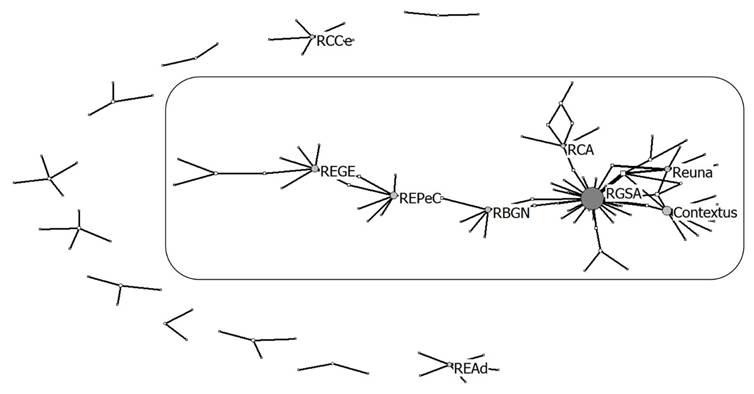
That said, the scientific journals that stood out in this study, from the authors' perspective and, consequently, in order of centrality and, simultaneously, relevance, were: Journal of Social and Environmental Management (RGSA), Contemporary Journal of Economics and Management (Contextus), Reuna Journal (Reuna), Journal of Management (REGE), Journal of Education and Research in Accounting (REPeC), Brazilian Journal of Business Management (RBGN), Electronic Journal of Administration (REAd), Scientific Capital Journal (RCC), and Journal of Administrative Sciences (RCA). Thus, it is understood that these journals, most of which are from the field of Administration, and from the perspective of the SPELL database, mobilize more authors to publish, disseminate, and simultaneously socialize their respective findings and contributions regarding the MDL theme within the brazilian academic community.
It is also noted that a large part of these more central journals in this study is more directly or indirectly connected through the researchers, forming a giant component, that is, the largest element of the social network in Figure 3 (Sampaio et al., 2015), showing, therefore, that the flow and exchange of information and knowledge on the research topic published in the academic literature pass through these more central scientific journals (Ribeiro, 2023a; Ribeiro, 2024a), particularly through the RGSA journal, which focuses on integrating the field of Administration with other areas of knowledge related to socio-environmental management (RGSA, 2024).
Regarding this, the study by Pereira et al. (2014) is highlighted, as they mapped co-authorship networks through Brazilian scientific production on the topic of carbon credits. Among their main findings, the authors found that RGSA was the journal that concentrated the most studies on the mentioned topic (Pereira et al., 2014), aligning with the findings of the current research (Figure 3), which focused on the CDM theme—intrinsically linked to the term "carbon" in the global scientific literature (Zhang et al., 2022; Aboagye et al., 2023; Androniceanu et al., 2024; Xu et al., 2024; Wang, 2024).
Figure 4 identifies the co-authorship networks, which were formed by 284 ties and 97 nodes. In this regard, it is emphasized that understanding co-authorship networks is crucial for comprehending how researchers on the subject of study establish partnerships and collaborate within academia (Ribeiro et al., 2014).
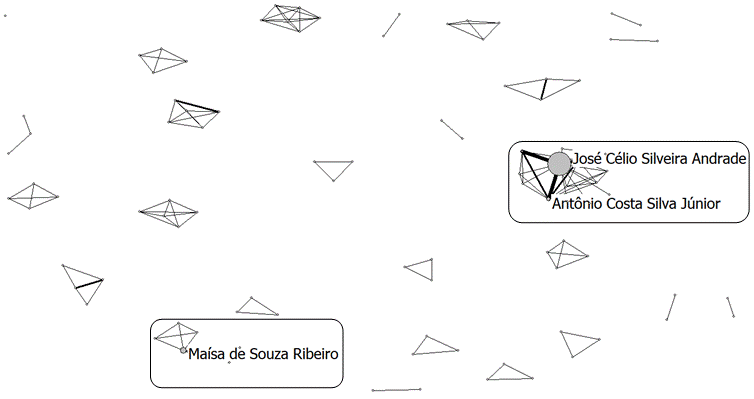
It is reiterated that betweenness centrality was used to assess the most influential authors in this research, particularly in terms of their ability to mediate the flow and exchange of data, information, communication, and knowledge regarding the subject under analysis (Grácio, 2018; Favaretto & Francisco, 2017; Facin, Barbosa, Matsumoto, Cruz & Salerno, 2022; Ribeiro, 2024c) in the Brazilian academy, from the perspective of the journals indexed in the SPELL database, the most influential authors in terms of betweenness centrality were: José Célio Silveira Andrade, Maisa de Souza Ribeiro, and Antônio Costa Silva Júnior. Their current institutional affiliations are: Federal University of Bahia (UFBA), University of São Paulo (USP), and Brazilian Petroleum (Petrobras). It is also worth mentioning that, at the time of their respective publications, authors José Célio Silveira Andrade and Maisa de Souza Ribeiro were affiliated with UFBA and USP, respectively, while Antônio Costa Silva Júnior was affiliated with Jorge Amado University Center (Unijorge).
Still regarding the authors, José Célio Silveira Andrade stands out the most, as he published nine studies on the MDL topic in the Brazilian academy, according to the journals listed in the SPELL database. This result is similarly confirmed in the research by the researchers Freitas e Paiva (2018), who investigated the international academic production of Brazilian authors on climate change in the fields of Business, Management, and Accounting. Therefore, it is reiterated that José Célio Silveira Andrade is a national reference when researching the topic of climate change in the organizational context, particularly in the themes of carbon credits and the carbon market, and consequently, from the perspective of the CDM (Freitas & Paiva, 2018). Still analyzing the co-authorship networks in this study, it is emphasized that their density was measured at 0.0333, which corresponds to 3.33% of the interactions effectively established among the 97 authors, in other words, 96.67% of the potential relationships among these researchers have yet to be formed. Overall, the social network of scholars in this study has low density, which is due to the structural gaps present in the cited network, these gaps arise from the small number of authors publishing on the investigated topic in Brazilian academia or the weak connections among these authors, this scenario leads to the emergence of weak ties, which indicate structural deficiencies in social networks, consequently, it fosters the appearance of so called small worlds, which originate from sparse social networks such as the co-authorship networks in this study, this situation impacts the network’s low internal cohesion and, simultaneously, the fluidity of the exchange of information and scientific knowledge on the central topic of this research, as a result, it influences the development, maturation, and evolution of the subject within Brazil's academic literature (Ribeiro, 2020; Santos & Farias, 2016; Coutinho, Martins, Marietto & Gomes, 2022; Ribeiro, 2023a; Ribeiro, 2024c).
4.4 Collaboration networks of (HEIs)
Figure 5 reveals the collaboration networks of HEIs, which were established by 44 ties and 34 nodes. It is reiterated that betweenness centrality was used to assess the most central HEIs in this study. In descending order of importance, these HEIs were: USP, UFBA, Universidade de Fortaleza (UNIFOR), and Universidade Federal de Santa Maria (UFSM). That said, these HEIs are considered, for this research, the strategic universities in terms of mediating the flow and exchange of knowledge, communication, and information on the CDM theme in Brazilian academia from the perspective of scientific journals indexed in the SPELL database platform.
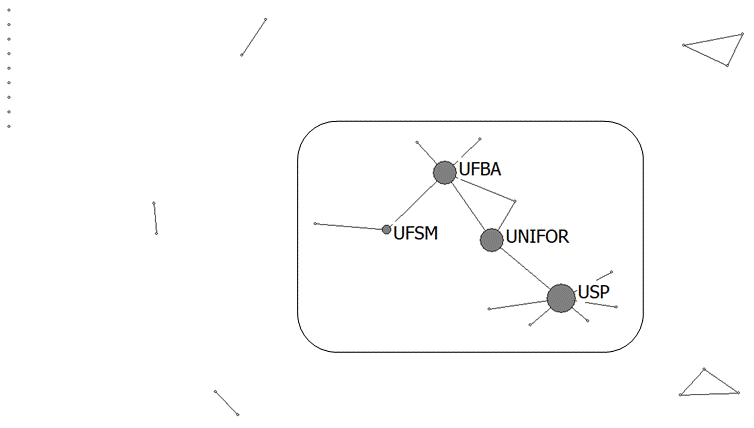
This result is similarly confirmed through studies analogous to this research, especially by highlighting USP as the most central and prolific HEI in the field of sustainability (Morais et al., 2017; Lima, Fernandes & Amâncio-Vieira, 2018), which is a field of knowledge inherently related to the CDM theme in the global scenario (Zhang et al., 2022; Aboagye et al., 2023; Androniceanu et al., 2024; Singh, 2024; Xu et al., 2024; Wang, 2024). Still analyzing Figure 5, it is observed that the most central HEIs in this study are interconnected, either directly or indirectly, through the largest cluster in the HEI collaboration network, this highlights that the flow of information and knowledge exchange on the CDM theme in Brazilian academia is linked to and, to some extent, dependent on these four HEIs, which are located in three regions of Brazil: Southeast, Northeast, and South.
Moreover, still analyzing Figure 5, the density of the HEI collaboration networks was calculated, which resulted in 0.0392, corresponding to 3.92% of the truly established relationships among the 44 HEIs identified in this research, this result is similar to what was observed in the co-authorship networks of this study, leading to the conclusion that the density of the networks of the institutions in this research is low, which can be explained by the structural failures in the organization of the mentioned network, in other words, due to the gaps in the structure of the social network formation, this influences the emergence of weak ties, low internal cohesion among the HEIs, impacting, as it occurs in the researchers' networks of this study, the flow and exchange of knowledge and information about the research topic (Santos & Farias, 2016; Favaretto & Francisco, 2017; Grácio, 2018; Ribeiro, 2024c), in brazilian scientific literature, from the perspective of academic journals listed in the SPELL database.
It is noteworthy that citation analysis in the scientific literature is a measure that allows for visualizing the relationship between two or more published studies, therefore, the citation network in academic literature, when paired, forms the foundation or support for scientific research on a topic originating from an academic field of knowledge (Hou & Wang, 2021). Therefore, Figure 6 was constructed and revealed the citation networks, which were built with 42,632 links and 1,063 nodes.
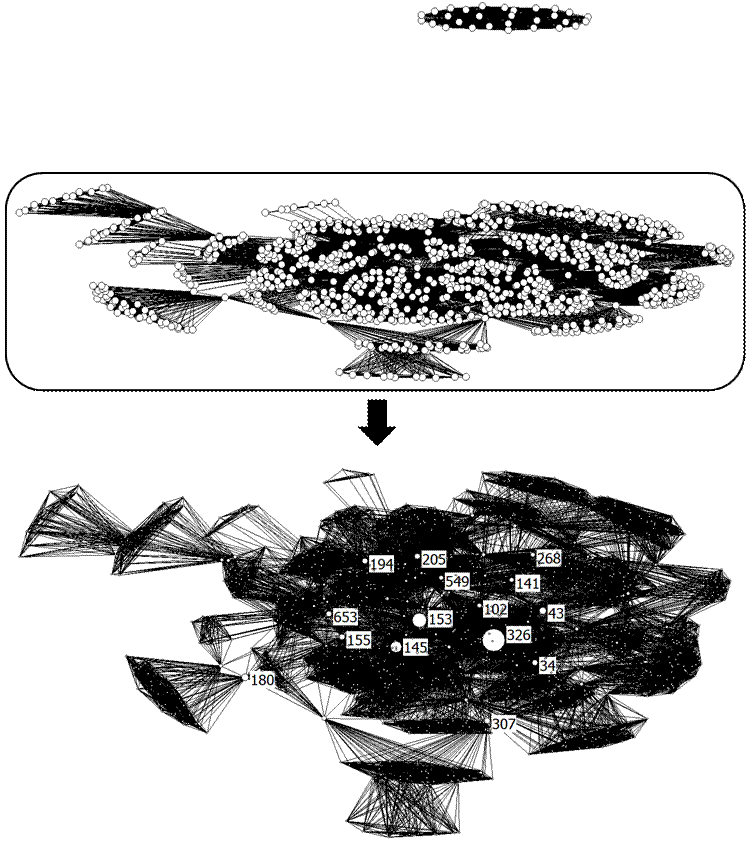
And the giant component observed through Figure 6 was established by 41,820 links and 1,034 nodes. In view of this, it is evident that the giant component identified in Figure 6 is the largest element of the mentioned network, as the vertices of this largest group of actors are all connected to each other either directly or indirectly. Regarding the structure of the referenced network, it is observed that the giant component of the citation network is highly cohesive, revealing a trend of intense collaboration among the different actors (citations), thus, the giant component in Figure 6 becomes the most relevant cluster in the citation network, as most of the citations are connected to each other, intrinsically influencing the greater flow of information and exchange of knowledge (Sampaio et al., 2015; Köhler & Digiampietri, 2021; Ribeiro, 2023a), among the citations, regarding the MDL theme in Brazilian academia from the perspective of journals indexed in the SPELL database.
Reinforcing that: (i) the betweenness centrality was used to highlight the most influential citations of this research, which are evidenced within the giant component (Facin et al., 2022; Ribeiro, 2024c); and (ii) the size of a node represents the frequency of the citation in the social network, therefore, according to betweenness, the node with a larger circle represents the key node (Hou & Wang, 2021). That being said, the most central citations were: 34. United Nations Framework Convention on Climate Change (2011); 43. Bardin, L. (1977); 102. Ministry of Science, Technology, and Innovation (2011); 141. World Business Council for Sustainable Development (2006); 145. Interministerial Commission on Global Climate Change (2003); 153. Lopes, I. V. (2002); 155. Ministry of Science, Technology, and Innovation (2007); 180. Brazilian Institute of Geography and Statistics (IBGE) (2002); 194. Conejero, M.A. (2006); 205. Ribeiro, M. de S. (2005); 268. Cervo, A. L., & Bervian, R. S. (1996); 307. Andrade, J. C. S., & Costa, P. (2008); 326. Seiffert, M. E. B. (2009); 549. Barbieri, K. S., & Ribeiro, M. S. de (2007); e 653. Yin, R. K. (2005).
In relation to these more central citations, there are six that come from legal entities and nine from individuals. Of these from individuals, the authors are: (i) Laurence Bardin; (ii) Ignez Vidigal Lopes; (iii) Marco Antonio Conejero; (iv) Maisa de Souza Ribeiro; (v) Amado Luiz Cervo and Pedro Alcino Bervian; (vi) José Célio Silveira Andrade and Paulo Costa; (vii) Mari Elizabete Bernardini Seiffert; (viii) Karen Simões Barbieri and Maisa de Souza Ribeiro; and (ix) Robert Kuo-zuir Yin. And the names of their respective works are: (i) Content Analysis (Book); (ii) Clean Development Mechanism (Guideline); (iii) Carbon Credit Marketing: An Exploratory Study (Dissertation); (iv) The Accounting Treatment of Carbon Credits (Thesis); (v) Scientific Methodology (Book); (vi) Climate Change, the Kyoto Protocol, and the Carbon Credit Market: Challenges to Global Environmental Governance (Journal Article); (vii) Carbon Market and the Kyoto Protocol: Business Opportunities in the Pursuit of Sustainability (Book); (viii) Carbon Credit Market: Commercial and Accounting Aspects (Conference Paper); and (ix) Case Studies: Planning and Methods (Book).
It is interesting to note that, among these most cited authors, two also appear in this research as the most central researchers in terms of mediating the flow of information and knowledge about the CDM topic in Brazilian academia: José Célio Silveira Andrade and Maisa de Souza Ribeiro, with the latter being featured in two of the most cited works. The most cited works emphasize credit / carbon market, which are key and relevant themes related to the CDM topic in the global scientific landscape (Zhang et al., 2022; Aboagye et al., 2023; Androniceanu et al., 2024; Shrivastava et al., 2024; Xu et al., 2024; Wang, 2024). It is also noteworthy that some authors focus on the methodological field, particularly regarding content analysis and case study, suggesting that research on CDM published in Brazilian academia is primarily based on these types of scientific methods.
Figure 7 captured the social networks of keywords, which were generated through 466 ties and 94 nodes. It is important to note that the 41 articles analyzed contained a total of 94 keyword occurrences. However, to arrive at this number of unique keywords, the following criteria were used and maintained: (i) no distinction was made between uppercase and lowercase letters, and (ii) singular and plural keywords were kept as separate entries (Favaretto & Francisco, 2017).
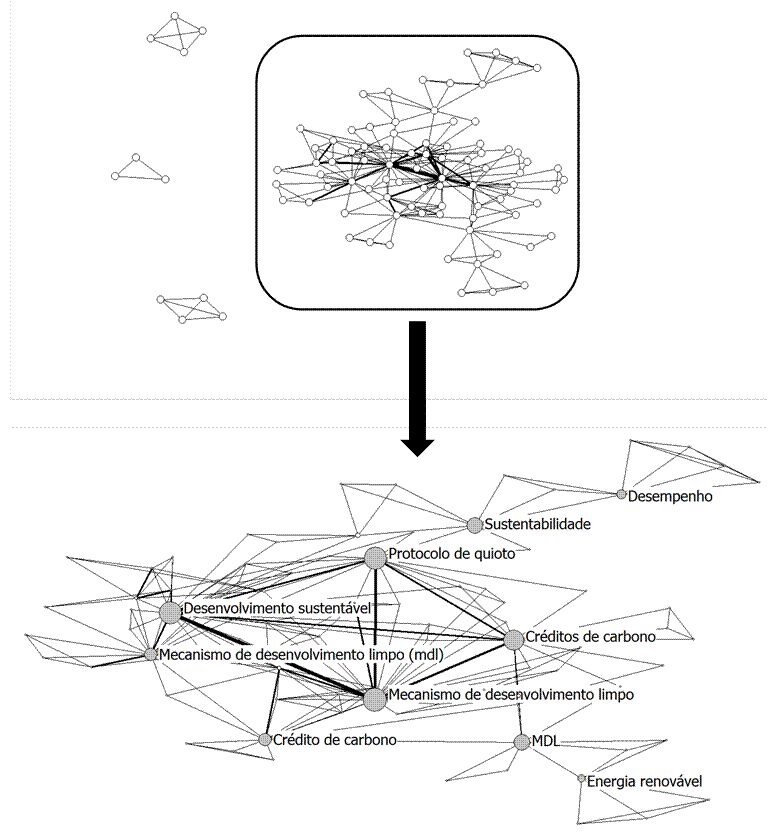
It is noteworthy that the giant component conceived through Figure 7 was formed by 436 edges and 83 nodes. It is reinforced that the giant component is linked to the highest flow of knowledge and exchange of information within the social network (Sampaio et al., 2015; Köhler & Digiampietri, 2021; Ribeiro, 2023a). It is reiterated that betweenness centrality was used to calculate the most influential keywords in this study and that these keywords are found within this giant component. Thus, the most central keywords in this research, in descending order of relevance, were: Clean Development Mechanism, sustainable development, Kyoto Protocol, carbon credits, CDM, sustainability, carbon credit, Clean Development Mechanism (CDM), performance, and renewable energy.
Thus, it can be understood that these keywords have the ability to mediate the flow and exchange of information and knowledge between one keyword and its relationship with the others, therefore, these most central keywords serve as a "bridge" for the connection between them (keywords), and thus, it can be stated that the highlighted keywords represent the central themes researched. In other words, they form the thematic map based on the highest centralities of the respective keywords, which provide support for the research topic under investigation (Favaretto & Francisco, 2017; Facin et al., 2022; Urbizagástegui-Alvarado, 2022; Ribeiro, 2024c).
It is also added that, through the analysis of the social networks of the keywords, 10 main research terms were identified, thereby covering the most relevant topics studied by researchers on the MDL topic in academia. In this regard, it is understood that this discovery is particularly important because it guides and directs researchers to position themselves and publish new research on the MDL topic, as well as identifying gaps in topics that have not yet been adequately explored in the scientific literature (Bortoletto, Pacagnella & Cabello, 2023), of Brazil from the perspective of the journals indexed in the SPELL database.
In summary, it is emphasized that a visualization of the most central keywords can reveal keywords that appear with significantly different frequencies over time, therefore, these most central keywords mapped and specified the boundaries of academic research during a specific period, from 2006 to 2024, on the subject of this study's analysis. It is emphasized that, in this academic work, the keywords with the highest betweenness centrality and, therefore, with a constant frequency of occurrence, are considered important in the context of defining the boundaries of scientific research on the focus topic of this study (Hou & Wang, 2021).
Finally, the most central keywords of this study may directly reflect the main critical research points and analytical perspectives on the MDL topic. Therefore, the emphasized and highlighted keywords can reveal the current research trends in this field of knowledge (Chen et al., 2023) what is the MDL topic in Brazilian academia. In this regard, it can be understood that these central keywords may also be the hot research topics, revealing and reflecting the studies most frequently conducted by scholars in the field, thus highlighting paths of evolution and, consequently, growth trends (Zheng, Li & Chai, 2023), on the MDL topic in brazilian academia, in light of the journals indexed in the SPELL database.
The objective of this study was to investigate the profile and behavior of the scientific production of articles published on the topic of MDL in Brazilian academia from the perspective of social network analysis and through the lens of SPELL. To this end, SNA was used to examine the 41 identified articles on the MDL topic. Given the above, it was found that there is little publication on the MDL topic in Brazilian academia, with these publications occurring mainly between the years 2007 and 2018, subsequently, the MDL topic saw a decline in productivity, influencing the downward trend of this subject in national scientific literature, as reflected in the indexed journals within the SPELL database.
Regarding scientific journals, the most prolific ones were: RGSA, Contextus, Reuna, REGE, REPeC, RBGN, REAd, RCCҽ, and RCA, showing that authors who wish to publish their findings and contributions on the MDL topic in Brazil choose these journals, which predominantly align with the field of Administration. As for the authors, the most central figures were José Célio Silveira Andrade, Maisa de Souza Ribeiro, and Antônio Costa Silva Júnior, with José Célio Silveira Andrade and, particularly, Maisa de Souza Ribeiro standing out, as they are also among the most cited researchers in the co-citation network of this study. Regarding the co-citation network, Mari Elizabete Bernardini Seiffert and Ignez Vidigal Lopes emerge as the most cited authors among the 41 articles published on the MDL topic in Brazilian academia, from the perspective of journals indexed in the SPELL database.
With regard to higher education institutions (HEIs), the universities that stood out in terms of centrality were USP, UFBA, UNIFOR, and UFSM, this highlights their influence, as they serve as key "bridges" and "pathways" for the proliferation, dissemination, and socialization of scientific knowledge on the MDL topic within Brazilian academia. However, when measuring the densities of co-authorship networks and HEI collaboration networks in this study, both social networks were found to have low density, this is a sine qua non factor for the emergence of structural holes and, consequently, weak ties, which impact the internal cohesion of researchers' and HEIs' social networks, as a result, this affects the flow and exchange of information and knowledge on the MDL topic within Brazilian academia, from the perspective of the SPELL database.
In light of the above, this research highlights and addresses theoretical implications by presenting the scientific community with the intellectual structure and the formation of social networks related to the MDL topic within the Brazilian scientific environment, from the perspective of journals indexed in the SPELL database. The identification of keywords and, consequently, the most important conceptual approaches (most central keywords) on the MDL topic may prove relevant, as they will become more widely recognized within Brazilian academia by both senior and early career researchers focused on this subject, this, in turn, creates opportunities for new studies on MDL, fostering its growth within Brazilian academia. Regarding practical implications, this research can: (i) contribute to and influence the development of theory on the MDL topic in the fields of Administration, Accounting, and Tourism; (ii) expand and strengthen teaching on this subject within higher education institutions (HEIs); and (iii) support the decision making process and, consequently, managerial decision making by business leaders, aiming to make companies more sustainable.
The main limitation of this study was the use of a single database, SPELL, therefore, as a suggestion for future research, it is recommended to enhance this study by incorporating other national and international databases, such as Web of Science, Scopus, Scielo, Ebsco, ProQuest, and CAPES Periodicals among others. It is also advisable to conduct a bibliometric study on the researched topic and perform a systematic literature review, incorporating content analysis of the 41 studies identified in this investigation, this would help to further substantiate the findings and provide more critical analyses of the MDL topic within Brazilian academia.
redalyc-journal-id: 5707
