1 INTRODUCTION
The urgency of adopting timely climate measures has been recognized by the United Nations (UN) as a necessity and one of the main goals of Sustainable Development (Piazza, 2021). Climate change represents the most pressing environmental concern today for international policy and the global leadership. The complexity of the causes and effects of climate change reverberates across a broad range of social, economic, and political aspects, underscoring the importance of developing efficient climate governance systems (Chan, 2021; Lund, 2018).
While international climate policy continuously faces challenges in implementing multiple agreements, such as the Paris Agreement, and in establishing truly effective governance mechanisms, real progress in climate governance policies lies in cities' ability to implement and sustain adaptation and mitigation measures (McCarney & Kent, 2020; Nagel, 2019). Given the complexity of climate challenges and the fact that cities are directly affected by adverse climate effects, in recent years, they have begun to claim a leadership role in global climate governance (Diáz-Pont, 2021; Kern, 2019).
The effects of climate change have significantly impacted urban functioning, with flooding and global warming standing out as the most commonly observed consequences in cities worldwide. This has led local and national governments, as well as international bodies, to seek intelligent urban governance models to address the adverse effects of extreme climate events, aiming to promote and enhance governance models focused on urban sustainability (Leonardsson et al., 2021; Thaler et al., 2021).
Despite the need to implement climate governance systems in cities, recent research has highlighted significant deficiencies in urban management regarding adaptation and mitigation practices for climate change effects. Although most government officials claim, often without substantial evidence, to possess the necessary means — including technology and infrastructure for developing emergency climate monitoring systems, some do not consider the issue a political priority. Others indicate that despite public interest, inefficiencies persist in the interaction between government sectors and actors when addressing climate issues (Phipps, 2020).
The theoretical framework of studies on climate governance in cities emphasizes their role as implementers of public policies, which are influenced by various factors such as political and economic issues, knowledge levels, and local capacities. Furthermore, it is crucial to highlight the challenges of integrating climate action with urban governance due to power imbalances within city governance. These imbalances constitute a critical factor in analyzing climate governance approaches and urban transformations. Additionally, cities play a vital role in filling governance gaps left unaddressed by states and federations in responding to climate change agendas (Lago, Chaparro, Lumbreras, 2023; Schmidt et al., 2024; Xu, 2024).
In the promotion, development, and implementation of climate governance, both governmental and non-governmental actors are involved (Verhoeven, 2021). Understanding the role of governance in overcoming tensions arising from climate change can be analyzed through three fundamental axes: the theoretical framework of climate governance, derived from studies on sustainability governance, political ecology, and peacebuilding; the recognition of the local yet global nature of climate-related problems; and the development of practices that consider the pluralistic and interactive context of the issue in promoting sustainable cities (Leonardsson et al., 2021). During the literature review, no other studies were identified that specifically investigate climate governance with an emphasis on urban contexts. While similar research exists, it primarily focuses on the broader context of leadership in climate governance (McPherson & Clarke, 2024), thus reinforcing the relevance of this study for the state of the art in this field.
Given the above and considering the breadth and diversity of studies on this topic, a Systematic Literature Review (SLR) is proposed to address the following research question: What is the state of the art in studies that relate climate issues to urban governance? Based on this guiding question, the study’s objectives are defined. As a general objective, this research aims to identify empirical evidence regarding the relationship between climate issues and urban governance.
Furthermore, the specific objectives are to identify the main related constructs, describe the primary climate governance strategies identified, determine this field of study’s contributions to the Sustainable Development Goals (SDGs), and develop a research agenda for future studies that identifies gaps and proposes new directions for climate governance in cities. The study is based on key concepts related to climate governance and seeks to infer, through keyword analysis, the extent to which studies address the urban context. The next section presents the methodological procedures of this study.
2 METHODOLOGICAL PROCEDURES
This study is characterized as a Systematic Literature Review (SLR), making it a secondary source research aimed at describing and synthesizing the scientific production of a specific field of study through specific protocols, ensuring a certain logical structure during the review process of a substantial body of studies (Galvão & Ricarte, 2020). Regarding the approach, this study adopts a mixed-methods approach, integrating both qualitative and quantitative analyses to enhance the understanding of the phenomenon under investigation. The research objectives were outlined based on the propositions of Munn et al. (2018). To answer the research question and meet the defined objectives, the methodological steps of this study were established, as represented in Figure 1.
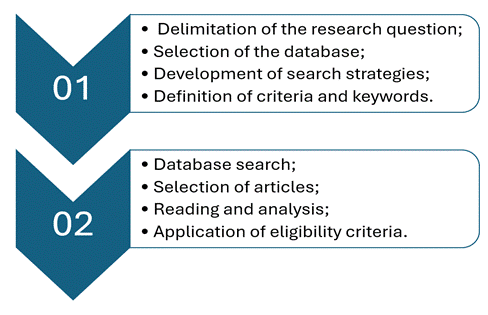 Figure 1.
Stages of the Systematic Literature Review
Source: Elaborated by the authors.
The study's stages are defined in two main phases: the first phase involves defining the criteria and strategies for the Systematic Literature Review (SLR), while the second phase encompasses the stages of search, selection, and analysis, as detailed below:
● Definition of the Research Question: As highlighted in the introduction section of this study, this Systematic Literature Review (SLR) is based on the following research question: What is the state of the art in studies that relate climate issues to urban governance?
● Selection of the Database: The database selected for the Systematic Literature Review (SLR) was Web of Science. The decision to use a single database was based on several reasons. First, the quality of the studies and the extensive coverage of the database, which includes a significant portion of the international literature on the topic, were key factors. Additionally, the filters available in Web of Science facilitate the search process. Lastly, the substantial body of studies already identified in the initial search reinforced the suitability of this database for the research.
● Development of Search Strategies: The search strategies involved defining a time frame to select the most up-to-date studies while allowing for a longitudinal analysis of the data. Additionally, the selection was limited to articles published in journals, ensuring a high standard of academic rigor. The search terms were carefully chosen based on their consolidation in the international literature to maximize the scope and relevance of the search. Furthermore, the PRISMA guidelines were followed throughout the processes of identification, screening, eligibility, and inclusion of the studies (Page et al., 2021).
● Definition of Criteria and Keywords: The adopted criteria were: (1) identification of both international and national studies; (2) a time frame covering the last ten complete years (2014–2023); (3) inclusion of only journal articles, excluding book chapters or studies published exclusively in conferences of various genres. The search terms used were “Climate Change” AND “Governance,” considering studies that include both expressions in the title.
● Search in the Database: The database search began on August 30, 2024, and was completed on October 22, 2024, encompassing the processes of searching, accessing, verifying, and downloading the selected studies.
● Selection of Articles: The selection of articles was based on the criteria outlined above, with a preliminary reading of the abstract and keywords to identify studies that were either relevant or not aligned with the research theme.
● Reading and Analysis: At this stage, following the initial selection based on abstract reading, a full reading of the remaining studies was conducted, along with their analysis, considering the general and specific research objectives. The open-source software R (Schmuller, 2019) was used to generate graphical resources that supported the data analysis.
● Application of Eligibility Criteria: Finally, after the full-text reading, the selected studies were reassessed to ensure compliance with the eligibility criteria, aiming to identify any studies that, upon final review, still did not align with the research theme. The following section presents the results, discussion, and analysis of this study's findings.
3 ANALYSIS AND DISCUSSION OF RESULTS
This section on the analysis and discussion of results is divided into the following subsections: Identification of theMain Related Constructs, Key Climate Governance Strategies, Contributions of Climate Governance to the Sustainable Development Goals (SDGs), and Development of a Research Agenda for Future Studies. These subsections were structured to address the study's specific objectives, which, in turn, were defined to contribute to achieving the general research objective. Identifying the main related constructs enables the mapping of key concepts and factors associated with climate governance studies, providing a more holistic understanding of the subject. Describing the main governance strategies identified in the studies can offer evidence of governance implementation in urban contexts, emphasizing the mechanisms, policies, and instruments adopted. Analyzing the contributions of climate governance to the SDGs aligns the research with the global sustainability agenda, highlighting the importance of climate governance for the sustainable development of cities. Finally, the research agenda for future studies aims to promote new investigations, guiding further exploration of the topic based on the identified literature gaps. Figure 2 presents the PRISMA Flowchart illustrating the study selection process.
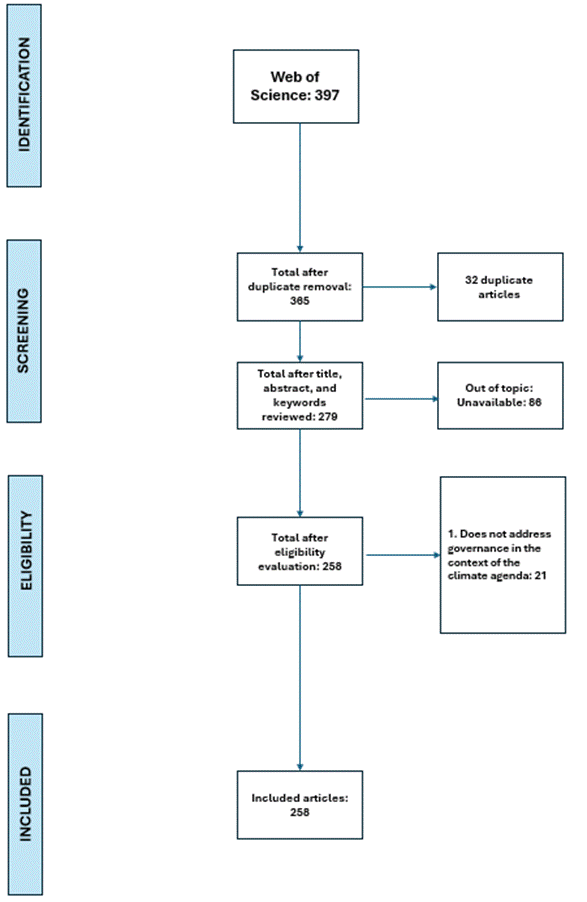 Figure 2
PRISMA Flowchart of the Study Selection Process
Source: Research Data.
3.1 Identification of the Main Related Constructs
The initial section of this literature review presents a network of related constructs, as well as the central constructs found in the analyzed studies. The identification process was based on the keywords highlighted in each study. The open-source software R was used to quantify the frequency of keywords and establish relationship networks based on their occurrence. The size of the highlighted terms represents their frequency, while the connections between terms and the thickness of the association lines indicate how often the terms appeared together in the same keyword group. As a minimum criterion, only terms that were associated in at least two different studies were considered.
The inclusion of this section in the Systematic Literature Review (SLR) is justified by the need for a holistic understanding of the relationship between climate change and governance, along with other constructs that mediate this connection. Identifying conceptual links between different terms and variables used in climate governance research—through the mapping of interrelated concepts, which are often studied in isolation—helps build a broader and more integrated perspective on climate issues and governance practices.
Furthermore, the analysis of related constructs is essential to ensure the conceptual integrity of the study. Understanding how different studies define and operationalize constructs related to climate governance can help in delineating theoretical boundaries. Figure 3 below presents the network of related and highlighted constructs.
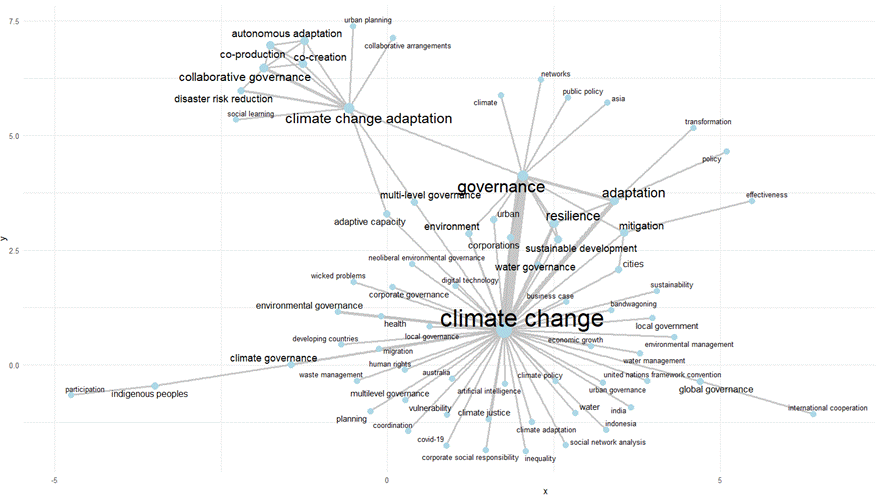 Figure 3
Network of Related and Highlighted Constructs
Source: Research Data.
The main correlation network identified originates from the keyword climate change, which is primarily associated with the following constructs: Governance (28 studies), Adaptation (10 studies), and Resilience (6 studies). The second network of studies is centered on governance, which is particularly linked to climate change (28 studies), as well as adaptation and resilience (6 studies each).
Climate change adaptation involves reducing vulnerabilities by preparing for its various impacts. This is a complex and evolving phenomenon, intrinsically connected to governance practices carried out by multiple actors, such as states, cities, businesses, and civil society, in assessing the benefits of investments in climate adaptation policies (Bednar, Henstra & McBean, 2019; García et al., 2022; Termeer, Dewulf & Biesbroek, 2017). Decisions regarding climate change adaptation, as well as the success of their implementation, depend on more than just financial and technological resources. Their drivers and barriers are also influenced by environmental, political, and sociocultural factors, as well as the combination of these factors with financial and technological aspects at different governance levels (Paschen & Ison, 2014).
At the social level, climate change adaptation has the potential to assist vulnerable populations in dealing with the challenges posed by adverse climate effects, while also exploring opportunities and mitigating risks associated with global warming and extreme climate events (Gilfillan, 2019).
The association between governance and climate adaptation is well-documented in the literature, as evidenced by the emergence of new expressions derived from this dynamic, such as “adaptation governance”, which has a multi-level character and is considered a key component of climate resilience (Iwanciw, Dewulf & Vinkhuyzen, 2020), another related construct identified in this study. Resilience, in the context of climate governance, refers to the structural foundation that integrates biophysical and ecological knowledge with governance principles. It can be defined as a measure that quantifies the capacity of a socio-ecological system to withstand adverse climate events while maintaining its structure and functionality (Cosens, 2014).
The third network of related concepts places climate change adaptation at its core, associating it with collaborative governance (6 studies), disaster risk reduction (4 studies), adaptive capacity (3 studies), and multi-level governance (3 studies). Climate change is occurring, largely due to insufficient mitigation efforts, making adaptation an emerging necessity for both cities and businesses (Chu, 2016; Greenhill, Kenter & Dannevig, 2020 Governance aimed at climate change adaptation is an emerging challenge across various organizational and governmental levels, becoming a multi-level issue following the 2015 Paris Agreement on Climate Change (Iwanciw, Dewulf, Vinkhuyzen, 2020).
Climate change poses significant risks to urban areas and governance structures (Brink & Wamsler, 2018). Adaptation governance practices involve multi-level institutional structures, requiring interaction among various stakeholders at different levels. In climate adaptation governance, there is a strong emphasis on the relationship between global negotiations and local initiatives, highlighting the multi-level and collaborative nature of governance for adaptation (Armstrong, Kamieniecki, 2017; Belesova, Kelman, Boyd, 2016; Gregorio et al., 2019; Henstra, Thistlethwaite, Vanhooren, 2020; Iwanciw, Dewulf, Vinkhuyzen, 2020).
The multi-level relationship between governance practices across institutions within collaborative network systems is a longstanding and well-established topic in political science. These collaborative network structures are influenced by institutional factors and relationship levels. Following the common trend of governance and collaboration systems, governance for climate adaptation reveals complex interaction networks among political actors operating at different institutional and spatial levels, with particular emphasis on urban contexts, where citizen collaboration plays a crucial role (Brink & Wamsler, 2018; Hamilton & Lubell, 2018).
The interconnection between climate change and governance has been widely discussed in the literature, particularly concerning adaptation and resilience practices. The construction of conceptual networks has demonstrated the complexity of interactions among core constructs, contributing to an integrative perspective on climate governance, which considers multi-level and collaborative factors.
At the same time, a significant gap regarding mitigation practices has been identified, indicating the need for further theoretical and practical exploration of governance contributions at different levels toward climate change mitigation. Unlike adaptation practices, mitigation governance has not yet developed a robust body of research, exposing both practical and theoretical gaps in understanding how governance at various levels contributes to climate change mitigation. This concern is further emphasized by empirical evidence suggesting that the success of climate governance policies depends on the synergy between mitigation and adaptation practices (García et al., 2022, Lee, Koski, 2015).
3.2 Climate Governance Strategies
Climate governance strategies are divided into two main groups: mitigation strategies and adaptation strategies, focusing on the relationship between humans and the environment while considering socio-ecological, ecological-cultural, and socio-economic aspects, as well as regional factors and the interdependence between these two types of measures (García et al., 2022; Paschen & Ison, 2014). Recent evidence has shown a greater effort by governments to implement and develop adaptation strategies, whereas mitigation strategies have been given lower priority. In the specific context of cities, climate strategies face challenges due to the lack of a centralized governmental strategy to support local initiatives (Bednar, Henstra, McBean, 2019).
Climate governance relies on actors from different levels, thus exhibiting a multi-level character (Iwanciw, Dewulf & Vinkhuyzen, 2022; Rykkja, Neby & Hope, 2014). These actors include international institutions, states, businesses, non-governmental organizations, and local governments (Albitar, Al-Shaer & Liu, 2023; McKenzie & Stahelin, 2022; Hlahla, Nel & Hill, 2019; Xu, 2015). In emerging economies, where governance levels are often insufficient to address the effects of climate change, local communities frequently develop their own strategies to cope with specific climate events, such as floods, erosion, and cyclones (Hossen et al., 2022).
At the local level in cities, climate governance strategies depend on political and administrative factors, particularly given the multi-year planning cycles common to many urban centers. Key measures include monitoring greenhouse gas (GHG) emissions, setting emission reduction targets, developing and implementing action plans, and evaluating the quality and effectiveness of the adopted measures. These steps, along with governance assessments, form the foundation for improving climate governance in urban centers (Carreras, 2019; Meiklejohn, Moloney, Bekessy, 2021; Wang et al., 2022).
Urban climate governance strategies must consider specific aspects, such as capital availability. The capital structure is divided into five main dimensions—social, political, human, financial, and environmental — which, in an integrated manner, serve as essential tools for the functioning of governance systems. Social capital refers to the participation of multiple stakeholders involved in climate-related issues; political capital encompasses institutions, local political support, and public transparency; human capital pertains to available human resources, including access to knowledge and skills; financial capital includes the availability of monetary resources necessary for adaptation and mitigation strategies; and environmental capital covers environmental management strategies and the level of ecological protection of ecosystems (Williams et al., 2020).
Innovation is another key factor in the development and enhancement of climate governance in urban centers. Technological innovations can assist municipalities in developing strategic adaptation and mitigation plans, promoting green construction, and advancing community planning while considering intermunicipal interactions (Patterson & Huitema, 2019).
In summary, it is fundamentally important for cities to adopt an integrated climate governance approach that combines both mitigation and adaptation strategies. While adaptation practices are becoming increasingly necessary due to the urgencies posed by climate impacts, mitigation efforts must not be overlooked, as they are essential for reducing future climate impacts. Multi-level collaboration, involving diverse actors, is vital for ensuring that climate policies are tailored to local needs.
Additionally, the availability of resources whether political, financial, human, social, or environmental is crucial, as is the role of innovation in fostering more robust and effective climate strategies. Cities must urgently implement actions with clear target plans, enabling them to measure and monitor current and future climate challenges. There is a strong emphasis on the need for coordinated and integrated actions at all levels of governance, with cities taking the lead in addressing what is widely regarded as the greatest challenge of today and the years ahead.
3.3 Contributions of Climate Governance to the Sustainable Development Goals (SDGs)
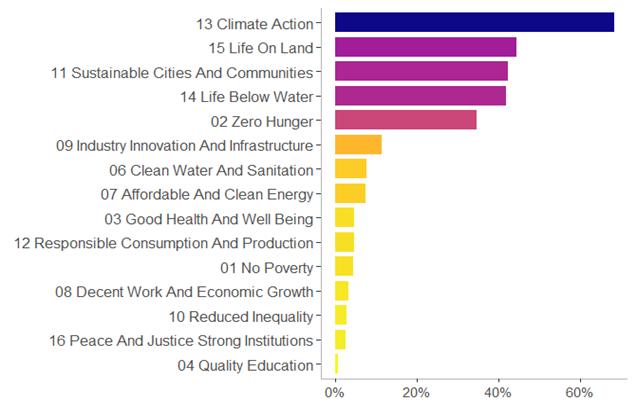
The Sustainable Development Goals (SDGs) are among the most crucial international initiatives for mitigating greenhouse gas (GHG) emissions and enhancing resilience to climate change (Adu & Roni, 2024). Graph 1 presents the percentage of studies in which contributions to the SDGs were identified, considering the scope of this research and the articles selected based on the eligibility criteria.
 Graph 1.
Percentage of studies aligned with the Sustainable Development Goals (SDGs)
Source: Research Data
The most prominent SDG identified in the Systematic Literature Review (SLR) on the relationship between governance practices and climate change was SDG 13 – Climate Action, which was expected given that it is one of the central constructs of this study. The primary focus of this SDG concerns raising awareness and securing the commitment of various actors to the importance of reducing greenhouse gas (GHG) emissions (Albitar, Al-Shaer & Liu, 2023). The alignment of governmental agendas with climate issues is strongly influenced by the significance and global impact of SDG 13 on both policy and economics (McKenzie & Stahelin, 2022).
The next two most prominent SDGs were SDG 15 – Life on Land and SDG 11 – Sustainable Cities and Communities. In studies where these SDGs were identified as relevant, discussions on climate issues and governance systems were strongly tied to the urban context. Although cities were not identified as a primary topic in the related constructs section, a significant portion of discussions on the importance of governance in climate issues focused on urban settings. As shown in Graph 1, more than 40% of the studies analyzed were either explicitly focused on cities or included urban issues in their scope, even when cities were not the central theme.
Climate change is undeniably a global issue, but the extreme effects of climate events are felt most intensely at the local level (Birchall, MacDonald & Slater, 2021). Cities worldwide have already taken a leading role in addressing climate challenges. However, local climate action still faces misunderstandings and difficulties due to several factors, including the complex network of governmental arrangements, the rigidity of current governance models, and the uncertainties imposed by climate change (Lee & Koski, 2015).
Climate change adaptation practices have already become mandatory in some cities, such as those in Denmark (Lund, 2018). The potential damage from extreme climate events poses a serious concern for cities, with flooding and rising urban temperatures standing out as the most tangible consequences observed at the global level (Gotgelf, Roggero & Eisenack, 2020; Thaler et al., 2021).
The combination of voluntary actions with the growing interest of local governments in climate issues, incorporating multiple governance approaches in an integrative framework, has strengthened the recognition of cities as strategic arenas for climate action. Urban governance processes that address climate issues not only impact local communities but also have the potential to influence national and global contexts (Broto, 2017).
Additionally, SDG 14 – Life Below Water has gained attention due to discussions on the relationship between ocean sustainability and climate governance, an emerging and rapidly growing topic in scientific research (Blackmore et al., 2016; Chan, 2021; Gotgelf, Roggero & Eisenack, 2020; Valdés-Pineda et al., 2014). Likewise, SDG 2 – Zero Hunger has been highlighted in relation to climate change impacts on agriculture, industrialization, and supply chains, particularly those involving essential food crops (Addis, Birhanu & Italemahu, 2023; Dellmuth & Gustafsson, 2021; Gregorio et al., 2019).
Other SDGs, such as SDG 9 – Industry, Innovation, and Infrastructure; SDG 6 – Clean Water and Sanitation; SDG 7 – Affordable and Clean Energy; SDG 3 – Good Health and Well-Being; SDG 12 – Responsible Consumption and Production; SDG 1 – No Poverty; SDG 8 – Decent Work and Economic Growth; SDG 10 – Reduced Inequalities; SDG 16 – Peace, Justice, and Strong Institutions; and SDG 4 – Quality Education, showed smaller-scale associations with discussions on climate governance. Concluding this section of analysis, it is evident that climate governance contributes to and intersects with nearly all SDGs. This integration is a critical necessity, as isolating governance efforts within only a few SDGs could undermine the effectiveness and capacity of climate governance as well as the interconnections between Sustainable Development (SD) and climate issues.
3.4 Future Research Agenda
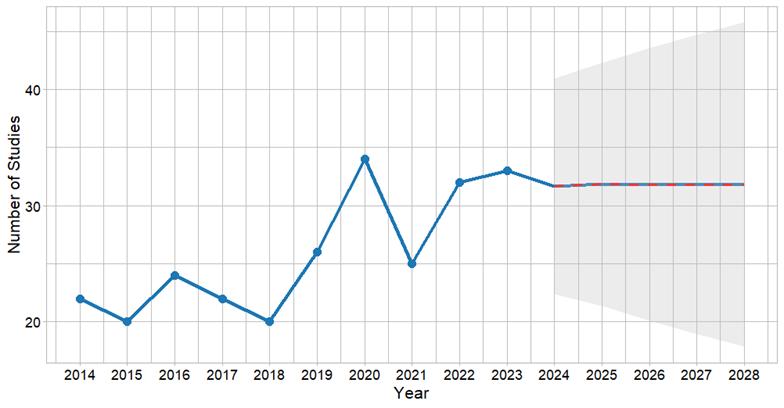
Research on climate governance is constantly evolving and deepening. Initially, the temporal trend of studies is presented, based on the number of studies per year. Following this, a forecast is provided for the next five full years (2024–2028). The forecast model was built using ARIMA (AutoRegressive Integrated Moving Average) modeling, a widely used statistical technique for time series forecasting. The blue line illustrates the progression of studies from 2014 to 2023, while the red dotted line represents the forecast for the upcoming years. The shaded area indicates the confidence interval for the predicted data. The graphical representation of the data is shown below in Graph 2.
 Graph 2.
Longitudinal Trend and Forecast of Future Studies
Source: Research Data.
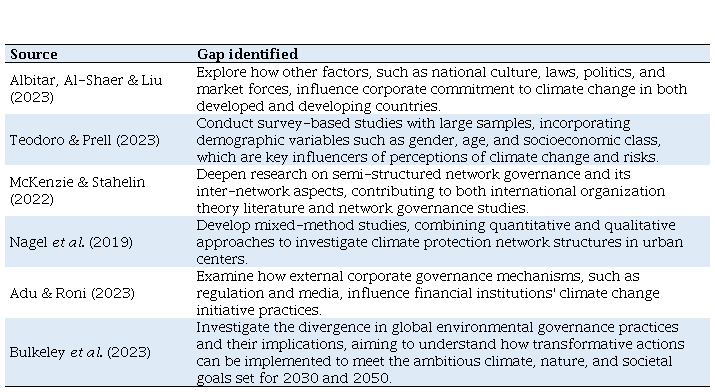
To identify optimal parameters for time series analysis, the forecast model was adjusted using the “auto.arima” function in the R software. The longitudinal trend of studies, despite fluctuations of increase and decline, did not show significant practical differences in the number of studies per year. Moreover, the forecast for the next five years indicated a trend of stagnation in the average number of studies, suggesting that, even considering past annual fluctuations, the production in this field tends toward stabilization rather than significant growth in the coming years. However, the shaded area represents possible declines or increases in the number of studies, which could be influenced by various factors, such as research incentives in this field and the impact of social, environmental, and market-driven demands. Given the importance of climate governance in the urban context, the time series model findings emphasize the need for greater investments and incentives to advance research in this area. To contribute to the development of this research field, Table 1 presents suggestions for future studies based on recent literature and theoretical gaps identified in the Systematic Literature Review (SLR.
Table 1
Future Research Agenda
 Source: Based on Albitar, Al-Shaer & Liu (2023); Teodoro & Prell (2023); McKenzie & Stahelin (2022); Nagel et al. (2019); Adu & Roni (2023); and Bulkeley et al (2023).
The future research agenda proposed by the authors reflects a broad range of research directions, with a focus on understanding the interactions between climate governance, corporate practices, and socio-economic contexts. The diversity of approaches suggests a growing recognition of the complexity and interconnectivity of various climate-related issues, indicating that future studies should integrate these dimensions to develop more effective and inclusive solutions.
Despite the broad scope of the recommended research topics, which were formulated based on identified gaps cited by the authors of existing literature, there is also a need for research designs with specific objectives and methodologies aimed at addressing the needs of cities in different contexts. Emphasis should be placed on exploring local governance mechanisms and the impact of this research field on public policy formulation and municipal climate strategies, as well as on the contributions of different collaborative climate governance models in implementing more effective strategies. Additionally, further research is suggested on the relationship between climate governance, social inequality, and the vulnerabilities of specific populations, with special attention to the dynamics of climate governance in cities located in emerging economies. The final considerations of this study are presented in the next section.
4 FINAL CONSIDERATIONS
This Systematic Literature Review (SLR) aimed to identify empirical evidence on the relationship between climate issues and urban governance. The methodological design was based on the recommendations of Munn et al. (2018), and after the selection and analysis stages, a total of 258 articles were included in this study. The results highlighted the connection between climate governance and adaptation and resilience measures in response to climate change effects. Additionally, some emphasis was placed on collaborative governance, disaster risk reduction, adaptive capacity, and multi-level governance.
Furtermore climate strategies, the findings confirmed that they are divided into two main objectives: adaptation and mitigation. However, this study revealed greater concern—both in theoretical and practical fields—toward adaptation strategies. This imbalance between adaptation and mitigation underscores a critical deficiency in current climate governance practices, as cities, businesses, and nations require an integrated approach that combines both adaptation and mitigation. This approach should also consider capital availability across its social, political, human, financial, and environmental dimensions, as well as the potential of innovation as a strategic tool.
Regarding this study’s specific focus on urban climate governance, urban centers did not appear as a primary theme in the related constructs section. However, as identified in the SDG contributions section, more than 40% of the studies associated climate governance with the development of sustainable cities, particularly linked to SDG 11 – Sustainable Cities and Communities. Additionally, climate governance was strongly associated with SDG 13 – Climate Action, SDG 15 – Life on Land, SDG 14 – Life Below Water, and SDG 2 – Zero Hunger.
The future research agenda outlined a diverse range of potential research directions, reinforcing the broad scope of discussions on governance and climate change. One notable limitation of this study was the inability to include a specific keyword related to cities during the search process, due to the low number of results found in these attempts. As a result, this study adopted a broader approach, which provided greater generalizability but reduced specificity in the discussion of urban climate governance. Additionally, the selection of a single research database may constitute a limitation, despite the substantial body of studies included in the analysis.
This study contributes to both theory and practice by expanding the literature on the relationship between governance and climate strategies and offering potential insights for policymakers. These insights can be used in decision-making by demonstrating the need for a more balanced approach between adaptation and mitigation measures in urban climate strategies. From a theoretical perspective, while the literature gaps identified indicate the evolution of this research field, they also highlight the need for deeper discussions on the relationship between climate governance and the complex dynamics of urban development. From a practical standpoint, this study emphasizes the importance of strengthening climate governance policies, particularly at the local level, by considering the specificities and vulnerabilities of each region. Finally, it is reaffirmed that analyzing climate governance in urban contexts has interdisciplinary and transdisciplinary significance, as it intersects with multiple fields of knowledge, including public administration, environmental sciences, political science, sociology, economics, and urban planning. This multidimensional and holistic nature underscores the complexity and relevance of the climate governance agenda.
Overall, it can be concluded that urban managers must integrate mitigation and adaptation strategies in a coordinated manner, considering the multiple contexts and local needs of each city. Climate governance has proven to be a dynamic process, requiring the interaction of actors at different levels, including businesses, local governments, civil society, nations, and international entities, in the pursuit of addressing the complex challenges posed by climate change.
 Marcos Filho Lima Bastos marcosfbastos1995@gmail.com

