Abstract:
Background: The COVID-19 pandemic poses a substantial threat to human life and society, with profound implications on the capital market. The originality and importance of the study lies in the proposal, which has not yet been carried out, to evaluate the longitudinal behavior of the quotation of three of the main sustainability indices on the Brazilian Stock Exchange. Revealing the potential to offer valuable insights into the association between the performance of sustainable investments and periods of health and economic crises.Purpose: Hence, this study aimed to examine the longitudinal behavior of sustainability index prices of the Brazilian Stock Exchange during three periods: before, during, and after the COVID-19 pandemic. The indices analyzed were the Corporate Sustainability Index (ISE B3), the Efficient Carbon Index (ICO2 B3), and the Great Place to Work Index (IGPTW B3). The sustainability indices of the Brazilian Stock Exchange evaluate and classify companies based on practices in one or more pillars of the sustainable agenda, with a view to promoting responsible investments. They encourage transparency and the adoption of better corporate sustainability practices.
Method: A descriptive research design and quantitative approach were employed using documentary data sources and repeated measures analysis of variance for analyses.
Results: The results revealed statistically significant variations in the prices of the three indices throughout the periods assessed, thereby confirming our first hypothesis. Our second hypothesis was partially validated, given that ISE B3 and IGPTW B3 had positive performance when comparing to the average prices between the pre- and post-pandemic periods.
Conclusions: Superior performance in the average price of two out of the three indices during the first pandemic year, relative to pre-pandemic conditions, along with the longitudinal analysis of the entire period studied, suggests the enduring resilience of sustainability indices in crisis periods.
Keywords: sustainability indices, Covid-19, capital market, price, Brazil.
Resumo:
Contextualização: A pandemia da COVID-19 se constituiu uma forte ameaça à vida humana e à sociedade, com reflexos significativos no mercado de capitais. A originalidade e a importância do estudo residem na proposta, ainda não realizada, de avaliar o comportamento longitudinal da cotação de três dos principais índices de sustentabilidade da Bolsa de Valores brasileira. Revelando o potencial de oferecer valiosos insights sobre a associação entre o desempenho de investimentos sustentáveis e períodos de crises sanitárias e econômicas.Objetivo: O presente estudo teve como objetivo analisar o comportamento longitudinal da cotação de índices de sustentabilidade da B3 S.A. antes, durante e após a COVID-19. Os índices estudados foram o Índice de Sustentabilidade Empresarial (ISE), Índice de Carbono Eficiente (ICO2) e o Índice Great Place to Work (IGPTW). Os índices de sustentabilidade da Bolsa de Valores Brasileira avaliam e classificam empresas com base em práticas baseadas em um ou mais pilares da pauta sustentável, com vista a promover investimentos responsáveis. Eles incentivam a transparência e a adoção de melhores práticas de sustentabilidade corporativa.
Método: A pesquisa teve caráter descritivo, abordagem quantitativa e fonte de dados documental. A técnica utilizada foi a Anova de Medidas Repetidas (Anova – MR).
Resultados: Os resultados evidenciaram diferenças estatisticamente significativas na cotação dos três índices no transcorrer do tempo analisado, desta forma, havendo confirmação da H1. Enquanto a H2 foi parcialmente confirmada, vez que o ISE e IGPTW apresentaram um desempenho positivo na comparação da cotação média entre os períodos pré e pós-pandemia.
Conclusões: Um desempenho superior na cotação média de dois dos três índices estudados no primeiro ano de pandemia em comparação com o período pré-pandêmico, bem como, de um modo geral, ao considerar a análise longitudinal de todo o período estudado, pode demonstrar certa resiliência dos índices de sustentabilidade frente à períodos de crise.
Palavras-chave: índices de sustentabilidade, Covid-19, mercado de capitais, cotação, Brasil.
Resumen:
Contextualización: La pandemia del COVID-19 ha sido una gran amenaza para la vida humana y la sociedad, con importantes repercusiones en los mercados de capitales. La originalidad y la importancia del estudio radican en la propuesta, aún no realizada, de evaluar el comportamiento longitudinal de la cotización de tres de los principales índices de sostenibilidad en la Bolsa de Valores de Brasil. Tiene el potencial de ofrecer conocimientos valiosos sobre la asociación entre el rendimiento de las inversiones sostenibles y los períodos de crisis sanitarias y económicas.Objetivo: El objetivo de este estudio era analizar el comportamiento longitudinal de los índices de sostenibilidad de B3 S.A. antes, durante y después de COVID-19. Los índices estudiados fueron el Índice de Sostenibilidad Empresarial (ISE), el Índice de Eficiencia de Carbono (ICO2) y el Índice Great Place to Work (IGPTW). Los índices de sostenibilidad de la Bolsa brasileña evalúan y clasifican a las empresas en función de prácticas basadas en uno o varios pilares de la agenda sostenible, con vistas a promover inversiones responsables. Fomentan la transparencia y la adopción de mejores prácticas de sostenibilidad empresarial.
Método: La investigación fue de carácter descriptivo, con un enfoque cuantitativo y una fuente de datos documental. La técnica utilizada fue el ANOVA de Medidas Repetidas (MR ANOVA).
Resultados: Los resultados mostraron diferencias estadísticamente significativas en el precio de los tres índices a lo largo del tiempo analizado, confirmando así H1. Mientras que H2 se confirmó parcialmente, ya que el ISE y el IGPTW mostraron un rendimiento positivo al comparar el precio medio entre los periodos anterior y posterior a la pandemia.
Conclusiones: Un comportamiento superior en la cotización media de dos de los tres índices estudiados en el primer año de la pandemia en comparación con el periodo prepandémico, así como, en general, al considerar el análisis longitudinal de todo el periodo estudiado, puede demostrar una cierta resiliencia de los índices de sostenibilidad ante periodos de crisis.
Palabras clave: índices de sostenibilidad, Covid-19, mercados de capitales, cotización, Brasil.
Carátula del artículo
Resilience in times of pandemic: A longitudinal study of sustainability indices of the Brazilian Stock Exchange
Resiliência em tempos de pandemia: Um estudo longitudinal dos índices de sustentabilidade da Bolsa de Valores Brasileira
Resiliencia en tiempos de pandemia: Un estudio longitudinal de los índices de sostenibilidad de la Bolsa Brasileña
 Marcos Filho Lima Bastos marcosfbastos1995@gmail.com
Federal University of Semi-Arid (UFERSA), Brasil
Clandia Maffini Gomes clandiamg@gmail.com
Federal University of Rio Grande (FURG), Brasil
Ana Paula Perlin anapaula.perlin@yahoo.com.br
Federal University of Santa Maria (UFSM), Brasil
Jordana Marques Kneipp jordana.kneipp@ufsm.br
Federal University of Santa Maria (UFSM), Brasil
Contextus – Revista Contemporânea de Economia e Gestão, vol. 22, e93488, 2024
Universidade Federal do Ceará
Recepción: 29 Mayo 2024
Aprobación: 29 Julio 2024
Publicación: 13 Agosto 2024
1 INTRODUCTION
In response to the threat the COVID-19 pandemic poses to human life, governments worldwide have implemented measures to curb the virus’s spread. Among these measures is the temporary total or partial cessation of various non-essential economic activities. Consequently, companies worldwide experienced drastic drops in supply and demand, adversely impacting their financial performance during the pandemic. This scenario, fraught with uncertainties and limitations imposed by the exigent circumstances, impacted businesses in unprecedented ways (Cheema-Fox et al., 2021; Gormsen and Koijen, 2020; Saénz and Solari, 2022; Zimon et al., 2024).
The search for an understanding of the effects and real impact of COVID-19 in emerging economies is essential (Raza; Said; Elshahat, 2023). In the Brazilian business scenary, which has suffered the sharp impact characteristic of emerging economies in times of crisis, discussions have centered on the economic implications and potential survival strategies amidst fears of business closures (Flores et al., 2023; Souza et al., 2023). This is particularly evident in various sectors such as industry, tourism, construction, fashion, and the capital market, all of which faced significant challenges due to the pandemic-induced economic downturn (Cazeri et al., 2022; Flores et al., 2023; Galvão, 2021; Ribeiro and Moreira, 2021; Simeão and Ferreira, 2022).
It is worth noting that the crisis sparked by COVID-19 underscored the importance of adopting a corporate strategy anchored in sustainability (Nicoletti et al., 2020; Ranjbari et al., 2021). The global health and humanitarian crisis resulting from the pandemic unveiled previously unseen difficulties, thus calling into question the corporate world’s commitment to the sustainability agenda (Barbier and Burgess, 2020; Lee et al., 2020). Social, environmental, and governance aspects emerged as central focal points for business discussions during the pandemic. In particular, discussions revolved around the relationship between this tripartite approach and financial performance during this challenging period (Abedifar et al., 2022; Cardillo et al., 2022; Folger-Laronde et al., 2022; Rubbaniy et al., 2022; Singh et al., 2021; Sun and Small, 2022).
Given this context, this study sought to examine the longitudinal behavior of sustainability index prices of the Brazilian Stock Exchange during three periods: before, during, and after the COVID-19 pandemic. The indices analyzed included the Corporate Sustainability Index (ISE B3), the Carbon Efficient Index (ICO2 B3), and the Great Place to Work Index (IGPTW B3). Longitudinal studies include the analysis of the behavior of certain factors of the same group over time, proving crucial to understanding growth, decline and other changes in the behavior of indicators, and are therefore commonly used to identify factors that may influence behavior (Laird, 2022). In the financial area, longitudinal studies can provide empirical evidence on the impact of events on financial results, helping stakeholders to make more assertive decisions (Rashid et. al., 2016).
This research seeks to enhance the current scope of understanding within studies exploring the relationships among sustainable practices, capital markets, and the COVID-19 pandemic. In particular, with regard to the dynamics of sustainability indices in markets located in emerging economies during periods of crisis, with an emphasis on the Brazilian Stock Exchange, given the recent nature of the end of the COVID-19 pandemic, no studies have yet been identified that have investigated the impacts of the health crisis on Brazilian sustainability indices, before, during and after the pandemic. In addition, the different alignment of the indices under analysis, which represent different pillars of sustainability, gives this study the possibility of making inferences about the impacts of the pandemic in Brazil in the social, environmental and economic spheres.
Although discussions about the impact of COVID-19 on the most diverse social, political and economic segments are a recurring and reasonably consolidated theme in recent national and international literature, including studies involving the capital market and the sustainable agenda in the pandemic context (Adikari; Buddhika, 2023; Alijani et. al., 2021; Babu et. al., 2022; Fathmaningrum; Utami, 2022; Nogueira; Madaleno, 2022; Nurdany; Ibrahim; Resende; Sales, 2021; Romadoni, 2021; Sáenz and Solari, 2023; Alkayed et. al., 2023), the particular analysis of three of the most important sustainability indices of the Brazilian Stock Exchange is a new proposal, with the potential to contribute to the understanding of the behavior of the indices studied during the pandemic period.
It is noteworthy that analyses that focus on studying the behaviour of sustainability indices in periods of health crises, such as COVID-19, can offer valuable insights into the long-term implications of these events for sustainable organizational performance (Liu, 2023). In addition, it has been shown that sustainable financial assets play a more secure role during periods of turbulence, such as COVID-19, compared to financial assets of other types (Lu; Chen, 2023). It is also imperative to highlight the higher levels of resilience identified by these indices during COVID-19, with greater stability and lower volatility, demonstrating a higher level of confidence in these investments in the face of the turbulent scenario of the pandemic (Janik; Pluciennik, 2023).
Brazil was considered the second most competitive economy in Latin America in industrial terms and the 35th in the world (United Nations Brazil, 2019) and plays a central role in international discussions on sustainability, especially concerning the environmental pillar (United Nations Brazil, 2023). These findings reinforce the importance of understanding the resilience and role of sustainability indices and other investments of this kind in the Brazilian market. In practical terms, this study may shed light on the performance trends of sustainability indices during and after the pandemic.
To achieve the proposed objective, a repeated measures analysis of variance (RM-ANOVA) will be used, a technique capable of comparing the average performance of the price of the indices under study in different periods comprising the year immediately before, the pandemic period and the post-pandemic period. Subsequent section of this study will discuss the obstacles of capital markets during the COVID-19 pandemic as well as deliberations on sustainable strategies amid the pandemic context.
2 THE CAPITAL MARKET DURING THE COVID-19 PANDEMIC AND THE SUSTAINABLE AGENDA IN THIS CONTEXT
Public health emergencies can profoundly disrupt markets and impact the corporate environment. These disruptions often lead to substantial macroeconomic repercussions, market volatility, and influences extending to the capital market. The extent of such an impact is due to a combination of economic factors and psychological elements. For instance, investors’ negative emotions during crises can amplify their risk aversion, a noteworthy aspect of behavioral finance (Reimer et al., 2023; Wu et al., 2023; Xu et al., 2022).
The impact on the capital market varies based on the sectoral classification of the economic activities undertaken (Padhan and Prabheesh, 2021). While some sectors, such as pharmaceuticals, health, food, and communications, experienced positive effects of the pandemic, others, including the transportation sector and activities more concentrated on the financial market, endured substantial economic losses (Alam et al., 2020; Xu et al., 2022). Despite these setbacks, certain niches of the financial market benefitted during the COVID-19 pandemic, more notably the credit and financing markets (Xie and Tian, 2023).
In examining various stages of the pandemic, one can observe a direct correlation between the surging number of COVID-19 cases and confirmed deaths, heightened media coverage, political discourse, and declining market liquidity. Conversely, the recovery of infected individuals and the rollout of vaccination programs globally have demonstrated the potential to positively influence market liquidity, either immediately or over an extended period (Adnan and Hasan, 2021; Priscilla et al., 2022; Wu et al., 2023).
Research has shown that negative pandemic-related news has a more substantial effect on emerging countries than their developed counterparts. Likewise, the reaction to positive news (e.g., vaccine rollouts) has been slower in these countries. These findings back assertions about the profound negative impacts of health crises on more vulnerable economies, a challenge faced by the Brazilian market during the pandemic (Flores et al., 2023; Reimer et al., 2023; Souza et al., 2023).
To conclude this section on the financial performance of the capital market, despite a predominantly negative landscape for the overall market, as underscored in previously discussed studies, sustainability indices, in some contexts, have outperformed other investment portfolios (Sáenz and Solari, 2023). Such findings can be attributed to the heightened attention to sustainability issues garnered during the COVID-19 pandemic, largely due to rising awareness about resource scarcity, exacerbated inequalities, and evident struggles in producing and distributing essential goods (Nicoletti et al., 2020). The subsequent section of this theoretical review will delve into the role of the sustainability agenda amidst the pandemic, focusing specifically on the performance of sustainability indices during the period.
The need for a sustainable lifestyle, production, and consumption has become increasingly imperative for humanity, as underscored by the COVID-19 pandemic (Nogueira and Madaleno, 2022). This health crisis significantly affected the three pillars of sustainability—society, the environment, and the economy, each in unique ways. On the one hand, positive environmental impacts included improvements in air and water quality and reduced greenhouse gas emissions, while on the other hand, challenges arose from corporations’ diminished financial capacity for environmental investment and waste disposal issues (Ranijabari et al., 2021).
In general, the pandemic brought about short-term environmental gains, with long-term effects remaining uncertain due to various variables and potential scenarios. These environmental implications are tied strongly with potential economic, operational, and social effects, highlighting the holistic nature of the sustainability pillars and emphasizing their plurality, inseparability, and interdisciplinarity (Sarkis, 2021; Sousa and Abdala, 2020). The social pillar, which concentrates on human social capital encompassing health and safety rights, social responsibility, and community aspects, experienced mostly negative effects. Detriments were observed in individual health, well-being, and safety, with a particular emphasis on the well-being of health professionals during this period (Haque, 2021; Ranijabari et al., 2021).
The economic pillar saw financial straits imposed by the pandemic hindering the global progress of organizations toward achieving Sustainable Development Goals, painstakingly aligned with the sustainability pillars in a balanced manner (Ranijabari et al., 2021). By examining the broader integration of the three pillars in the financial market, there was a noticeable rise in the dissemination of sustainability reports and concerns about environmental, social, and governance performance during this period (Alkayed et al., 2023).
Moreover, COVID-19’s negative impact was less damaging to companies with superior sustainable performance or those in countries or regions showcasing a more consolidated sustainable culture (Bose et al., 2022). This supports findings of enhanced financial resilience among companies with superior sustainable performance during the pandemic, as they weathered the negative effects of the health crisis better (Lu et al., 2022). Nevertheless, this contradicts findings that failed to correlate corporate sustainability levels with organizational resilience during the pandemic (Yadav and Bhama, 2023).
Organizational resilience may be defined as the capacity to rapidly recover from difficulties, as with the market crash experienced amid the pandemic. In the context of the present study and within the realms of capital markets and organizational research, resilience is seen as the strength to withstand the effects of a negative event or maintain high levels of dynamic adaptability in response to changes in the external environment (Cheema-Fox et al., 2021).
Recent studies have shown that the impact of the COVID-19 pandemic on financial market sustainability indices has been different in different global regions. For example, in the United States, there was an increase in the levels of disclosure of sustainability reports by financial institutions during the pandemic period. Revealing a more expressive emphasis on the sustainable agenda during this health crisis (Alkayed et. al., 2023). At the same time, in the Indian market, stock market indices, including sustainability indices, showed a positive relationship with the number of daily cases and deaths, while the restrictions imposed by the lockdown negatively impacted these indices, including, in the case of sustainability indices, positive returns with high volatility, highlighting the impact of COVID-19 on this group of investments (Adikari; Buddhika, 2023; Babu et. al., 2022).
In addition, the common movement of sustainability indices with the stock market may derive from the influence exerted by the dependence that these indices have on market indicators as a whole, an issue highlighted in studies on European sustainability indices, which indicated their strong dependence on the stock market, as well as the need to implement policies that give these indices a greater level of independence in this context (Nogueira; Madaleno, 2022).
The impact of the COVID-19 pandemic, already evident in the international market, has also been observed in the Brazilian market. A recent study showed that publicly traded companies with shares traded on B3 suffered changes in their performance coefficients, with an impact on the most diverse business sectors and that, despite this, companies listed on the ISE did not suffer significant changes that could negatively impact their performance coefficient averages. (Resende; Sales, 2021).
Institutional Theory, which aims to explain isomorphism in organizational practices and forms, among its basic precepts, bases itself on the influence of different organizational cultures on the behavior and performance of organizations (DiMaggio; Powell, 1983). The movement towards sustainable investments can be associated with the common movement of organizations in the search for legitimacy. The institutionalization of sustainable practices shows that means of promoting and highlighting sustainable performance, such as sustainability indices, act as drivers and motivators for adherence to sustainable practices in the corporate environment (Kandokrova et. al., 2021; Kordsachia; Focke; Velte, 2022). Based on Institutional Theory and the aforementioned literature, it is possible to assume that the pandemic may have accelerated the process of adherence to and legitimization of sustainable practices and, consequently, impacted the performance of the sustainability indices under analysis. Given the discussion within these theoretical sections, we can now define the fundamental hypotheses of this study:
H1: There are significant differences in the prices of sustainability indices before, during, and after the COVID-19 pandemic.
H2: The sustainability indices showed significant performance increases compared to the periods before and after COVID-19.
3 METHODOLOGICAL PROCEDURES
This study sought to analyze the longitudinal fluctuation of three sustainability indices of the B3 before, during, and after the COVID-19 pandemic using documentary data sources (Gil, 2014). The sustainability indices of the Brazilian Stock Exchange evaluate and classify companies based on practices in one or more pillars of the sustainable agenda, with a view to promoting responsible investments. They encourage transparency and the adoption of better corporate sustainability practices. Of the three indices analyzed, the ISE stands out the most, due to the plural nature of the index's evaluation, which covers six dimensions of analysis, aligned with the three pillars of sustainability, as well as corporate governance and levels of business innovation. Characterized as a total return index, the ISE aims to be an indicator of the average performance of the share price of companies that are selected on the basis of their recognition of their environmental, social and economic commitment. Its composition exclusively takes into account shares in companies listed on the index and on B3 itself. The cut-off score for participation in the ISE takes into account a number of factors, including the number of responding companies, the standard deviation levels and the company's score in the cycle compared to the immediately previous cycles (B3 S.A, 2024).
Meanwhile, the ICO2 is characterized as a strictly environmental index and, more specifically within the environmental pillar, focused on discussions about climate change. The purpose of companies joining is to demonstrate their commitment to the search for efficiency in the reduction of greenhouse gas (GHG) emission levels, with a focus on the transition to low-carbon economies. The index, as in the case of the ISE, is also made up of assets from companies listed on B3 and its main objective is to become a benchmark indicator with regard to good levels of average performance in the price of assets based on low-carbon investments, with a focus on adopting practices that demonstrate the potential to lead investments to greater levels of efficiency in the emission of polluting gases (B3 S.A, 2024).
Finally, among the indices listed, the IGPTW is certified externally to B3, and is made up of companies that are already certified and listed among the best national companies to work for, based on a national ranking prepared by Great Place to Work (GPTW). The purpose of the index is to support investors during the decision-making process, prioritizing investments from companies that put the debate on the quality of work at the heart of their discussions, considering aspects such as the relationship between people and the functional development of employees. This index also considers exclusively the assets of companies listed on B3 and certified by GPTW (B3 S.A., 2024).
In general, it can be seen that the indices are similar in that they focus on the pillars of sustainability and are methodologically similar in terms of the criteria used to create and compose them. However, while the ICO2 has a strictly environmental alignment, focused on the climate agenda, and the IGPTW shows interest in the social pillar by focusing on the quality of work of employees, the ISE covers all the pillars, including social and human capital, levels of corporate governance, innovative performance, the environmental agenda and discussions on climate change.
The analyzed period spanned from March 2019 to December 2023, covering the twelve months leading up to the onset of the pandemic and the following seven months post-pandemic. Analyses were conducted using repeated measures analysis of variance (RM-ANOVA), which is considered suitable for investigating the behavioral patterns of variable groups over time and comparing mean values of different periods within and across these groups. Data processing and analysis were conducted using the R software (Schmuller et al., 2019).
The stages of the research process are illustrated in Figure 1.
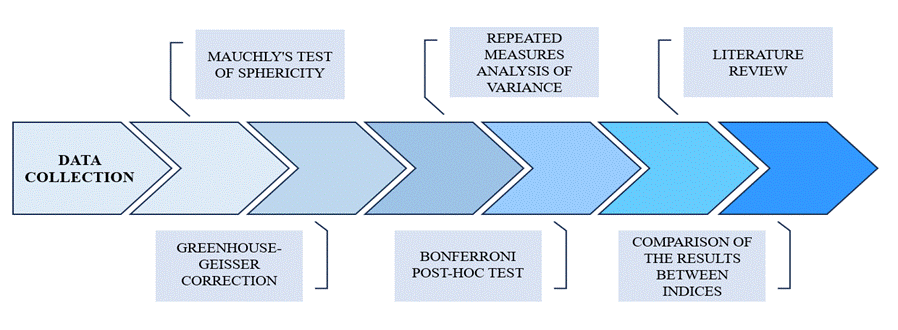 Figure 1
Flowchart of the research design
Source: Elaborated by the author.
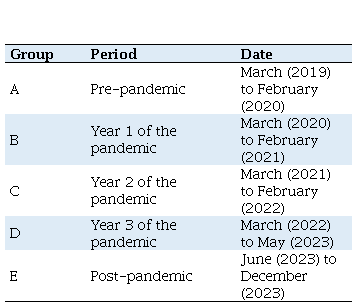
Each step was executed separately for each index (ISE B3, ICO2 B3, and IGPTW B3), with the study variables being the daily prices. Table 1 outlines the timeframes that guided the selection of the analysis periods. This categorization was developed based on data from the World Health Organization (WHO), marking the beginning and end of the COVID-19 pandemic (United Nations Brazil, 2023).
Table 1
Groups of analysis based on the initial and final periods of the COVID-19 pandemic
 Source: Developed by the authors.
The Mauchly's Test was applied to check whether the database meets the sphericity assumption regarding the homogeneity of longitudinal variance. The next step is to apply the Greenhouse-Geisser Correction in order to solve any problems related to the lack of homogeneity of variance. Subsequent steps involve performing RM-ANOVA, the Bonferroni post-hoc test, calculating the effect size (cohen's d) between the differences in the periods and literature review, in order to compare the results identified between the indices.
Each step in this study was meticulously executed for all sustainability indices under investigation, with calculated values in each group considering the daily price of such indices for each analysis period. Initial tests encompassed Mauchly’s test of sphericity, followed by the Greenhouse-Geisser correction, both executed to guarantee data compliance with the assumption of homogeneity of longitudinal variance — a prerequisite for ANOVA-type analyses. The ensuing analytical outcomes are discussed in the following sections.
4 ANALYSIS AND DISCUSSION OF THE RESULTS
This section is structured into four unique subsections. The initial three subsections focus specifically on the detailed analysis of the longitudinal variance of each examined index and predominantly serve a descriptive function. The fourth subsection offers an analysis to compare the outcomes arrived at in the prior stages, specifically addressing the divergences and convergences recognized among the indices studied, including a review of relevant literature.
4.1 Longitudinal variance of the Corporate Sustainability Index
The ISE B3, as the likely main sustainability index of the B3, has an orientation aligned with the precepts of the triple bottom line and is composed of a theoretical portfolio of assets. Created in 2005, it seeks to consolidate itself as an average performance indicator for asset prices belonging to selected companies based on criteria of sustainable commitment and orientation in the business context (B3, 2024). The index encompasses several dimensions such as human capital, corporate governance and senior management, business model and innovation, social capital, and environment and climate change, all highlighting its comprehensive and multifaceted utility for the sustainable agenda. The performance analysis questionnaire for listed companies was recently updated in 2021 with the advent of the ESG Workspace platform for publishing results (B3, 2024).
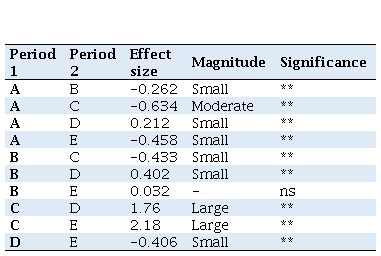
RM-ANOVA was performed to determine the longitudinal variance of ISE B3 asset prices before, during, and after the pandemic based on the five periods outlined herein. Mauchly’s test did not satisfy the sphericity assumption, demonstrating a lack of homogeneity in longitudinal variance (Mauchly’s W = 0.035, p < 0.05). Consequently, the Greenhouse-Geisser correction was implemented. The overall outcome of the RM-ANOVA revealed statistically significant differences in the ISE B3 share price over time (F = 172.523, p < 0.01, partial η² = 0.545). Table 2 lists the data obtained using the post-hoc test and the effect size magnitude between the mean differences during the analysis periods.
Table 2
Effect size between periods for the Corporate Sustainability Index (ISE B3)
 Source: Research data.Note: * p < 0.05; ** p < 0.01; ns = not significant.
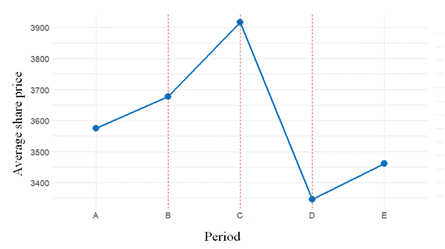
The Bonferroni post-hoc test demonstrated a statistically significant, although minimally substantial, increase in the price of ISE B3 when comparing the pre-pandemic period to the initial 12 months of the pandemic (p < 0.01, Cohen’s d = -0.262) (Graph 1).
 Graph 1.
The evolution of the average ISE B3 share price throughout the analyzed period.
Source: Research data
The increase in the share price was more noticeable when comparing the first and second years of the pandemic, with a significant discrepancy (p < 0.01, Cohen’s d = -0.433). This trend did not persist when comparing the second and third years of the pandemic, which resulted in a significant reduction in the share price of ISE B3, with a substantial effect size (p < 0.01, Cohen’s d = 1.76). Nevertheless, the post-pandemic period marked a resumption of growth, accompanied by a perceivable, albeit modest, rise in share price (p < 0.01, Cohen’s d = -0.406). Additionally, the longitudinal analysis revealed a minor increase in asset prices during the pre- and post-pandemic periods (p < 0.01, Cohen’s d = -0.458). Consequently, the transition from the second to the third year of the pandemic proved to be the period with the most notable decrease in ISE B3 share price.
4.2 Longitudinal variance of the Carbon Efficient Index
ICO2 B3 was established in 2010 to stimulate discussions about Brazil’s climate agenda. Through this index, organizations can disclose their pollution levels and green investments, thus showcasing their alignment with the gradual transition towards low-carbon economies (B3, 2024). A longitudinal analysis of the index price for the five periods illustrated statistically significant variations in the price throughout the period studied, paralleling the findings from the ISE B3 analysis (F = 168.517, p < 0.01, partial η² = 0.538). Mauchly’s test showed that the assumption of sphericity was not met (Mauchly’s W = 0.055, p < 0.05), which required the Greenhouse-Geisser correction.
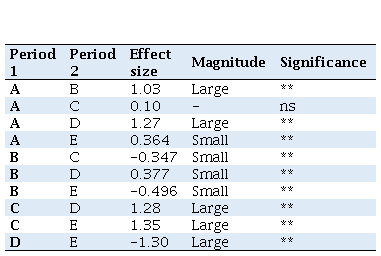
The Bonferroni post-hoc test indicated a statistically significant reduction in ICO2 B3 price, with a large effect size, when comparing the previous 12 months to the initial year of the pandemic (p < 0.01, Cohen’s d = 1.03). This trend did not repeat between the first and second years of the pandemic, wherein a slight increase in the index price was observed, with a small effect size (p < 0.01, Cohen’s d = -0.347).
Table 3
Effect size between periods for the Carbon Efficient Index (ICO2 B3)
 Source: Research dataNote * p < 0.05; ** p < 0.01; ns = not significant.
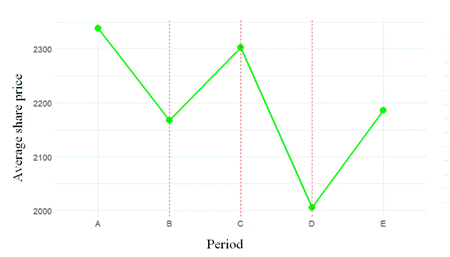
Next, from the second to the last period of the pandemic, there was a significant decrease in the price (p < 0.01, Cohen’s d = 1.28). Conversely, the period following the pandemic, when compared to the one immediately preceding it, demonstrated a substantial increase in the price (p < 0.01, Cohen’s d = -1.30). This increase was greater than what was observed in the previous comparison. Graph 2 depicts the behavior of the average longitudinal price during the assessed periods.
 Graph 2.
The evolution of the average ICO2 B3 share price throughout the analyzed period.
Source: Research data.
Considering the entire pre- and post-pandemic periods, there was a statistically significant decrease in the average price of the index, albeit of a low magnitude (p < 0.01, Cohen’s d = 0.364). When juxtaposed with the results obtained for ISE B3, the data for ICO2 B3 were less encouraging since ISE B3 demonstrated a minor increase.
4.3 Longitudinal variance of the Great Place to Work Index
The subsequent index scrutinized aligns with the social pillar of corporate sustainability. We examined the longitudinal variance of IGPTW B3, comprising the periods before, during, and after the pandemic. Established in 2019, it incorporates a theoretical portfolio of assets from a select group of companies certified for their superior work environments. The certification is provided by the Great Place to Work Institute, an initiative committed to endorsing and providing visibility to organizations that emphasize the humanitarian relationship between individuals and ongoing employee development (B3, 2024).
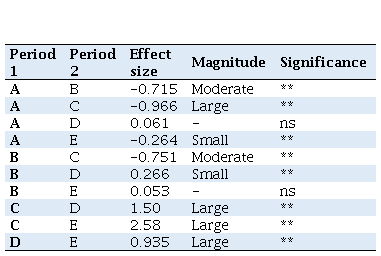
Upon analysis, we identified statistically significant disparities in IGPTW prices during the study period (F = 469.317, p < 0.01, partial η² = 0.765), demonstrating a larger effect size for the difference of this index compared to the preceding ones. As the sphericity assumption was not fulfilled, we applied the Greenhouse-Geisser correction (Mauchly’s W = 0.059, p < 0.05). Table 4 summarizes the findings obtained from the post-hoc test, and it is complemented by the quantification of the effect size corresponding to the average differences observed during the analyzed periods.
Table 4
Effect size between periods for the Great Place to Work Index (IGPTW B3)
 Source: Research dataNote: * p < 0.05; ** p < 0.01; ns = not significant.
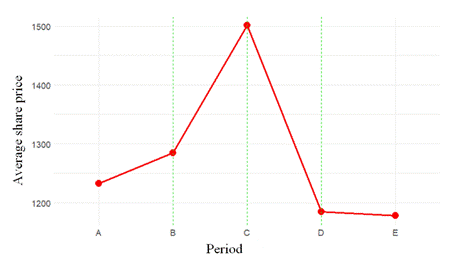
Table 4 shows a significant increase in the average IGPTW B3 price that occurred during the initial 12 months of the pandemic compared to the 12 months immediately prior (p < 0.01, Cohen’s d = -0.715). This escalation was notably more pronounced in the pandemic’s second year than the first (p < 0.01, Cohen’s d = -0.751). The longitudinal behavior of IGPTW B3 during these periods analyzed is illustrated in Graph 3.
 Graph 3.
The evolution of the average IGPTW B3 share price throughout the analyzed period.
Source: Research data
The comparison showed a marked decrease in the index price between the pandemic’s second and third years (p < 0.01, Cohen’s d = 1.50), followed by a less severe drop between the third year and the subsequent post-pandemic period (p < 0.01, Cohen’s d = 0.935). In contrast to previous indices, the period before the commencement of COVID-19 and the period after the pandemic revealed a moderate growth in IGPTW B3 (p < 0.01, Cohen’s d = -0.264), a trend that was also noted for ISE B3.
4.4 Discussion of results and comparison between indices
By comparing the indices, one can observe their behavior throughout this period including converging and diverging trends. Firstly, as depicted in Graph 4, ISE B3 showed the highest average share price, followed by ICO2 B3 and IGPTW B3, which had the lowest. This peculiarity can be attributed to differences in their existence duration, capital market engagement, and asset portfolio appeal, among other factors.
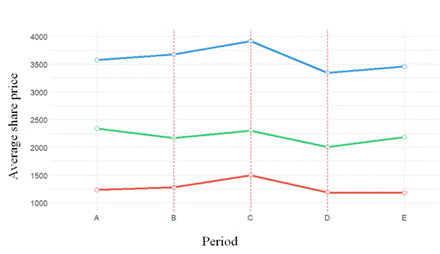 Graph 4.
Price performance of the indices during the analyzed periods.
Source: Research data
Upon comparing the average prices before and during the first year of the pandemic, we noted a rise in ISE B3 price (p < 0.01, Cohen’s d = -0.262) and minor effect size, as well as a moderately significant rise in IGPTW B3 price (p < 0.01, Cohen’s d = -0.715), as previously shown herein. However, there was a noticeable decrease in ICO2 B3 price for the same period, with a significant effect size (p < 0.01, Cohen’s d = 1.03). The slight increase in ISE B3 share price during this period validates earlier findings that suggested a positive growth in ISE B3 returns. This starkly contrasted other Brazilian capital market indices, which, recent analyses show, simultaneously declined (Saénz and Solari, 2022).
Furthermore, the positive synergy between sustainable performance and resilience during the pandemic may have boosted ISE B3 share prices (Nicoletti et al., 2020). Sustainability’s multifaceted nature makes it essential, especially when analyzing ISE B3, which integrates its three distinct yet interconnected pillars into its sustainable performance assessment framework (Sousa and Abdala, 2020). This interconnectedness may reveal common trends in the rise or fall of one or more pillars, encompassing certain facets of the index at various periods of the pandemic (Ranjbari et al., 2021).
The significant growth of IGPTW B3, an index aligned with the labor aspects of the social sustainability pillar, between the first two periods analyzed could reflect the increasing concern during the first year of the pandemic about the social issues imposed by the health crisis and ensuing social isolation. This scenario heightened the importance of various social issues, many of which are related to the workplace (Ranjbari et al., 2021). A greater emphasis on the social pillar also stemmed from a focus on the quality of work for health professionals during the pandemic. This led to discussions about organizational leaders’ role in promoting and maintaining employee well-being, particularly for health professionals, during a crisis (Haque, 2021).
Unlike ISE B3 and IGPTW B3, ICO2 B3 was the only index to show a price decrease when comparing the pre-pandemic period with the first year of the pandemic. This supports findings that identified a series of challenges for the environmental agenda during the health crisis linked to a decrease in environmental investments caused by the intersection of environmental and economic pillars. The issue of waste disposal during social isolation was another challenge (Ranjbari et al., 2021; Sousa and Abdala, 2020). The observed decrease in ICO2 B3 prices during the first year of the pandemic and its connections with the environmental pillar could likely be understood as a shared pattern with other Latin American indices. Most of these indices experienced significant price drops as the virus proliferated throughout Latin America, and the halt in economic ventures, including activities that drive ICO2 B3 assets, substantially affected the value of Latin American stock exchanges (Rivera et al., 2020; Saénz and Solari, 2022; Sierra et al., 2020).
Conversely, the assessment of the last period of the pandemic compared to the post-pandemic phase, as previously demonstrated, revealed a small effect size increase for ISE B3 (p < 0.01, Cohen’s d = -0.406) and a large effect size rise for ICO2 B3 (p < 0.01, Cohen’s d = -1.30). The latter represents the most significant increase across all indices during the periods evaluated. Additionally, IGPTW B3, when compared with the end of the pandemic and after the health crisis, indicated a substantial decline in the index price (p < 0.01, Cohen’s d = 0.935).
The uptick in ICO2 B3 values towards the end of the pandemic relative to the preceding period could suggest a more favorable performance of the index due to the close of the global health crisis compared to the other B3 sustainability indices. This could highlight organizations’ and investors’ increased focus on the environmental agenda, which has already been noted in prior research linking a gradual growth in environmental awareness related to changes in production and consumption patterns to the duration of the COVID-19 pandemic (Nogueira and Madaleno, 2022). Nonetheless, a comprehensive comparison between the periods failed to present a favorable landscape for ICO2 B3.
Overall, the analysis revealed a significant mean difference in the price of the indices between these periods, thus supporting H1 (There are significant differences in the prices of sustainability indices before, during, and after the COVID-19 pandemic). Despite the modest magnitude of the effect, elevated values were seen in the post-pandemic period in contrast to the pre-pandemic period for ISE B3 and IGPTW B3. Nevertheless, ICO2 B3 demonstrated a price decrease, partially supporting H2 (The sustainability indices showed significant performance increases compared to the periods before and after COVID-19) for two of the three indices scrutinized. This may indicate a degree of resilience in these indices relative to the health crisis.
Organizational resilience amidst the COVID-19 pandemic reveals a compelling correlation with the social pillar of sustainability, particularly emphasizing the well-being of employees. Overcoming such a crisis significantly influences organizational performance and market valuation as stakeholders perceive this sustainable resilience as a credible investment indicator. Hence, sustainability indices integrating their objectives with a social agenda focusing on work quality have gained greater strategic importance in the pandemic (Cheema-Fox et al., 2021), thereby reinforcing the increased significance of IGPTW B3 and ISE B3, both of which prioritize assets centered around the social pillar, during the ongoing pandemic.
However, it is important to note that this analysis—encompassing a financial variable linked to an event with economic, social, and environmental implications and utilizing RM-ANOVA — is not capable on its own of directly and objectively associating the performance of the indices evaluated with the effects of the pandemic. Indeed, some factors besides the pandemic could have influenced the prices of the indices. Nevertheless, various studies cited herein have demonstrated the link between capital market performance, sustainability indices, and the impacts of COVID-19, enabling inferences to be made about potential cause-and-effect relationships regarding the longitudinal behavior of the indices’ prices with the beginning and end of the pandemic (Abedifar et al., 2022; Cardillo et al., 2022; Folger-Laronde et al., 2022; Nogueira and Madaleno, 2022; Rivera et al., 2020; Rubbaniy et al., 2022; Saénz and Solari, 2022; Sierra and Nuñez, 2020; Singh et al., 2021; Sun and Small, 2022).
In order to broaden the understanding of the findings of this research, some questions will be clarified. Firstly, it is important to explain what sustainable assets are, which encompass a range of investments, such as green bonds, environmental, social and governance assets, and other types of investments that present a lower burden of side effects for the pillars of sustainability. During the COVID-19 pandemic, there has been evidence of lower volatility of sustainable investments compared to other types of investments (Hasan et. al., 2023). It is also important to note that the crisis imposed by COVID-19 has had a significant impact on the sustainability of companies around the world, bringing with it challenges such as reducing the energy used in production processes, interrupting supply chains and reducing the workforce (Martynets; Opanasiuk; Matvieieva, 2022; Moolman; Fouché; Leendertz, 2023).
A rise in sustainable awareness in the corporate environment has also been identified during the COVID-19 pandemic, with empirical evidence about the highlight, caused by the health crisis, of the importance of sustainable investments, leading companies to consider the composition of their range of products and services, delivery methods and impacts generated for the environment and social environment, aiming to increase the levels of sustainability and resilience of the economic activities developed (Martynets; Opanasiuk; Matvieieva, 2022; Moolman; Fouché; Leendertz, 2023).
Still on the impact of COVID-19 on sustainable assets, we observed a multifaceted influence of this health crisis on the demand for assets aligned with one or more pillars of sustainability (Döttling; Kim, 2022). The pandemic and subsequent recovery plans have fueled strong growth in demand and the development of sustainable finance in various asset classes, although, as explained above, the pandemic has not proved to be an isolated factor influencing the valuation of these assets, with this growth being driven by the impacts of climate change, the war in Ukraine, inflationary pressures and regulatory responses to sustainability issues, for example. The increase in consumer interest in the sustainable agenda has also been a major factor, and the change in the consumer value system, expectations of corporate social responsibility and increased loyalty to sustainable brands are worth highlighting when analyzing the valuation of sustainable assets during COVID-19 (Woo et. al., 2022).
A final aspect worth highlighting is the long-term implications that COVID-19 may have for sustainable investments, a fact that has been the subject of an extensive amount of scientific research. Studies have shown that, during the pandemic, sustainable financial assets such as the Dow Jones Sustainability World Index (DJSW), Green Bond, Carbon and Clean Energy have exhibited significant long-memory properties, indicating their potential as a safe destination for investors during periods of crisis (Lu; Chen, 2023), a fact that corroborates the outperformance identified in two of the three indices analyzed in this study.
The COVID-19 pandemic has punctuated the essential need for organizations to align and increase investments in sustainability. Given this context, the sustainability indices have proven to be robust indicators of corporate dedication to sustainability. The focus on the social pillar, as identified in this study, could reflect the intensified challenges that workers and organizations have faced in conducting economic activities during the pandemic.
5 CONCLUSIONS
This study aimed to evaluate the longitudinal behavior of the sustainability indices of the Brazilian Stock Exchange (B3) before, during, and after the COVID-19 pandemic. The Corporate Sustainability Index (ISE B3), the Carbon Efficient Index (ICO2 B3), and the Great Place to Work Index (IGPTW B3) were analyzed by repeated measures analysis of variance, which revealed statistically significant differences in prices for all three indices throughout the study period, thus supporting H1: There are significant differences in the prices of sustainability indices before, during, and after the COVID-19 pandemic.
The initial 12-month period of the pandemic, juxtaposed to the preceding period, revealed a decrease in ICO2 B3 prices and an increase in ISE B3 and IGPTW B3 prices. This highlighted the amplification of the social pillar, particularly when comparing the results of the environment-focused ICO2 B3 to the socially-oriented IGPTW B3. Similar to our findings in this initial pandemic year, ISE B3 and IGPTW B3 exhibited increased prices before and after COVID-19. Conversely, ICO2 B3 experienced a decline, partially validating the H2: The sustainability indices showed significant performance increases compared to the periods before and after COVID-19. Despite this fluctuation, ICO2 B3 witnessed growth in price during the post-pandemic phase, possibly suggesting increased awareness among organizations and stakeholders about the impacts of the environmental pillar amid times of crisis.
Superior performance in the average price of two out of the three indices during the first pandemic year, relative to pre-pandemic conditions, along with the longitudinal analysis of the entire period studied, suggests the enduring resilience of sustainability indices in crisis periods. The social pillar especially emerged as a notable factor for the positive yield of these indices — a fact corroborated by data analysis and supportive literature.
The contributions of this study cover the field of finance, capital markets and corporate sustainability, with a focus on emerging economies such as Brazil. By proposing and carrying out an analysis of the behavior of three of the main sustainability indices in the Brazilian capital market before, during and after the COVID-19 pandemic, ANOVA-MR made it possible to identify significant variations in index prices, enriching the literature with empirical evidence on the impact of global health crises on corporate sustainability. The distinction between the performance of indices focused on different pillars of sustainability (social, environmental and economic) has the potential to offer a perspective on how each dimension has been affected by the pandemic.
By demonstrating that the IGPTW, aligned with the social pillar, showed greater resilience and growth during the pandemic period, this finding can help guide future corporate strategies. The results also highlight the resilience of sustainability indices during periods of health crises, suggesting that sustainable investments can be good alternatives in adverse scenarios. This contribution may be important for investors and portfolio managers seeking to minimize risks in times of uncertainty.
Despite our significant findings, our study is limited to the unfeasibility of directly correlating the performance of the B3 sustainability indices’ with the impacts of the pandemic. Notwithstanding, other studies have provided adequate empirical evidence on potential associations between constructs or their tangents. As a course for future research, we recommend quantitative analyses to implement data regression techniques that include COVID-19-related variables and sustainability index performance. Studies could focus on the economic, social, and environmental dimensions of the Brazilian capital market indices, as this approach may estimate the predictive capacity of sustainable performance on financial outcomes in organizations during global health crises.
REFERENCES
Abedifar, P., Bouslah, K., Neumann, C., & Tarazi, A. (2023). Resilience of Environmental and Social Stocks under Stress: Lessons from the COVID-19 Pandemic. Financial Markets Institutions & Instruments, 32, 23-50. https://doi.org/10.1111/fmii.12166
Adikari, A. A. V. S., & Buddhika, H. J. R. (2023). Impact of Covid-19 on Stock Market Indices: Evidence from Colombo Stock Exchange. South Asian Journal of Finance, 3(1), 38-53. https://doi.org/10.4038/sajf.v3i1.52
Adnan, A. T. M., & Hasan, M. M. (2021). The emergence of COVID-19 and capital market reaction: an emerging market scenario analysis. Asian Academy of Management Journal of Accounting and Finance, 17(1), 35-62.
Alam, M. M., Wei, H., & Wahid, A. N. (2020). COVID-19 outbreak and sectoral performance of the Australian stock market: An event study analysis. Australian Economic Papers, 60(3), 482-495. https://doi.org/10.1111/1467-8454.12215
Alijani, M., Banimahd, B., Nikoomaram, H., & Yaghobnezhad, A. (2021). Fractal analysis and the relationship between efficiency of capital market indices and COVID-19 in Iran. Results in Physics, 25, 1-9. https://doi.org/10.1016/j.rinp.2021.104262
Alkayed, H., Yousef, I., Hussainey, K., & Shehadeh, E. (2023). The impact of COVID-19 on sustainability reporting: A perspective from the US financial institutions. Journal of Applied Accounting Research, 6(2), 1-19. https://doi.org/10.1108/JAAR-12-2022-0345
Babu, M., Lourdesraj, A., Hariharan, C., Gayathri, J. Butani, C. K., & Kathiravan, C. (2022). Impact of COVID-19 pandemic on environmental, social, and governance index in India. International Conference on Environmental Engineering and Green Technology, 1-7. https://doi.org/10.1088/1755-1315/1057/1/012017
Bose, S., Shams, S., Ali, M. J., & Mihret, D. (2022). COVID-19 impact, sustainability performance and firm value: international evidence. Accounting & Finance, 62, 597-643. https://doi.org/10.1111/acfi.12801
Cardillo, G., Bendinelli, E., & Torluccio, G. (2022). COVID-19, ESG investing, and the resilience of more sustainable stocks: Evidence from European firms. Business Strategy and the Environment, 32, 602-623. https://doi.org/10.1002/bse.3163
Cazeri, G. T., Anholon, R., Eulalia, L. A. S., & Rampasso, I. S. (2022). Potential COVID-19 impacts on the transition to Industry 4.0 in the Brazilian manufacturing sector. Kybernetes, 51(7), 2233-2239. https://doi.org/10.1108/K-10-2020-0693
Cheema-Fox, A., Wang, H., & Serafeim, G. (2021). Corporate resilience and response to COVID-19. Journal of Applied Corporate Finance, 33(2), 24-41. https://doi.org/10.1111/jacf.12457
DiMaggio, P. J., & Powell, W. W. (1983). The Iron Cage Revisited: Institutional Isomorphism and Collective Rationality in Organizational Fields. American Sociological Review, 48(2), 147-160.
Fathmaningrum, E. S. Utami, T. P. (2022). Determinants of Investment Decisions in the Capital Market During the COVID-19 Pandemic. Journal of Accounting and Investment, 23(1), 147-169. https://doi.org/10.18196/jai.v23i1.13408
Flores, E. S., Sampaio, J. O., Beiruth, A. X., & Brugni, T. V. (2023). Earnings management during the COVID-19 crisis: evidence from the Brazilian and American capital markets. Journal of Accounting in Emerging Economies, 13(4), 760-783. https://doi.org/10.1108/JAEE-10-2021-0317
Folger-Laronde, Z., Pashang, S., Feor, L., & Elalfy. A. (2022). ESG ratings and financial performance of Exchange-traded funds during the COVID-19 pandemic. Sustainable Financial Investing, 12, 490-496. https://doi.org/10.1080/20430795.2020.1782814
Galvão, N. M. S. (2021). COVID-19 e comportamento empresarial: um estudo à luz da teoria dos stakeholders no setor da moda no Brasil. Revista Gestão Organizacional, 14(1), 192-211. https://doi.org/10.22277/rgo.v14i1.5552
Gil, A. C. (2014). Como elaborar projetos de pesquisa. 6 ed. São Paulo: Atlas.
Gormsen, N. J., & Koijen, R. S. J. (2020). Coronavirus: Impact on Stock Prices and Growth Expectations. The Review of Asset Pricing Studies, 10, 574-597. https://doi.org/10.1093/rapstu/raaa013
Haque, A. (2021). The COVID-19 pandemic and the role of responsible leadership in health care: thinking beyond employee well-being and organisational sustainability. Leadership in Health Services, 34(1), 52-68. https://doi.org/10.1108/LHS-09-2020-0071
Hasan, B., Rashid, M. Hossain, N., Rahman, M., & Amin, R. (2023). Using green and ESG assets to achieve post-COVID-19 environmental sustainability. Fulbright Review of Economics and Policy, 3(1), 25-48. https://doi.org/10.1108/FREP-04-2022-0026
Kandokrova, M., Makhosheva, S., Efendiev, A. Uyanaeva,H., & Dzgoev, B. (2021). Institutional imperatives for sustainable socio-ecological and economic development. E3S Web of Conferences, 284, 1-9. https://doi.org/10.1051/e3sconf/202128407013
Kordsachia, O., Focke, M., & Velte, P. (2022). Do sustainable institutional investors contribute to firms’ environmental performance? Empirical evidence from Europe. Review of Managerial Science, 16, 1409-1436. https://doi.org/10.1007/s11846-021-00484-7
Lee, D., Kang, J., & Kim, K. (2020). Global Collaboration Research Strategies for Sustainability in the Post COVID-19 Era: Analyzing Virology-Related National-Funded Projects. Sustainability, 12, 1-17. https://doi.org/10.3390/su12166561
Liu, L. Sustainability Indexes as Possible Predictors of Excess Mortality across OECD Countries during the Covid-19 Pandemic. Med R Xiv The Preprint Server for Health Sciences, 15, 1-12. https://doi.org/10.1101/2023.06.09.23291035
Lu, J., Rodenburg, K., Foti, L., & Pegoraro, A. (2022). Are firms with better sustainability performance more resilient during crises? Business Strategy and the Environment, 31, 3354-3370. https://doi.org/10.1002/bse.3088
Lu, K. C., & Chen, K. S. (2023). Uncovering Information Linkages between Bitcoin, Sustainable Finance and the Impact of COVID-19: Fractal and Entropy Analysis. Fractal and Fractional, 424(7), 1-17. https://doi.org/10.3390/fractalfract7060424
Martynets, V., Opanasiuk, Y., & Matvieieva, Y. (2022). How the Covid-19 Pandemic Affects Sustainable Development: The Impact on the Social, Economic and Energy Parameters of Sustainable Development. Strategic Planning for Energy and the Environment, 14(4), 425-456. https://doi.org/10.13052/spee1048-5236.4144
Moolman, A. M., Fouché, J. P., & Leendertz, V. (2023). Sustainability elements of companies that are affected by pandemics. Journal of Economic and Financial Sciences, 16(1), 1-12. https://doi.org/10.4102/jef.v16i1.828
Nicoletti, M., Alem, G., Blazek, M., Fillipi, P., & Bismarchi, L. F. (2020). Atuação empresarial para sustentabilidade e resiliência no contexto da COVID-19. Revista de Administração de Empresas, 60(6), 413-425. https://doi.org/10.1590/S0034-759020200605
Nogueira, M. C., & Madaleno, M. (2022). Are Sustainability Indices Infected by the Volatility of Stock Indices? Analysis before and after the COVID-19 Pandemic. Sustainability, 14, 1-13. https://doi.org/10.3390/su142215434
Nurdany, A., Ibrahim, M. H., & Romadoni, M. F. (2021). The asymmetric volatility of the islamic capital market during the covid-19 pandemic. Journal of Islamic Monetary Economics and Finance, 7(1), 185-202. https://doi.org/10.21098/jimf.v7i0.1312
Priscilla, S., Hatane, S. E., & Tarigan, J. (2022). COVID-19 catastrophes and stock market liquidity: evidence from technology industry of four biggest Asian capital market. Asia-Pacific Journal of Business Administration, 15(5), 695-720.
Ranjbari, M., Esfandabadi, Z. S., Zanetti, M. C., Scagnelli, S. D., Sibers, P. O., Aghbashlo, M., Peng, W., Quatraro, F., & Tabatabaei, M. (2021). Three pillars of sustainability in the wake of COVID-19: A systematic review and future research agenda for sustainable development. Journal of Cleaner Production, 297, 1-23. https://doi.org/10.1016/j.jclepro.2021.126660
Rashid, N. M. N. N. M., Noor, R., Matsuki, N., Rahman, N. A., & Omar, N. (2016). The longitudinal study of earnings management: analysis on companies financial abilities. Procedia Economics and Finance, 35, 136-145. https://doi.org/10.1016/S2212-5671(16)00018-6
Raza, M. W., Said, B., & Elshahat, A. (2023). Covid-19 and informational efficiency in Asian emerging markets: a comparative study of conventional and Shariah-compliant stocks. International Journal of Islamic and Middle Eastern Finance and Management, 16(3), 576-592. https://doi.org/10.1108/IMEFM-01-2022-0041
Reimer, G., Briozzo, A., & Capobianco, G. (2023). Eventos informativos sobre COVID-19 y su efecto en índices bursátiles. Una revisión de la evidencia empírica. Estudios Gerenciales, 39(167), 219-232. https://doi.org/10.18046/j.estger.2023.167.5759
Resende, K. C., & Sales, G. A. W. (2021). Comportamento do coeficiente beta das ações brasileiras no período da crise gerada pela pandemia da COVID-19. Revista Eletrônica do Departamento de Ciências Contábeis & Departamento de Atuária e Métodos Quantitativos da FEA, 8(1), 32-51.
Ribeiro, H. C. M., & Moreira, A. M. A. P. (2021). COVID-19: efeitos e implicações ocorridos no turismo da rota das emoções localizada no Nordeste do Brasil. PODIUM Sport, Leisure and Tourism Review, 10(2), 106-138. https://doi.org/10.5585/podium.v10i2.18419
Rivera, R. J. M., Diéz, J. A. L., & Martinéz, F. V. (2020). Impacto de la pandemia COVID-19 en variables financieras relevantes en las principales economías de Latinoamérica. Economía Teoría y Práctica, v. especial, 125-144. https://doi.org/10.24275/etypuam/ne/e052020/mendoza
Rubbaniy, G., Khalid, A. A., Samitas, A., & Ali, S. (2022). Are ESG stocks safe-haven during COVID-19? Studies in Economics and Finance, 39, 239-255. https://doi.org/10.2139/ssrn.3779430
Schmuller, J. (2019). Análise estatística com R. 2 ed. Rio de Janeiro: Alta Books.
Sierra, C. F. D., & Nuñez, W. N. (2020). El mercado integrado latinoamericano – mila – en tiempo de covid -19. análisis enero – mayo 2020. Aglala, 11(1), 17-37.
Simeão, I., & Ferreira, K. A. (2022). Lean construction and resilience while coping with the COVID-19 pandemic: an analysis of construction companies in Brazil. International Journal of Lean Six Sigma, 14(5), 970-988. https://doi.org/10.1108/IJLSS-02-2022-0027
Singh, N. P., Makhija, P., & Chacko, E. (2021). Sustainable investment and the COVID-19 effect-volatility analysis of ESG Index. International Journal of Sustainability, 13, 357-368. https://doi.org/10.1504/IJSE.2021.118620
Sousa, A. C., & Abdala, K. O. (2020). Sustentabilidade, do conceito à análise. Revista Metropolitana de Sustentabilidade, 10(2), 146-166.
Souza, G. H. S., Lima, N. C., Coelho, J. A. P. M., & Jardim, A. C. G. S. (2023). Expectativas empresariais frente ao início da pandemia da COVID-19: Evidências empíricas no Brasil. REGEPE Entrepreneurship and Small Business Journal, 12(2), 1-12. https://doi.org/10.14211/regepe.esbj.e2240
Sun, L., & Small, G. (2022). Has sustainable investing made and impact in the period of COVID-19? Evidence from Australian Exchange traded funds. Sustainability Financial Investing, 12, 251-273. https://doi.org/10.1080/20430795.2021.1977577
Woo, H., Shin, D. C., Jung, S., & Jin, B. E. (2022). Does the Pandemic Boost Sustainability? The Influence of COVID-19 on Consumers and Their Loyalty Intentions toward Sustainable Brands. ITAA Proceedings, 19, 1-4.
Wu, C., Xu, M., Du, P., Li, J., Zhu, Y., & Zhang, Y. (2023). Impact of COVID-19 policy on stock prices of listed property companies. Applied Mathematics and Nonlinear Sciences, 8(2), 251-264. https://doi.org/10.2478/amns.2021.2.00278
Yadav, N., & Bhama, V. (2023). Sustainability, Resilience, and Returns During COVID-19: Empirical Evidence from US and Indian Stock Markets. Journal of Emerging Market Finance, 22(2), 215-238. https://doi.org/10.1177/09726527231158555
Zimon, G., Salehi, M., & Arabi, S. K. (2024). COVID-19 and CFO performance: evidence of large and medium-size companies. Journal of Facilities Management, 22(1), 1-19. https://doi.org/10.1108/JFM-05-2023-0054

